

Parrassaurus yacahuitztli is a Late Jurassic ichthyosaur from Coahuila in north-eastern Mexico. Barrientos-Lara and Alvarado-Ortega named the genus and species in 2021 from holotype CPC 307, a skull and partial skeleton from the Tithonian La Caja Formation. Its diagnosis relies on a combination of skull and forelimb characters; the specimen does not reveal every aspect of the animal’s biology.
Quick facts
| Type species | Parrassaurus yacahuitztli |
|---|---|
| Age | Late Tithonian, Late Jurassic |
| Formation | La Caja Formation, Coahuila, north-eastern Mexico |
| Holotype | CPC 307, skull and partial skeleton |
| Diagnostic evidence | External naris, lacrimal and skull-bone contacts |
| Unknowns | Colour, exact diet and behaviour of the individual |
Evidence guide
The type specimen includes a skull, lower jaw, teeth, vertebrae, ribs, parts of the shoulder girdle and elements of both forelimbs. It is not a complete articulated skeleton.
The specimen comes from marine deposits of the La Caja Formation in Coahuila and is dated to the late Tithonian, the final stage of the Jurassic.
The description notes an external narial opening subdivided by a process of the maxilla, an elongate lacrimal, a long lacrimal–prefrontal contact, and features of the rostrum and skull roof. These observations refer to CPC 307.
The partial skeleton supports a diagnosis but does not preserve colour or behaviour. Exact length and diet require traceable measurements or direct feeding evidence, not an unlabelled reconstruction.
From a Mexican fossil to a named genus
Holotype CPC 307 comes from the Sierra de Parras area of Coahuila. Earlier work on ichthyosaurs from the Late Jurassic Gulf of Mexico reported the material as an indeterminate ophthalmosaurid. In 2021, Jair Israel Barrientos-Lara and Jesús Alvarado-Ortega described it as the new genus and species Parrassaurus yacahuitztli in Alcheringa.
The sequence matters: researchers first compared the bones with known ophthalmosaurids, then identified a combination of characters they considered sufficient for a new taxon. The genus name refers to Sierra de Parras; the species name refers to a figure in Nahuatl tradition. Etymology is not part of the anatomical diagnosis.
The specimen is held in the Coahuila Paleontological Collection at Museo del Desierto as CPC 307. It is partial rather than a complete articulated skeleton, so observations, interpretations and missing information need to remain distinct.
Age and locality
CPC 307 comes from marine rocks of the La Caja Formation in the late Tithonian, the last stage of the Jurassic. The locality is in Sierra de Parras, Coahuila, in north-eastern Mexico. This is a Late Jurassic animal, even though other familiar Mexican ichthyosaurs come from older deposits.
Age matters when comparing ophthalmosaurids. Similar groups lived in different basins, but membership in one family does not mean fossils came from the same place or time. The late Tithonian Parrassaurus is older in the record than Early Cretaceous forms such as some described from elsewhere in Mexico.
What the holotype preserves
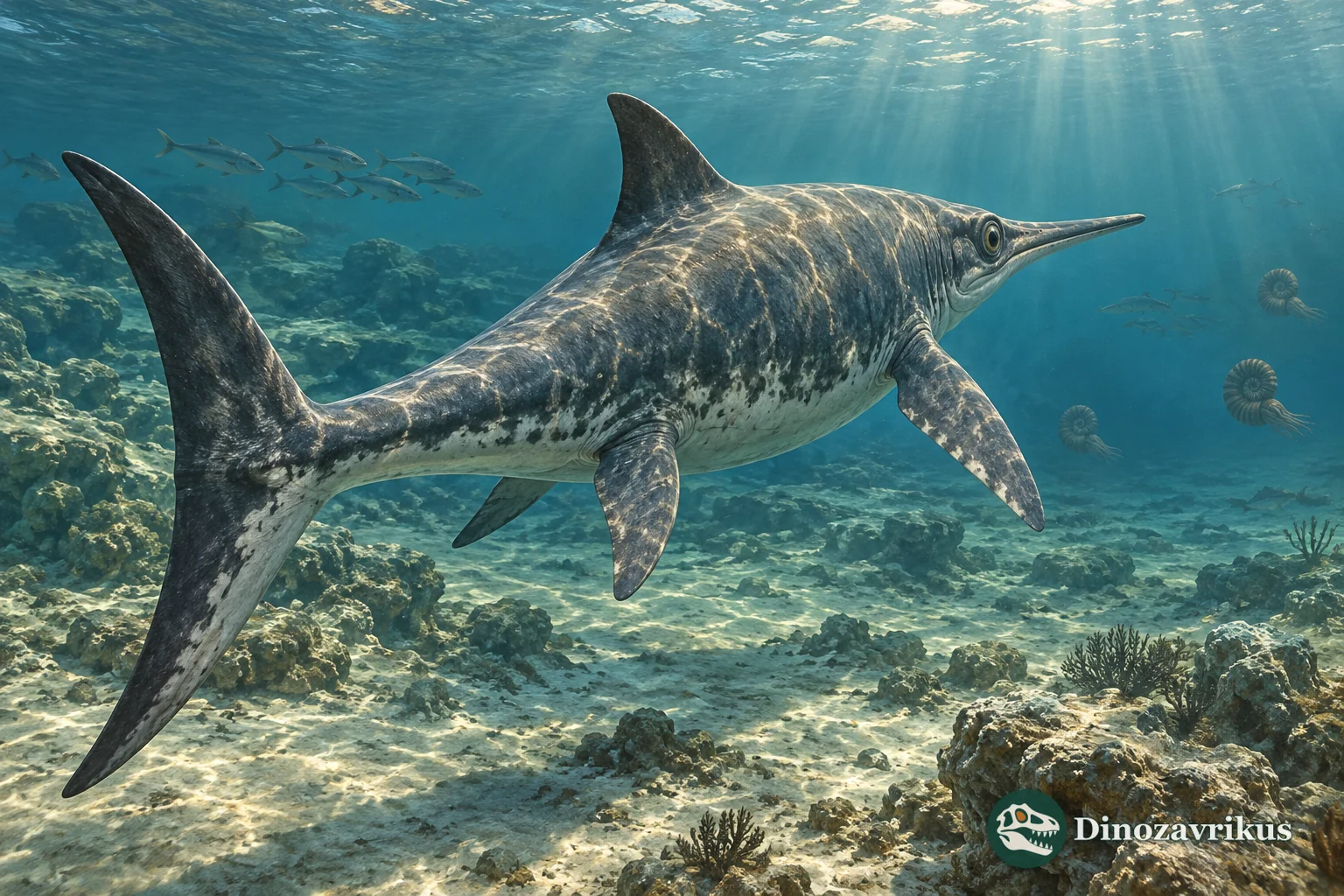
The description lists a skull, lower jaw, teeth, vertebrae, ribs, parts of the shoulder girdle and bones from both forelimbs. The vertebral column is incomplete, and the tail is not fully preserved. A full-body image therefore should not be mistaken for a proportional measurement of CPC 307.
The skull is especially informative. The authors described an external narial opening divided by a process of the maxilla, an elongate lacrimal and a long contact between the lacrimal and prefrontal. Other diagnostic features include an elongate prenarial part of the rostrum, proportions of the premaxillary processes and the frontal’s contribution to the anterior border of the supratemporal fenestra.
Forelimb anatomy and classification
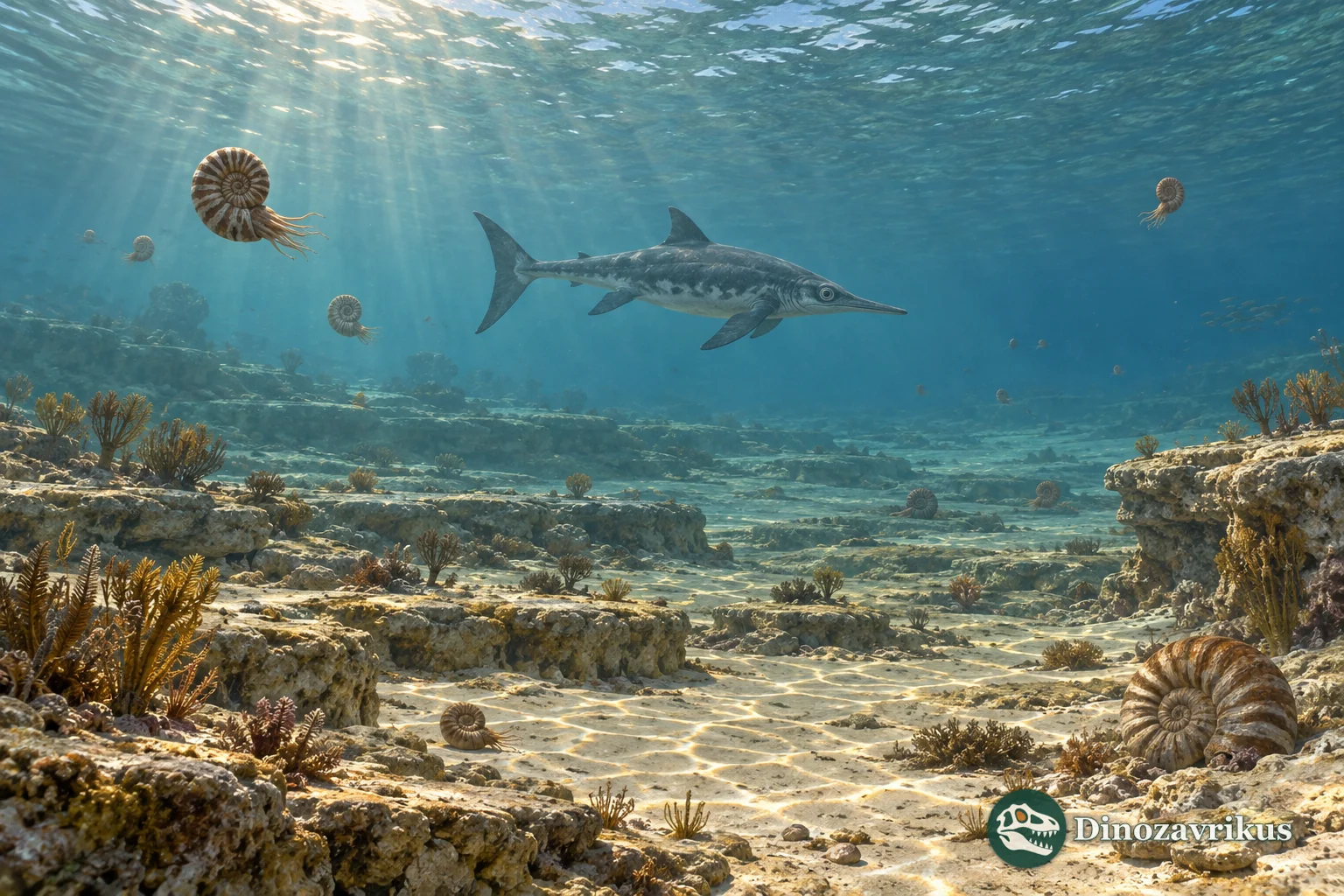
The diagnosis also includes a contact between the humerus and intermedium. In the described arrangement, that contact separates the ulna and radius. Relationships among these bones help distinguish ichthyosaur taxa, but should not be translated directly into a particular swimming style without a separate functional study.
The authors placed Parrassaurus among ophthalmosaurids and identified it as a distinct genus. Their phylogenetic analysis supports a position within Platypterygiinae, but relationships among major ophthalmosaurid branches can change when character matrices are revised. Reassessment of Mexican specimens has also shown that assignments to the broad genus Ophthalmosaurus may need revision: CPC 238, for example, was named Jabalisaurus.
Size, diet and behaviour
A reconstruction is not the same as a direct measurement of the holotype. Any total-length estimate should state its method and the measured bones behind it. CPC 307 is incomplete, so this profile does not present a widely repeated approximate figure as an exact established value.
As an ichthyosaur, Parrassaurus was a marine vertebrate with flippers. Its teeth and general anatomy are consistent with a predatory lifestyle, but specific prey have not been established by stomach contents from this specimen. Colour, swimming speed, reproduction and social behaviour are not directly known.
Why one holotype can define a genus
A new fossil species is often initially based on a single type specimen. The name remains anchored to that holotype, while the diagnosis records the characters that authors could observe and compare. This does not reveal the full range of variation within the species, and later material may refine the interpretation.
For Parrassaurus, the argument uses multiple skull and forelimb features rather than a long snout or geographic location alone. With limited material, both conclusions should be retained: CPC 307 was described as a distinct taxon, while its full anatomy and biology remain incomplete.
Frequently asked questions
Where was Parrassaurus found?
Holotype CPC 307 comes from late Tithonian marine rocks of the La Caja Formation in Sierra de Parras, Coahuila, north-eastern Mexico.
What is holotype CPC 307?
It is a partial skeleton with a skull, lower jaw, teeth, vertebrae, ribs, parts of the shoulder girdle and elements of both forelimbs. The tail and entire skeleton are not preserved.
Which features diagnose Parrassaurus?
The diagnosis uses the external narial opening, the shape and contacts of the lacrimal and prefrontal, features of the rostrum and skull roof, and forelimb-bone relationships.
Are its exact length and diet known?
A length estimate should be tied to a stated method and measurements; the skeleton is incomplete. Specific prey have not been established from direct feeding evidence in CPC 307.