

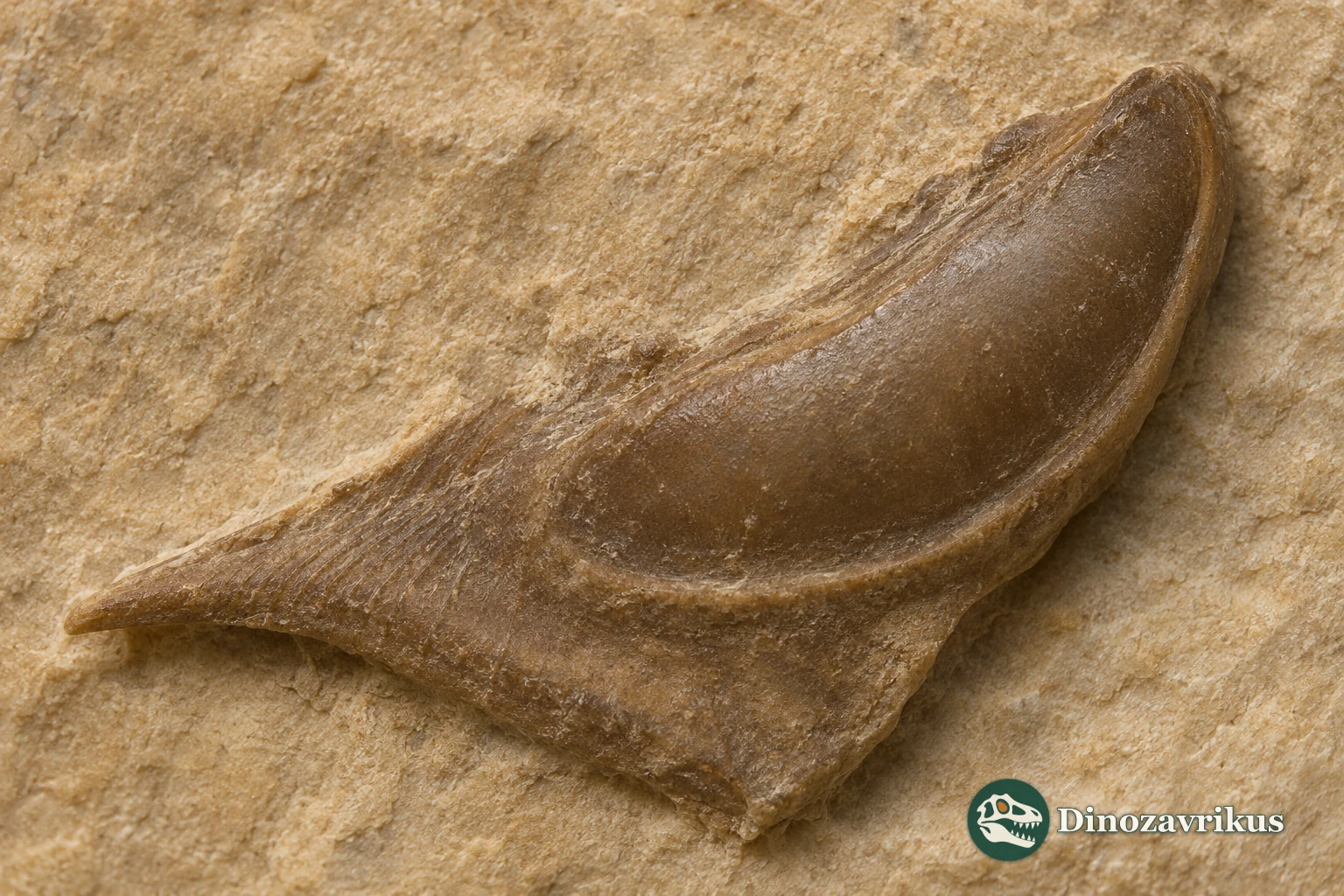
The tail shield of Peltabellia from North Greenland has a broad, smooth rim that slopes towards its edge. The grooves farther in are shallow. Isolated head shields and cheeks from the same Early Ordovician beds preserve the position and shape of the eyes.
Quick facts
| Family | Bathyuridae |
|---|---|
| Age | Early Ordovician |
| Named by | Harry Whittington, 1953 |
| Type species | Peltabellia peltabella |
| Type formation | Garden City Formation, Idaho |
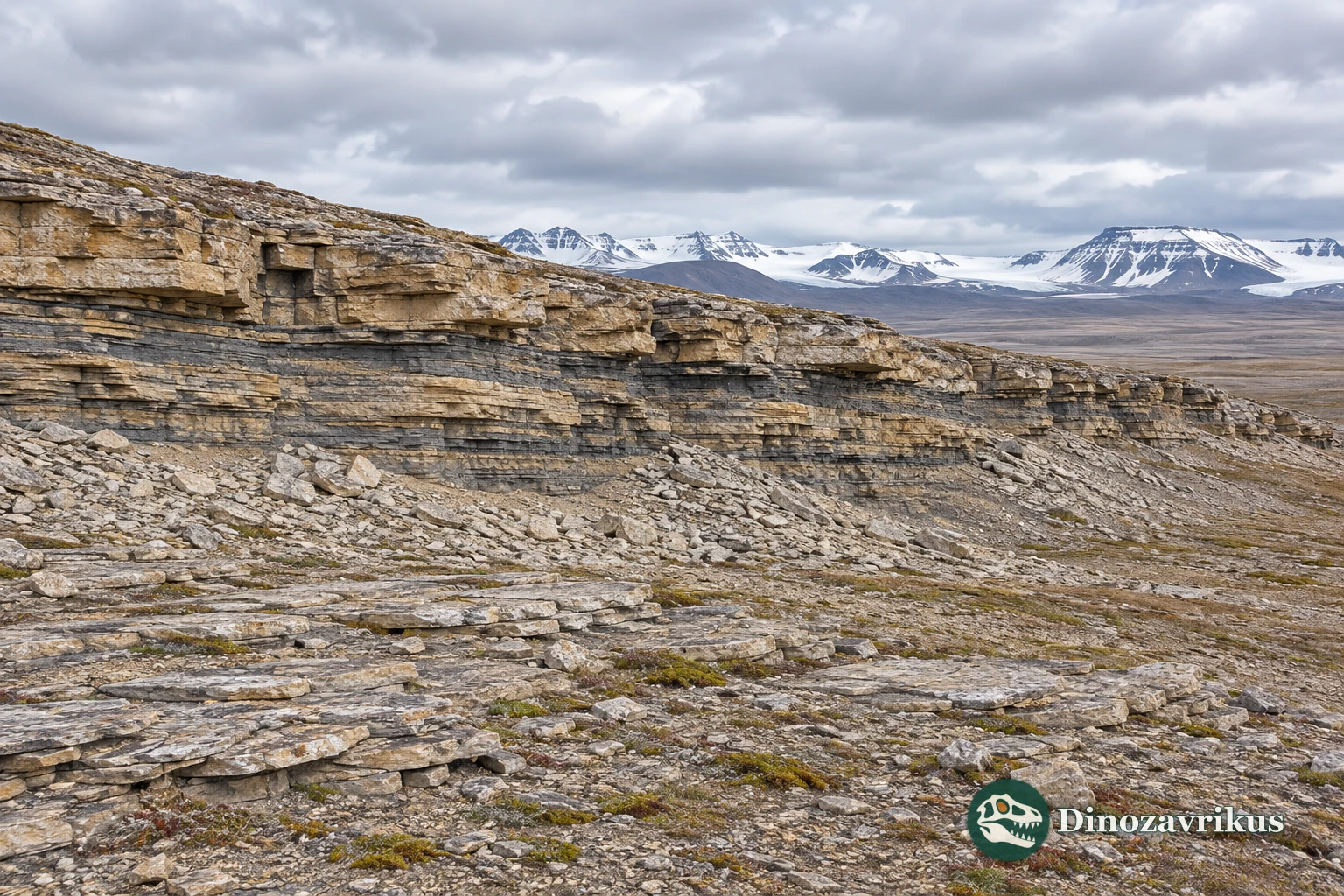
| Greenland species | Poulsen Cliff Formation |
What can the fossils tell us?
The type of the Greenland species is an isolated tail shield. It does not show the number of movable segments.
A well-preserved free cheek shows the eye in place alongside the short cheek spine.
The difference in the rim helped distinguish the Greenland fossils as a separate species.
The Idaho species behind the name
In 1951 Reuben Ross described an Early Ordovician trilobite from the Garden City Formation as Jeffersonia peltabella. Two years later Harry Whittington made it the type species of Peltabellia.
Related forms came from the Poulsen Cliff Formation of Washington Land, in western North Greenland. Richard Fortey and John Peel named P. elegans. Its holotype, MGUH 18.965, is a tail shield. Other specimens include central head shields and free cheeks.
A raised eye and shallow tail grooves
The central part of the head in the Greenland species is nearly rectangular, with a broadly rounded front. It tapers slightly in the largest cranidium, whereas in smaller specimens the sides are nearly parallel. The strip-like eye stands on a narrow raised base. The free cheek ends in a short triangular spine.
The described tail shields are 1.3 to 1.8 times as wide as long. The axis extends for roughly two-thirds of the length. Faint traces of the grooves indicate four or five rings. The grooves on the flanks show most clearly in an internal mould. The shields of Lutesvillia offer a comparison with another Early Ordovician bathyurid.
Comparing Greenland with Siberia
The tail of P. elegans resembles the Missouri specimen described as Bathyurellus permarginatus in overall proportions. In the Missouri fossil, however, the rim is almost horizontal. The Greenland rim slopes down, and the transition from the ribbed field is gentler. These differences helped establish the Greenland species.
Fortey and Peel compared the material with the Siberian genus Biolgina and treated that name as a synonym. Later revisions noted that various species assigned to Peltabellia differ in important respects from the type. The limits of the genus are still open to revision.
Frequently asked questions
Where was the type species of Peltabellia found?
Its material comes from the Early Ordovician Garden City Formation in Idaho, United States.
What is the holotype of the Greenland species?
MGUH 18.965 is a detached tail shield from the Poulsen Cliff Formation of Washington Land.
What does the edge of the Greenland tail shield look like?
It has a broad, smooth rim that slopes downward. The shallow grooves on the sides stop before the outer edge.
Why does the name Biolgina appear in older papers?
It was introduced for Siberian material. Fortey and Peel found insufficient differences to retain it as a genus separate from Peltabellia.