

Peltephilus was an extinct South American cingulate in the family Peltephilidae. Its fossil armor and unusual projections on the head shield inspired the informal label “horned armadillo,” but those projections were bony elements of the armor, not horns like those of hoofed mammals.
The genus appears in the ancient mammal catalogue. Its fossil record overlaps other armored mammals such as Prozaedyus, while osteoderm structure helps distinguish the lineages.
Quick facts
| Scientific name | Peltephilus Ameghino, 1887 |
|---|---|
| Group | Peltephilidae, within Xenarthra and Cingulata |
| Genus range | Late Oligocene to middle Miocene in published regional records |
| Range | Argentina, Chile and Bolivia |
| Distinctive feature | Bony projections formed by osteoderms of the head shield |
| Best-known associated material | MPEF-PV 3011, assigned to Peltephilus pumilus |
| Preservation | Skull, mandible, parts of head and dorsal armor, and partial postcranium |
| Main limitation | Many species are based on small sets of isolated osteoderms |
What can the fossils tell us?
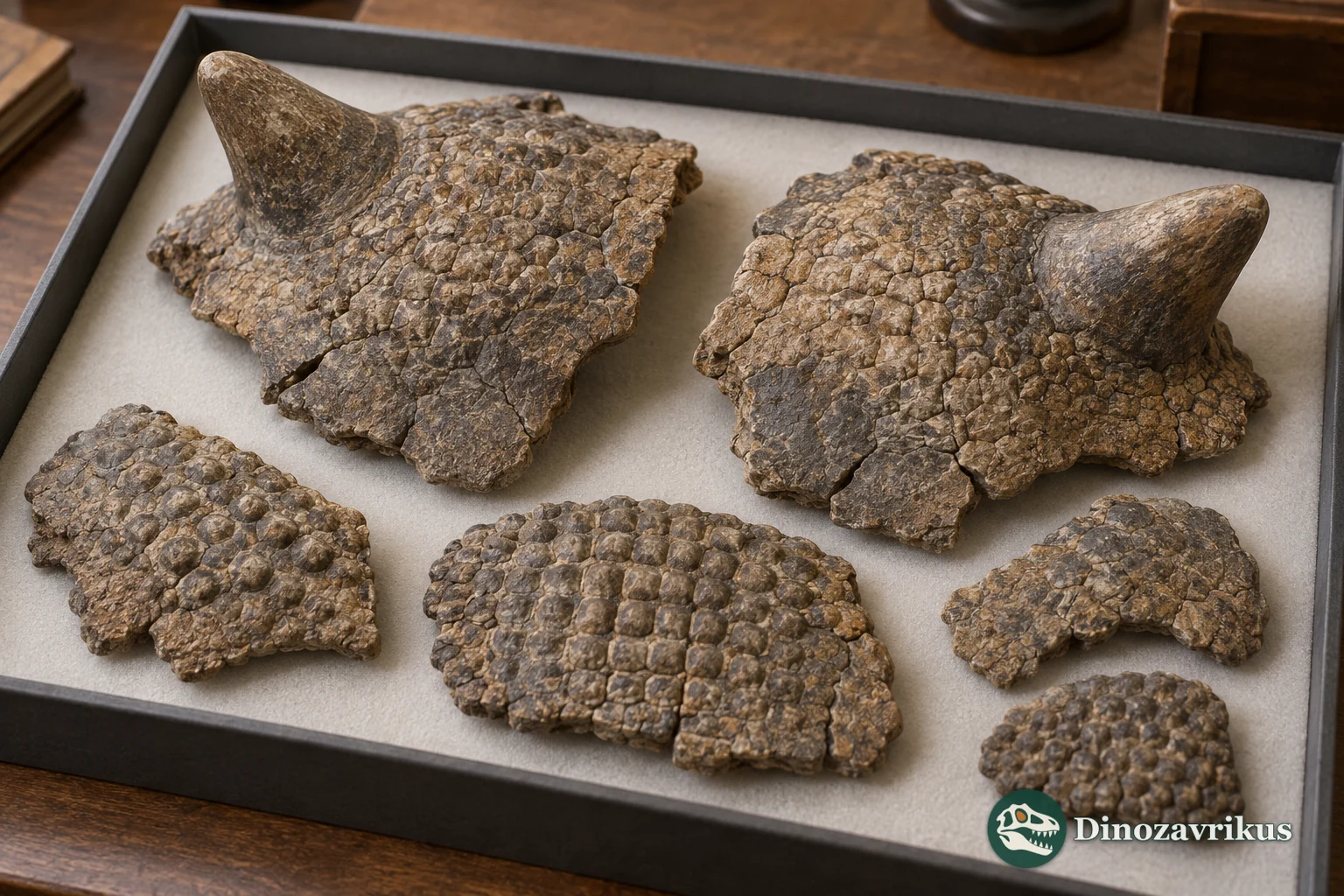
Isolated osteoderms show rough surfaces, pits, grooves and differences between movable and fixed plates. A single plate does not always reveal its position in the armor or identify a species.
The specimen assigned to Peltephilus pumilus includes a skull and mandible, much of the head shield, a substantial part of the dorsal armor and selected limb and trunk bones. It is the most complete known peltephilid, not a fully preserved body.
Peltephilids are described with chisel-shaped molariforms and a U-shaped dental arcade. These traits inform comparisons of chewing mechanics but do not establish a precise diet for Peltephilus.
Peltephilus is best known from Oligocene and Miocene fossils. The youngest records for Peltephilidae overall are assigned to Epipeltephilus kanti, so they should not be extended to this genus.
The name and its type species
Florentino Ameghino established Peltephilus in 1887 while describing South American fossil mammals. The osteoderms were central to its recognition: in cingulates, dermal bones form protective shields, and their shape and surface ornament can carry taxonomic information. Yet isolated plates do not always preserve enough characters to distinguish closely related species.
Published sources disagree about the genus’s type species. Several systematic treatments identify P. strepens, whereas a 2014 account of Patagonian Paleogene mammals gives P. pumilus. A concise profile should preserve this bibliographic inconsistency instead of presenting one statement as universally settled. It does not undermine the genus itself, but it matters when tracing how the name was fixed.
Named species include P. strepens, P. pumilus, P. giganteus, P. nanus and P. ferox, among others. Lists vary by revision. Some assignments use sets of osteoderms from the Santa Cruz Formation; isolated new plates are often left as Peltephilus sp. when they cannot be securely matched to a named species.
Head shield and body armor
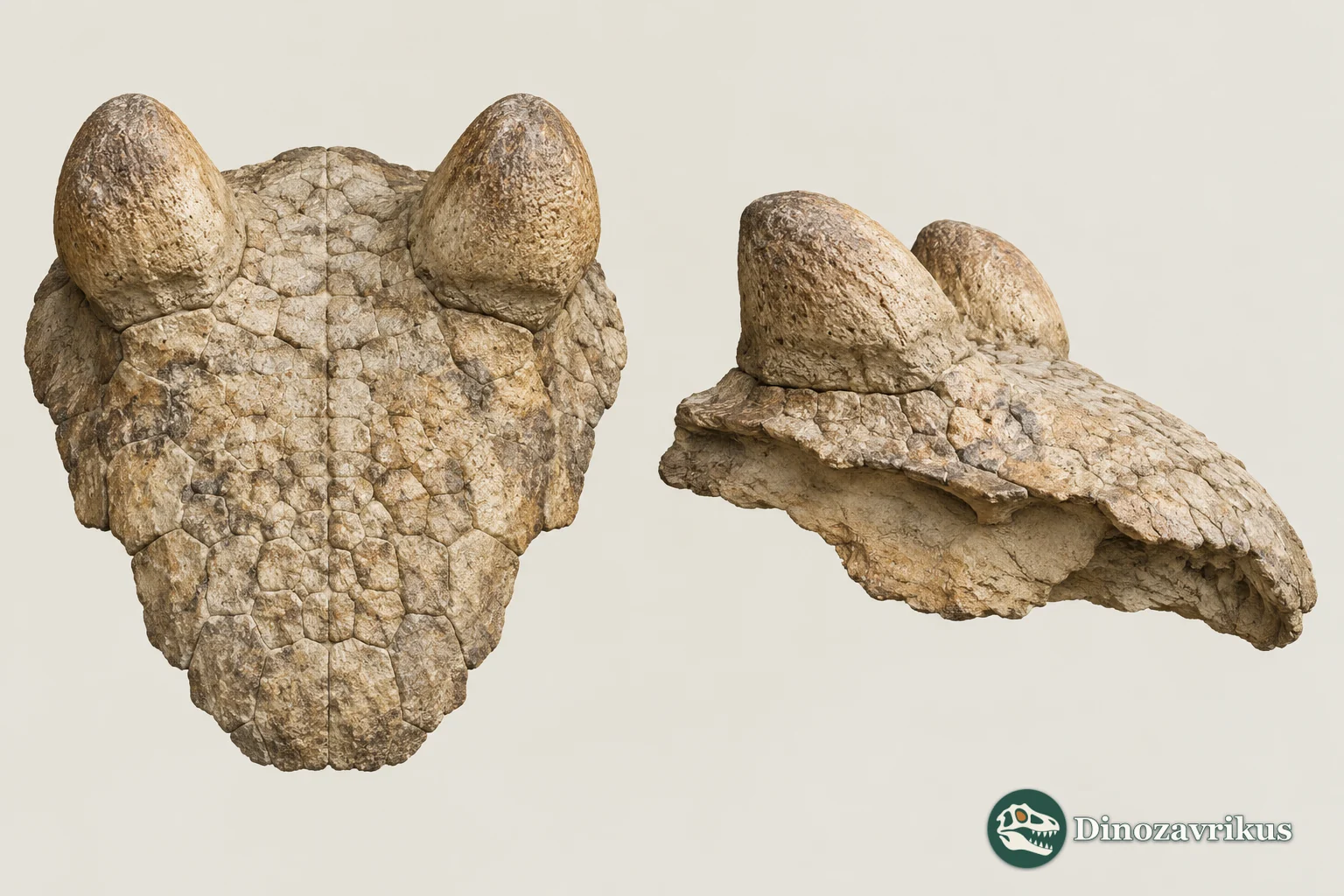
The head shield of peltephilids included osteoderms around the nasal and frontal region. Some projected forward and gave the animal its characteristic “horned” profile. These are bony elements of armor. The fossil evidence does not require a keratin horn sheath like that of a hoofed mammal.
Plates of the dorsal armor differ in size, thickness and mobility. Descriptions of the genus include fixed and movable osteoderms with coarse pits, rough outer surfaces, grooves and pores. Researchers measure their dimensions and compare ridges and openings. These traits aid classification, but an isolated plate may not preserve its exact position in a complete carapace.
The most complete known peltephilid
Specimen MPEF-PV 3011 from the Santa Cruz Formation in Santa Cruz Province, Argentina, was assigned to Peltephilus pumilus. It was collected by a team from the Museo Paleontológico Egidio Feruglio and comes from the late part of the early Miocene. The material includes a skull and mandible, most of the head shield, a large part of the dorsal armor, and selected postcranial elements: a scapula, femur and parts of a foot, pelvis, thoracic and lumbar vertebrae, and ribs.
This association extends the record beyond collections of isolated plates. It allows comparisons among the skull, armor and limbs of one animal and helps test which bones belong to peltephilids. The specimen is still incomplete, so missing regions cannot be treated as direct fossil evidence.
Teeth, movement and diet
Peltephilids are described as having chisel-shaped molariforms and a U-shaped dental arcade. These features distinguish the group from many other xenarthrans and support functional comparisons. They may inform hypotheses about food processing, but they do not identify which plants or invertebrates Peltephilus ate. Direct traces or gut contents would be needed for that level of detail.
MPEF-PV 3011 preserves selected limb bones, and studies of armadillos compare limb proportions and joint surfaces with living relatives. Such comparisons can frame ideas about posture and movement. They do not provide an exact running speed, burrowing behaviour or daily routine unless a specific anatomical feature supports the claim.
A precise body-mass estimate for every species is also unavailable. Size categories for the family are not a substitute for measurements from a particular skeleton and a stated calculation method. It is safer to describe Peltephilus as an armored terrestrial mammal and avoid one unsupported mass figure.
Age, range and the family’s decline
Records of Peltephilus come from late Oligocene and Miocene deposits in Patagonia and other parts of Argentina, Chile and Bolivia. Older reports and species assignments have been revised, so the genus should not automatically receive the full temporal range of Peltephilidae. The family extends from the early Eocene to the Late Miocene, but its youngest known genus is Epipeltephilus, not Peltephilus.
A 2023 phylogenetic study discussed young remains of Epipeltephilus kanti at about 9.23 million years from the Arroyo Chasicó Formation, along with additional material from Loma de Las Tapias. The authors noted that the family’s decline coincided chronologically with more open and arid environments. That timing does not by itself prove aridification caused the decline.
Fossil teeth, jaws, osteoderms and partial skeletons establish an armored cingulate with unusual bony projections on its head shield. The associated material strengthens anatomical reconstruction, but soft tissues, colour, exact diet, speed and behaviour remain unknown. Generated museum scenes on this page are illustrations, not photographs of actual specimens.
Frequently asked questions
When did Peltephilus live?
Published records place the genus in the late Oligocene and Miocene, especially the early Miocene of Patagonia. The broader early Eocene to Late Miocene range applies to Peltephilidae as a family.
Did Peltephilus have true horns?
The projections are interpreted as bony elements of the head shield, or osteoderms. Fossils do not establish keratin horns like those of hoofed mammals.
What is the most complete peltephilid specimen?
MPEF-PV 3011, assigned to Peltephilus pumilus, includes a skull, mandible, parts of the head and dorsal armor, and selected limb and trunk bones. It remains incomplete.
What did Peltephilus eat?
Its dental shape supports functional comparisons, but no direct evidence establishes a precise menu. Specific diet claims remain inference.