

Peltostega was an Early Triassic temnospondyl from Spitsbergen. Its type preserves the back part of the skull. Carl Wiman named the genus for the low, shield-like convexity of the individual skull-roof bones, each outlined by a shallow, winding suture.
Quick facts
| Group | Temnospondyls, rhytidosteids |
|---|---|
| Age | Early Triassic, Olenekian |
| Region | Europe (Spitsbergen, Norway) |
| Type species | Peltostega erici |
| Scientific name | Peltostega |
| Diet | Exact prey is unknown |
What can the fossils tell us?
The type preserves much of the skull roof behind the eye sockets. A second referred fragment is broken farther back.
A comparative analysis grouped Peltostega near the base of a rhytidosteid branch. Earlier classifications linked it to other groups of temnospondyls.
The marine sediment records where the fossil was buried. The fragmentary skull cannot establish how much time the animal spent in seawater.
Material from Mount Andersson
Wiman described the species in 1916 from a specimen collected on Mount Andersson in the Sassen Valley of Spitsbergen. The holotype, PIU U 24, is Olenekian in age. The species name honours Erik Andersson. A second skull fragment, PIU U 39, has been called Peltostega wimani. A later rhytidosteid analysis listed it under Peltostega erici.
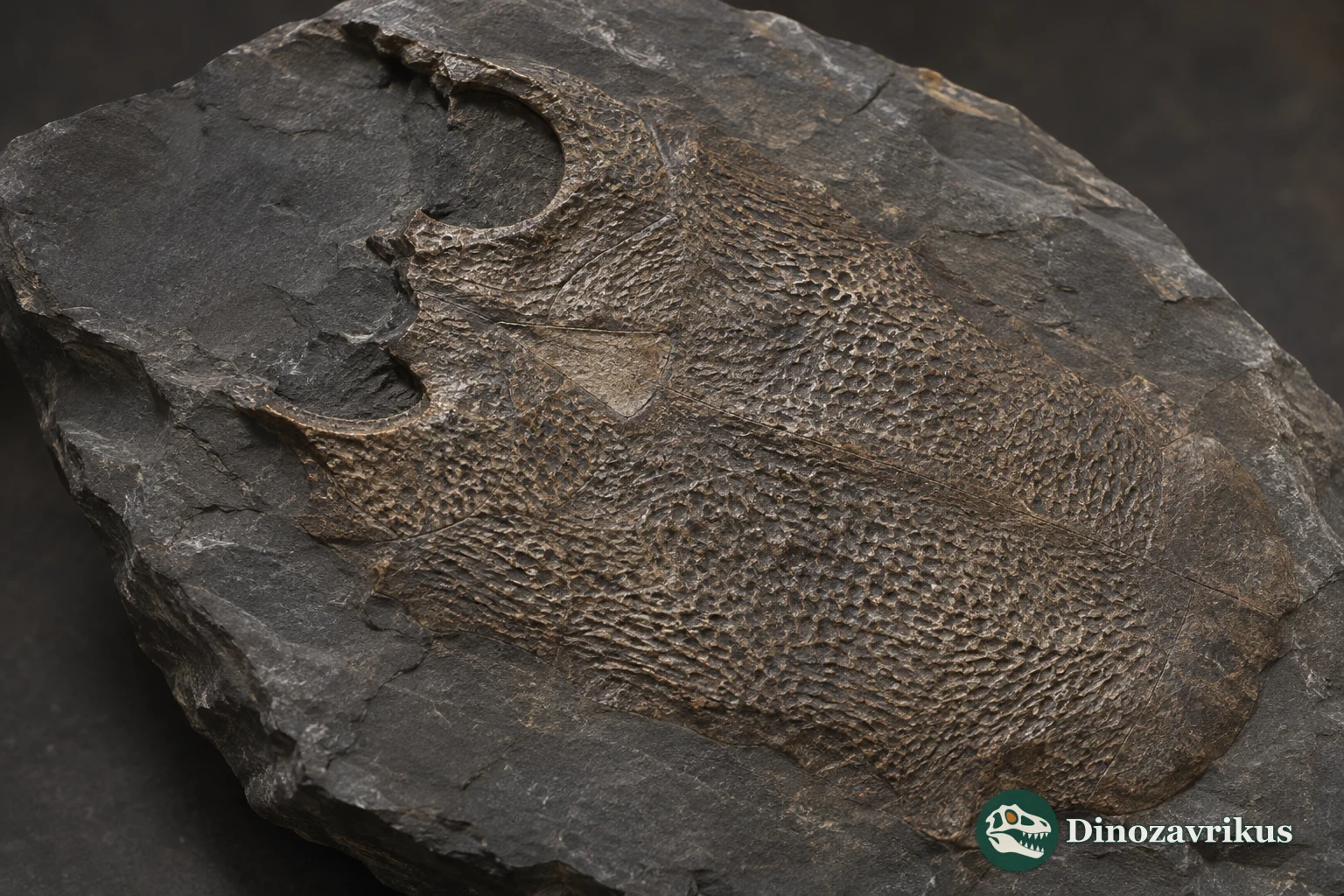
A roof of shallow convex plates
The edges of the skull bones follow winding grooves. At the centre of the roof, a round pineal opening lies in a transverse triangular depression without the surrounding pitted ornament. Wiman drew a broad, triangular outline using the preserved sides. The proportions of the front of the snout were necessarily reconstructed because that region is missing.
The fish-bearing beds
Fishes were the most abundant fossils in Wiman’s collection from the beds. The Early Triassic sequence also produced other temnospondyls, including Lyrocephaliscus. The sediment provides evidence for the burial environment. No described skeleton of Peltostega preserves the limbs or tail for comparison.
Frequently asked questions
How old is Peltostega?
The type comes from Olenekian deposits of the Early Triassic.
What inspired the genus name?
The slightly convex bones of the skull roof reminded Wiman of shields.
Is the front of the skull preserved?
The holotype is broken near the eye sockets. Wiman inferred the outline of the missing front portion from the preserved margins.
What did Peltostega eat?
No direct prey remains are known. Fish found in the same beds document the fauna at the burial site.