

Pepesuchus deiseae was a Late Cretaceous crocodyliform from Brazil. The two specimens used to describe it preserve different parts of its jaws particularly well. Thin sections from a third individual later provided a record of how its bones grew.
Quick facts
| Species | Pepesuchus deiseae |
|---|---|
| Age of type material | Campanian to Maastrichtian |
| Locality | Tartaruguito, São Paulo state, Brazil |
| Holotype | MN 7005-V, skull and partial skeleton |
| Paratype | MCT 1788-R, skull and mandible |
What can the fossils tell us?
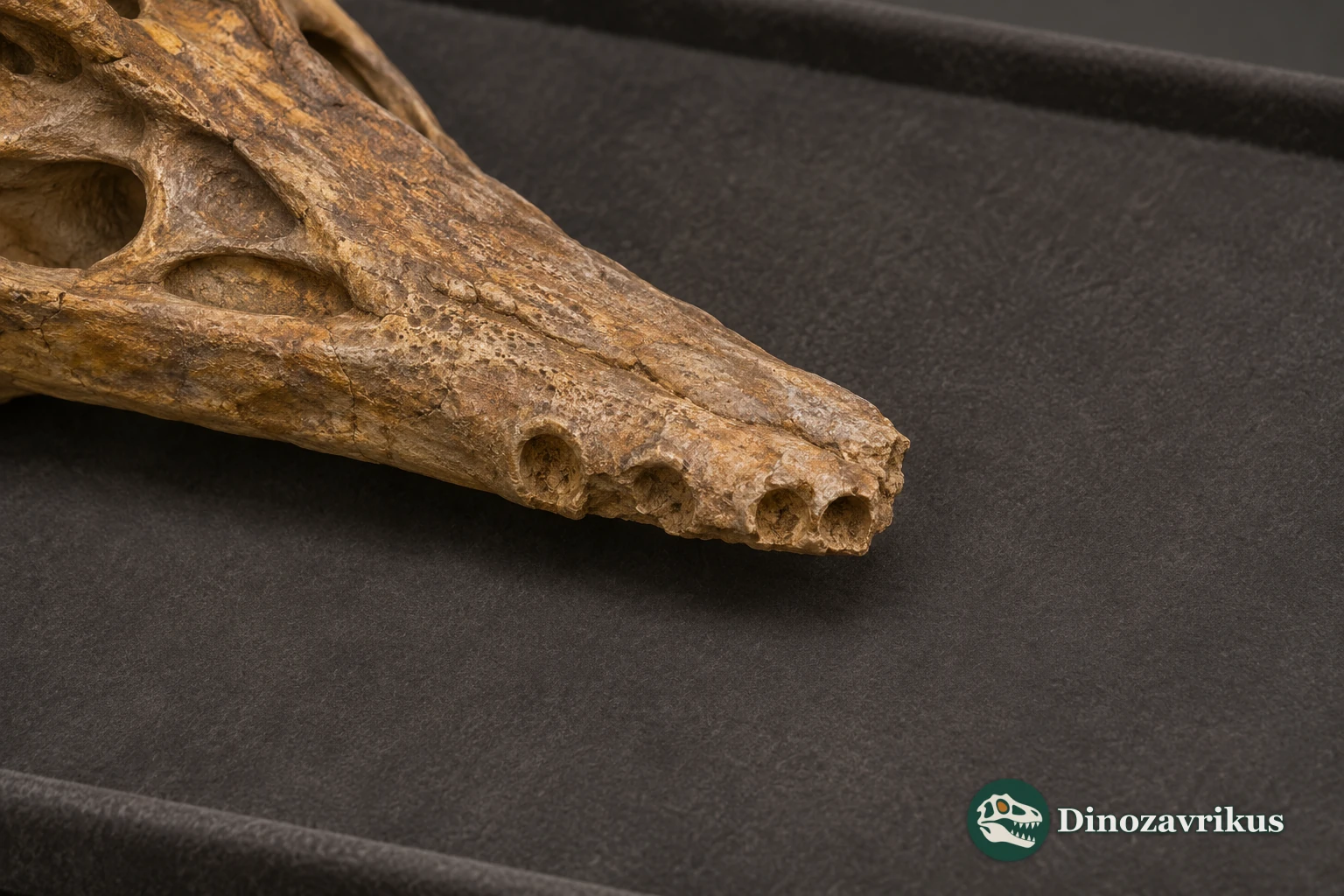
Each premaxilla held five tooth positions. The first two sockets were crowded together and almost shared a rim.
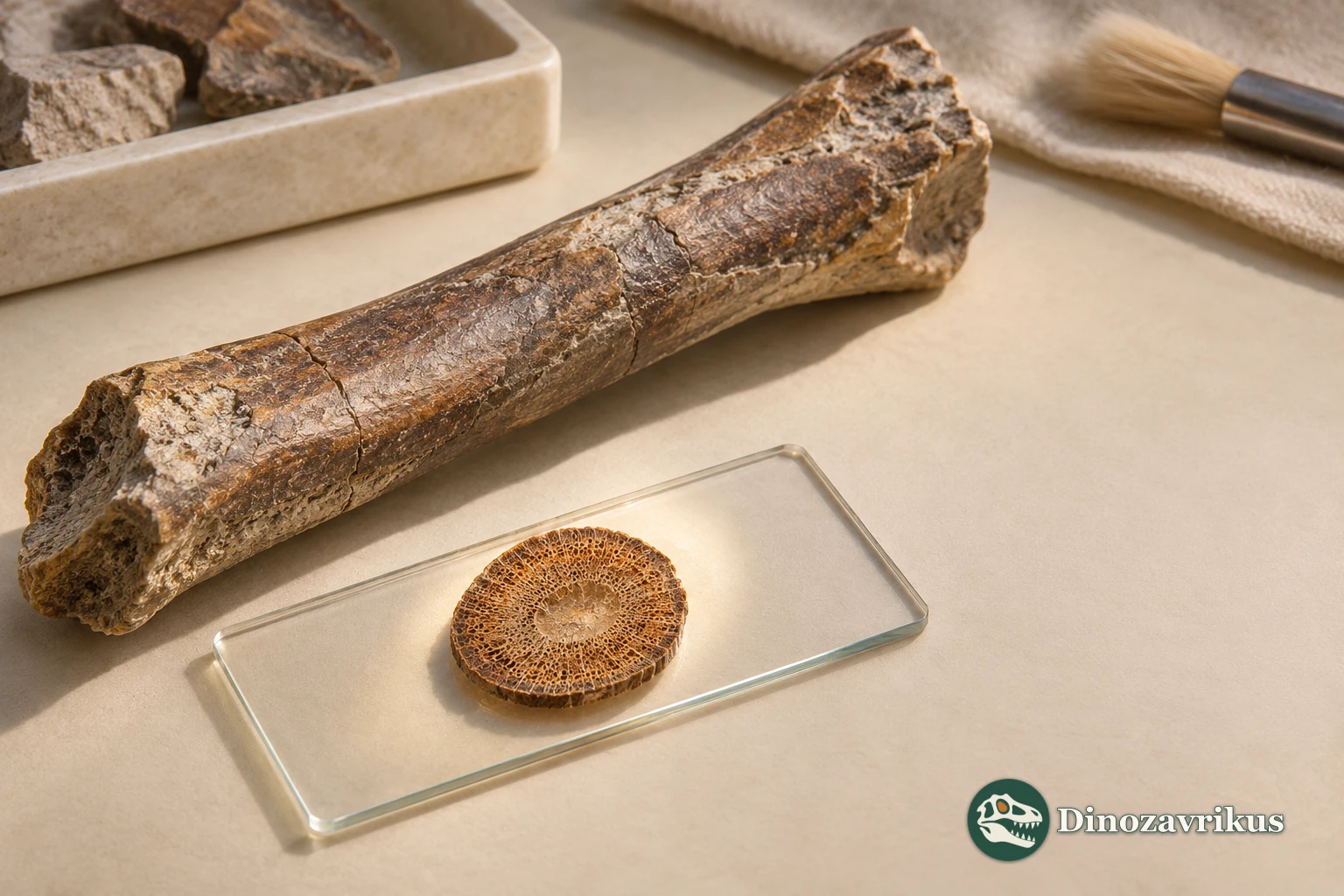
Thin sections of the tibia of MN 7466-V show closely spaced growth marks near the surface. The researchers interpreted the individual as mature.
The type material comes from the Presidente Prudente Formation. Similar fossils from the Araçatuba Formation have been assigned to the genus, with their species identity unresolved.
Two skulls from São Paulo state
Diogenes Campos and colleagues named the species in 2011. The holotype, MN 7005-V, came from Tartaruguito along the old railway between Pirapozinho and Presidente Prudente. In addition to its skull and lower jaw, the fossil preserves vertebrae from the sacrum and tail, limb elements and bony plates from the skin.
The tip of the snout is damaged in the holotype. The paratype, MCT 1788-R, provides more information about the front of the snout and lower jaw. The describers considered it likely to come from the same locality. The genus honours José Martin Suárez, known as Pepe, and the species honours palaeontologist Deise Dias Rêgo Henriques.
Tooth sockets and relationships
The front teeth were slender and elongated, with no reported serrations. In the joined front of the lower jaw, the sixth and seventh sockets form a pair, as do the eighth and ninth. Itasuchus shows a similar arrangement at different positions along the jaw.
The original description placed the species in Peirosauridae. Later work included Pepesuchus in Itasuchidae and attributed similar fossils from the Araçatuba Formation to the same genus. That material leaves the full geographic and stratigraphic range of P. deiseae open.
What thin sections reveal about growth
Mariana Sena and colleagues studied bone samples from MN 7466-V in 2018. The outer tissue of the right tibia contains several closely spaced lines of arrested growth. The pattern is consistent with a mature individual whose growth had slowed. The sections did not provide an exact age in years.
The researchers also suggested a partly aquatic lifestyle based on differences in bone density in the hand and wrist. That proposal rests on a comparison of bone microstructure. The animal’s usual prey and time spent under water remain unknown.
Frequently asked questions
Where was the holotype found?
At Tartaruguito in south-eastern Brazil, in deposits of the Presidente Prudente Formation.
What was unusual about the front teeth?
The first two sockets on each premaxilla nearly merged. The crowns show no reported serrations.
How did researchers recognise a mature individual?
Growth marks are closely spaced in the outer bone of its tibia, indicating that growth had slowed markedly.
Was Pepesuchus aquatic?
A study of hand and wrist bones proposed a semiaquatic habit. How much time the animal spent in water remains unresolved.