

Perplexicervix was an Eocene bird with conspicuous bony tubercles on its neck vertebrae. The feature was first documented in fossils from Messel in Germany and later helped identify a second species in the London Clay. The skeleton supplies clues to the shape of the bird, but its relationship to living orders remains unsettled.
Quick facts
| Type species | Perplexicervix microcephalon |
|---|---|
| Second species | Perplexicervix paucituberculata |
| Family | Perplexicervicidae |
| Age | Early and middle Eocene |
| Type locality | Messel, Germany |
| Type specimen | SMF-ME 11211a+b |
| Type skull length | 56.6 mm |
What can the fossils tell us?
Five of the six specimens discussed in 2010 showed tubercles. They are on the vertebrae beneath any skin and feathers.
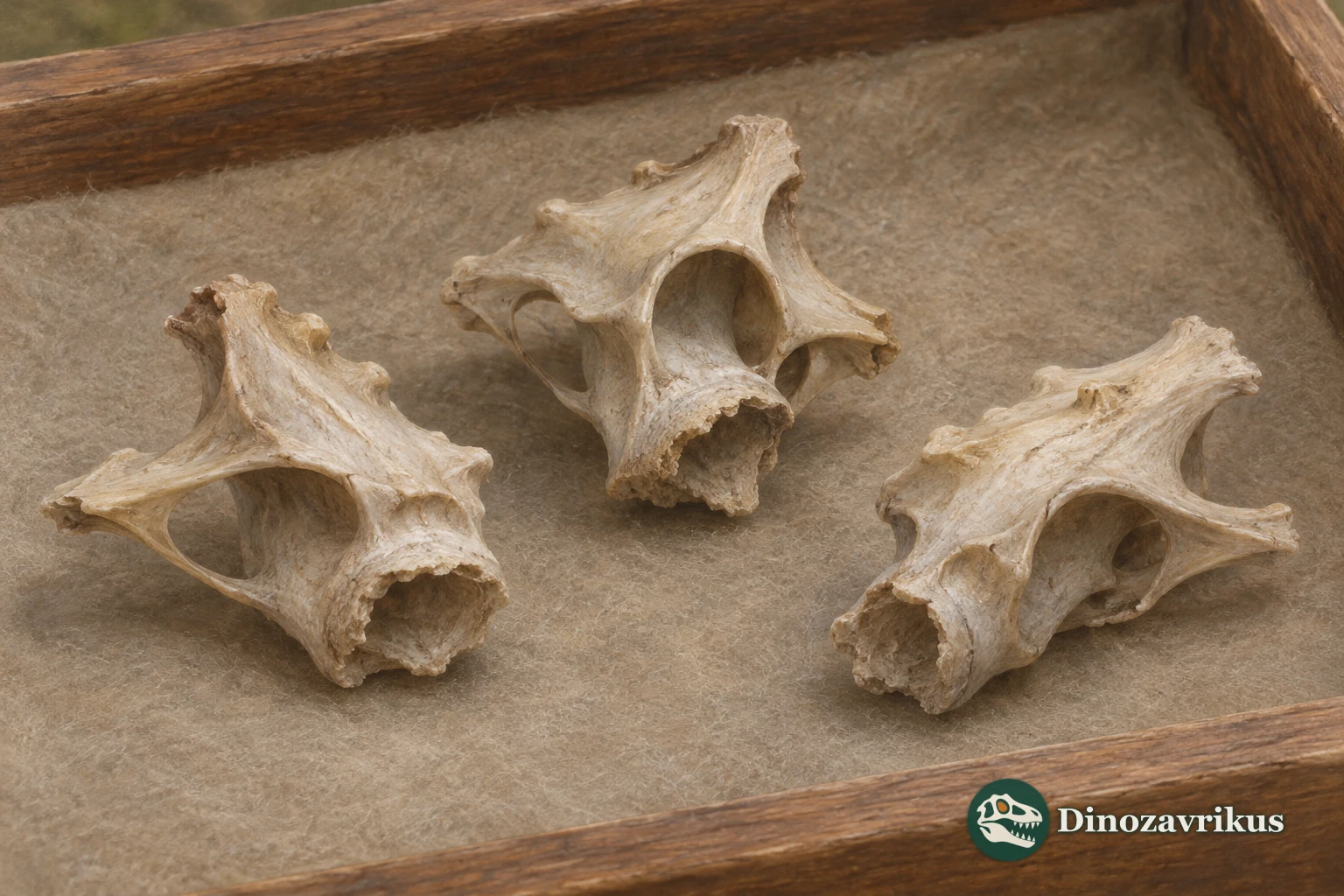
A series of vertebrae documents the English species. Some isolated limb and shoulder bones from the site were referred provisionally.
Micro-CT allowed researchers to study similarly ornamented bones from Quercy. Reinforcement of the neck is a proposed function, and the French vertebrae remain unidentified to species.
A small skull and an elongated foot bone
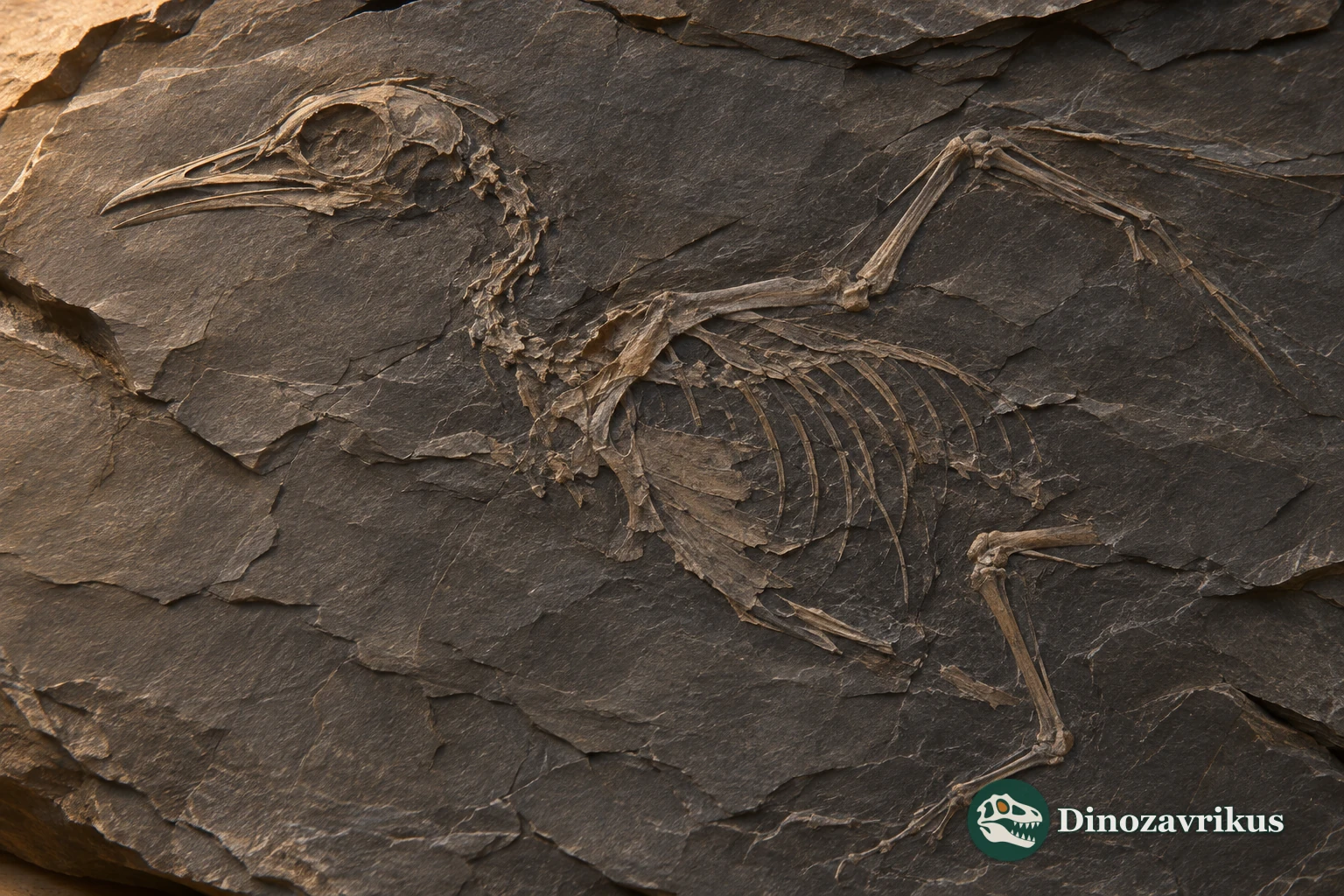
Gerald Mayr described Perplexicervix microcephalon in 2010 from the roughly 47-million-year-old deposits of Messel. The holotype, SMF-ME 11211a+b, is a partly disarticulated skeleton lacking the left leg. Its skull measures 56.6 mm. The bill is short, triangular in plan view and slightly hooked. The tarsometatarsus is elongated and the hind toe long.
The original description recorded neck tubercles in five of six individuals. The genus name refers to its puzzling neck. Those projections survive on the bone, so they tell us little about the outward appearance of the feathered neck. Another bird from the same lake beds, Paraprefica, could be placed in the bird family tree using features of better-preserved skulls.
Another species in the London Clay
Gerald Mayr, Vicen Carrió and Andrew Kitchener named Perplexicervix paucituberculata in 2023, from the early Eocene London Clay at Walton-on-the-Naze. The type, NMS.Z.2021.40.7, includes skull fragments and a series of vertebrae. Its cervical tubercles are smaller and cover less of the bone than in the Messel species. The authors established the family Perplexicervicidae.
Some shoulder and wing bones from the site resemble those of bustards. Their referral to the English species is tentative because they preserve different parts of the skeleton from the type. A bustard relationship remains a hypothesis.
Why the neck might have been reinforced
A 2024 study used micro-CT to examine three-dimensionally preserved, similarly ornamented vertebrae from Quercy in France. The authors suggested that the unusual structure strengthened the cervical spine and could have offered protection from a predator biting the neck. The French fossils were not assigned to a species, and the protective role is an inference from bone structure.
Frequently asked questions
How many species are named?
Two. The type species comes from Messel and the other from the early Eocene London Clay.
Did the bumps stick out of the skin?
The bumps are preserved on the neck vertebrae. The fossils do not establish the appearance of the overlying skin and feathers.
How does the English species differ?
Its tubercles are smaller and cover less of the surface of its neck vertebrae.
Was Perplexicervix a bustard?
Some provisionally referred bones resemble those of bustards. The relationship has not been established.