

Petradyptes stonehousei was a large penguin that lived off what is now the South Island of New Zealand in the late Paleocene. Its unusually broad and flattened humerus records the proportions of an early flipper. The same bone produced a preferred body mass estimate of about 50 kg.
Quick facts
| Species | Petradyptes stonehousei |
|---|---|
| Group | Stem penguin |
| Age | Late Paleocene |
| Formation | Moeraki Formation, New Zealand |
| Holotype | NMNZ S.047114 |
| Humerus length | 139 mm preserved, about 152 mm reconstructed |
| Body mass estimate | 50.3 kg from humerus proximal width |
What can the fossils tell us?
The humerus of the type is nearly complete. Its midshaft is 30.4 mm wide and roughly 12 mm thick.
The team linked specimens through similarities in the humerus, tibiotarsus, femur and carpometacarpus. Four referrals remain provisional.
Proximal humeral width yielded 50.3 kg and midshaft width gave 31.2 kg. The authors considered the midshaft model unreliable for Paleocene stem penguins.
Fossils inside concretions
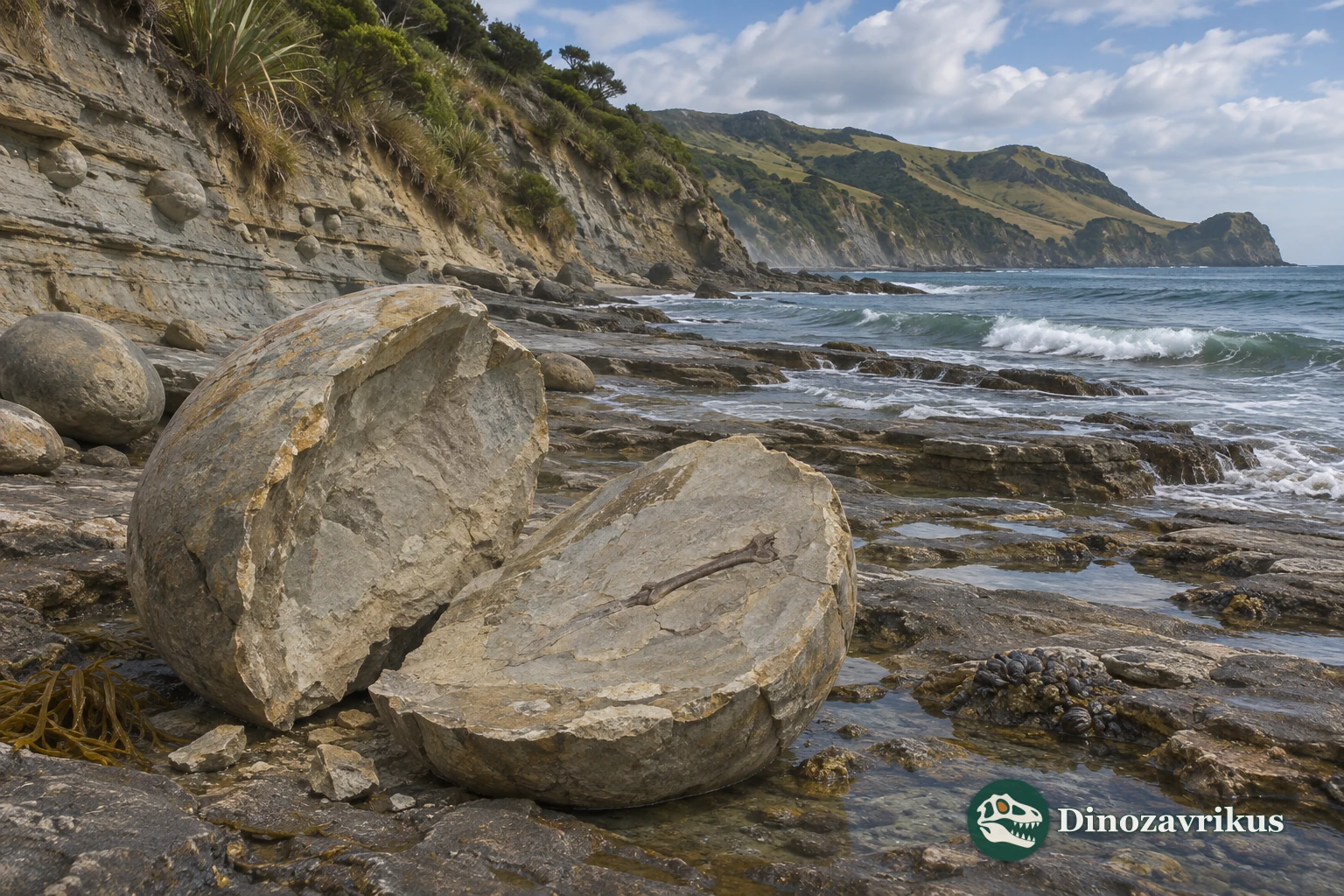
Daniel Ksepka and colleagues named the species in 2023 from the Moeraki Formation at Hampden Beach, North Otago. The fossil-bearing deposits are late Paleocene, about 59.5–55.5 million years old. Al Mannering prepared bones from the hard concretions. The genus name combines Greek words for rock and diver, and the species honours penguin researcher Bernard Stonehouse.
The Te Papa holotype is listed in the description as NMNZ S.47114 and comprises a nearly complete right humerus and the lower end of the left femur. Four other specimens were provisionally referred. The assignment depends on a chain of overlapping bones. S.47933 has a humerus comparable to the type and a tibiotarsus comparable to S.46081, which also preserves parts of the hindlimb and wing.
An early flipper with a flattened shaft
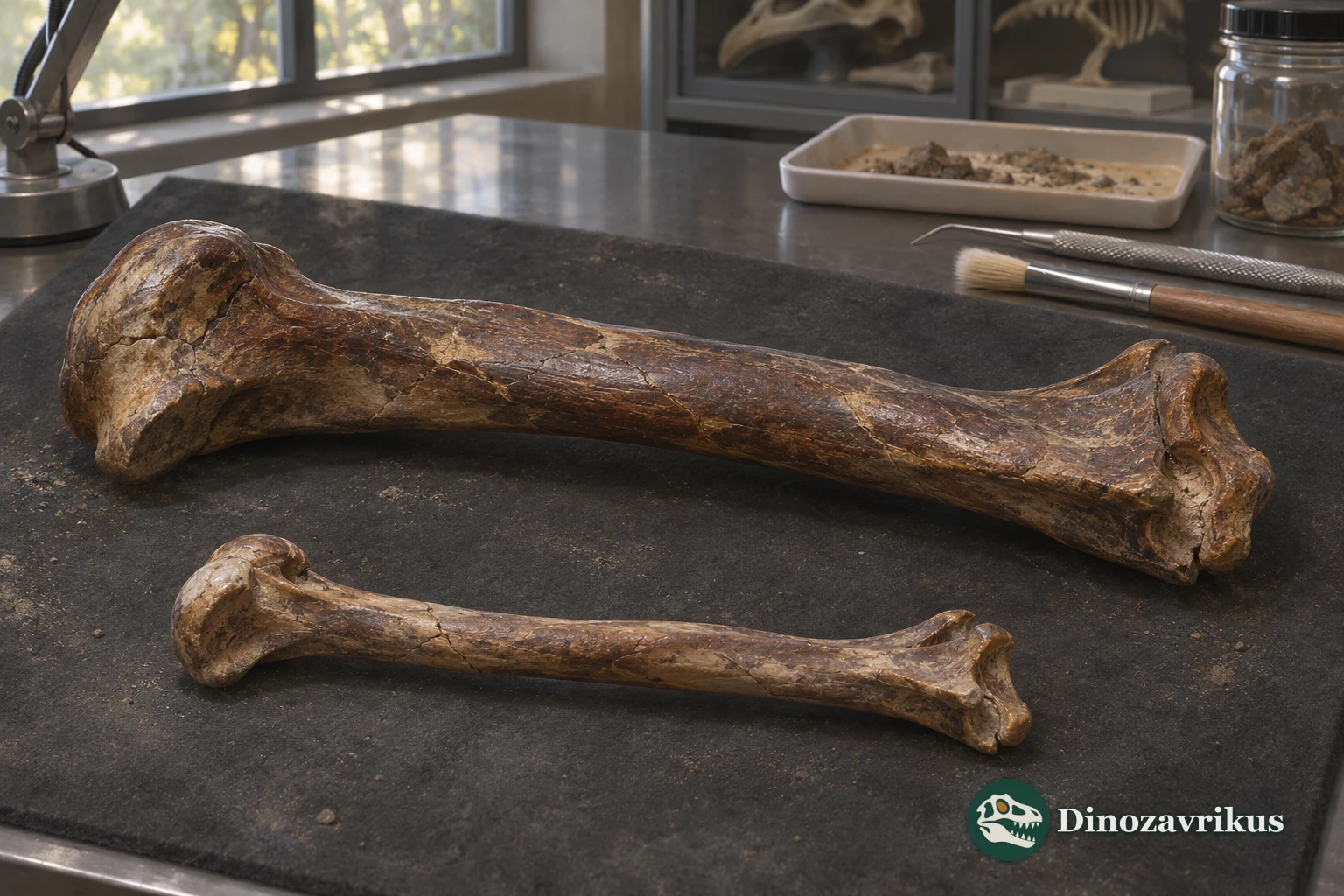
The type humerus measures 139 mm as preserved. Its estimated complete length is about 152 mm. At midshaft it is more than twice as wide as it is deep. The form and muscle attachment scars retain some early penguin features even in this distinctly flattened bone. The skeletal evidence supports wing-propelled diving without specifying how fast or deep the bird swam.
The much larger Kumimanu also occurs in the Moeraki Formation. The difference in humerus size shows how widely penguins in the region already varied in body size. Neither the skull nor the foot is known for Petradyptes. The illustration’s head and plumage are conjectural.
What 50 kilograms means
The upper end of the type humerus measures 53.4 mm across. A regression relating that width to body mass in living penguins produces an estimate of 50.3 kg. A separate midshaft model gives 31.2 kg, but the authors advise against relying on it for Paleocene penguins. Shaft proportions varied as flippers evolved, so a model based on living birds can underestimate the mass of these earlier forms.
Frequently asked questions
Where was the penguin found?
Near Hampden Beach in North Otago, in marine rocks of the Moeraki Formation.
How many specimens are known?
The description presents one type and four provisional referrals.
How was the approximate mass obtained?
The preferred figure of 50.3 kg comes from the width of the upper humerus and a comparison with living penguins.
What does the name Petradyptes mean?
It combines Greek words for rock and diver, a reference to both the coast and the bird’s way of moving.