

Petropluvialis simplex is a late Eocene bird known from isolated shoulder bones in southern England. Its description placed it among thick-knees. A later comparison of the joint surfaces instead suggested an early relative of waterfowl.
Quick facts
| Species | Petropluvialis simplex |
|---|---|
| Age | Late Eocene |
| Locality | Hordle, Hampshire, England |
| Holotype | BMNH 30327 |
| Type material | Shoulder end of right coracoid |
| Proposed affinity | Early anseriform |
What can the fossils tell us?
BMNH 30327 preserves the upper end of a right coracoid. It records part of the shoulder girdle and leaves the bill, feet and body size uncertain.
The facet for the wishbone projects down less strongly than it does in shorebirds. Transverse markings at the breastbone end also resemble those on waterfowl coracoids.
The same deposits produced a sternum assigned to Palaeopapia. A skeleton preserving both bones would allow that comparison to be tested.
Two isolated shoulder bones
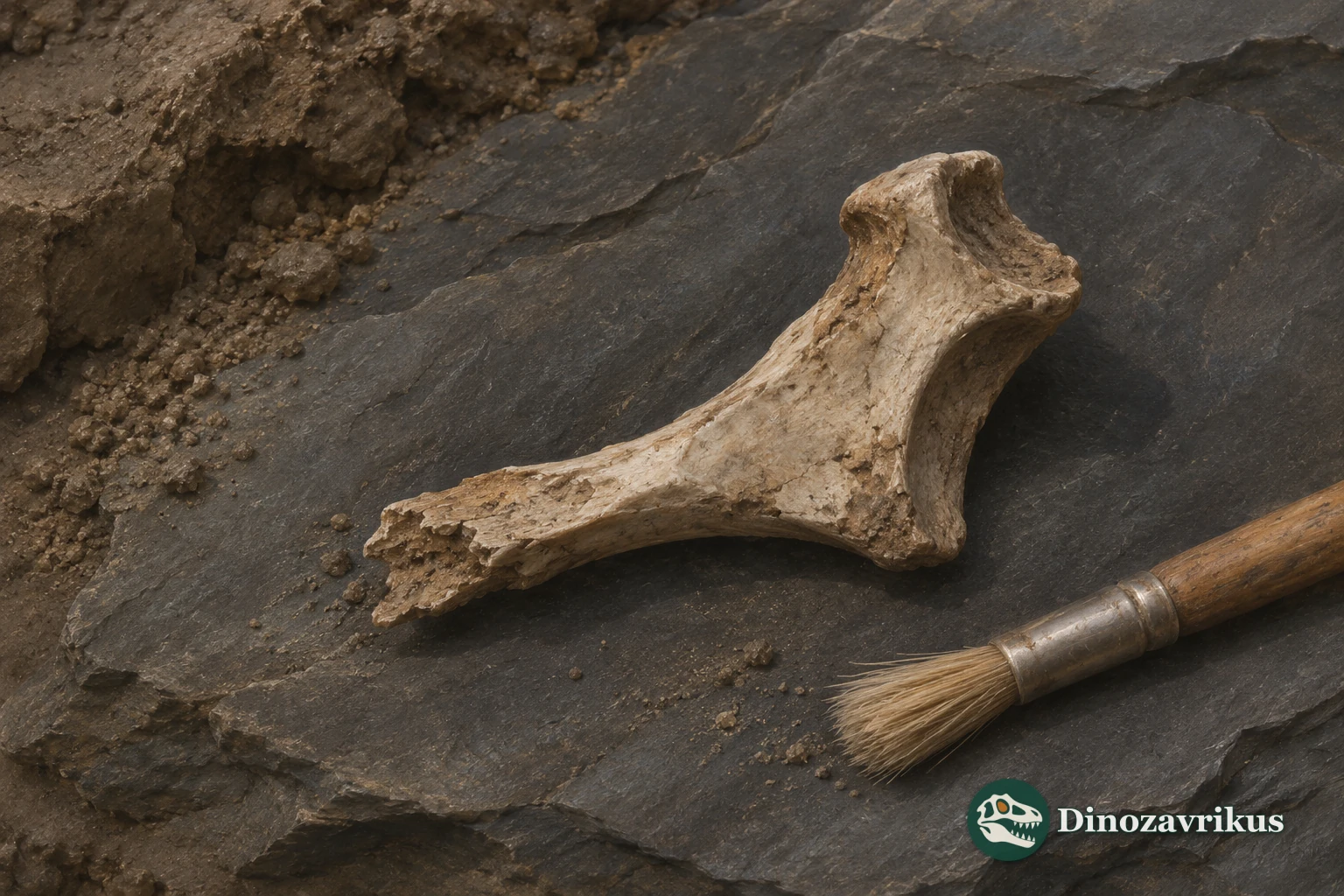
Colin Harrison and Cyril Walker named the bird in 1976 from finds at Hordle in Hampshire. The type, BMNH 30327, is held in London’s Natural History Museum. It is the shoulder end of a right coracoid, the bone that braced the shoulder against the sternum. These remains give no reliable measure of its total size or direct evidence of its diet.
From thick-knees to early waterfowl
In 2001 Gerald Mayr and Richard Smith noted that the surface for the wishbone projects less strongly downwards than it does in shorebirds. They also drew attention to transverse muscle markings at the sternal end of the coracoid and a small nerve opening. The English material was compared with a coracoid from Boutersem in Belgium that had provisionally been referred to Paracygnopterus. The Belgian specimen was later left without a genus.
Mayr and Smith raised the possibility that Petropluvialis and Palaeopapia eous could represent the same species. The latter name is based on a partial sternum from the same deposits. Different bones underpin these names, so the proposed synonymy remains open. A 2002 catalogue left the placement of Petropluvialis unsettled.
Frequently asked questions
What is a coracoid?
It is a stout bone linking the shoulder to the breastbone. The type of Petropluvialis preserves its shoulder end.
Was it a thick-knee?
That was the original identification. Later work found features closer to the coracoids of early waterfowl.
Where was it discovered?
The bones came from late Eocene deposits at Hordle in southern England.
Is Palaeopapia another name for it?
That remains a possibility. The proposed synonym is based on a different part of the shoulder girdle.