

Phantomosaurus neubigi is a Middle Triassic ichthyosaur from Bavaria, Germany, known from one incomplete skeleton. Its best-studied remains are parts of the rear skull and braincase, whose bone contacts include an unusual combination of features. They help researchers compare ichthyosaurs, but the fragmentary specimen cannot reveal the animal’s full anatomy or way of life.
Quick facts
| Type species | Phantomosaurus neubigi (Sander, 1997) |
|---|---|
| Age | Late Anisian, Illyrian interval of the Middle Triassic |
| Locality | Karlstadt am Main, Bavaria, Germany |
| Holotype | SNSB-BSPG 1992 I 39, the only known partial skeleton |
| Best-studied region | Rear skull and braincase |
| Unknowns | Reliable total length, diet and behaviour are not established |
Evidence guide
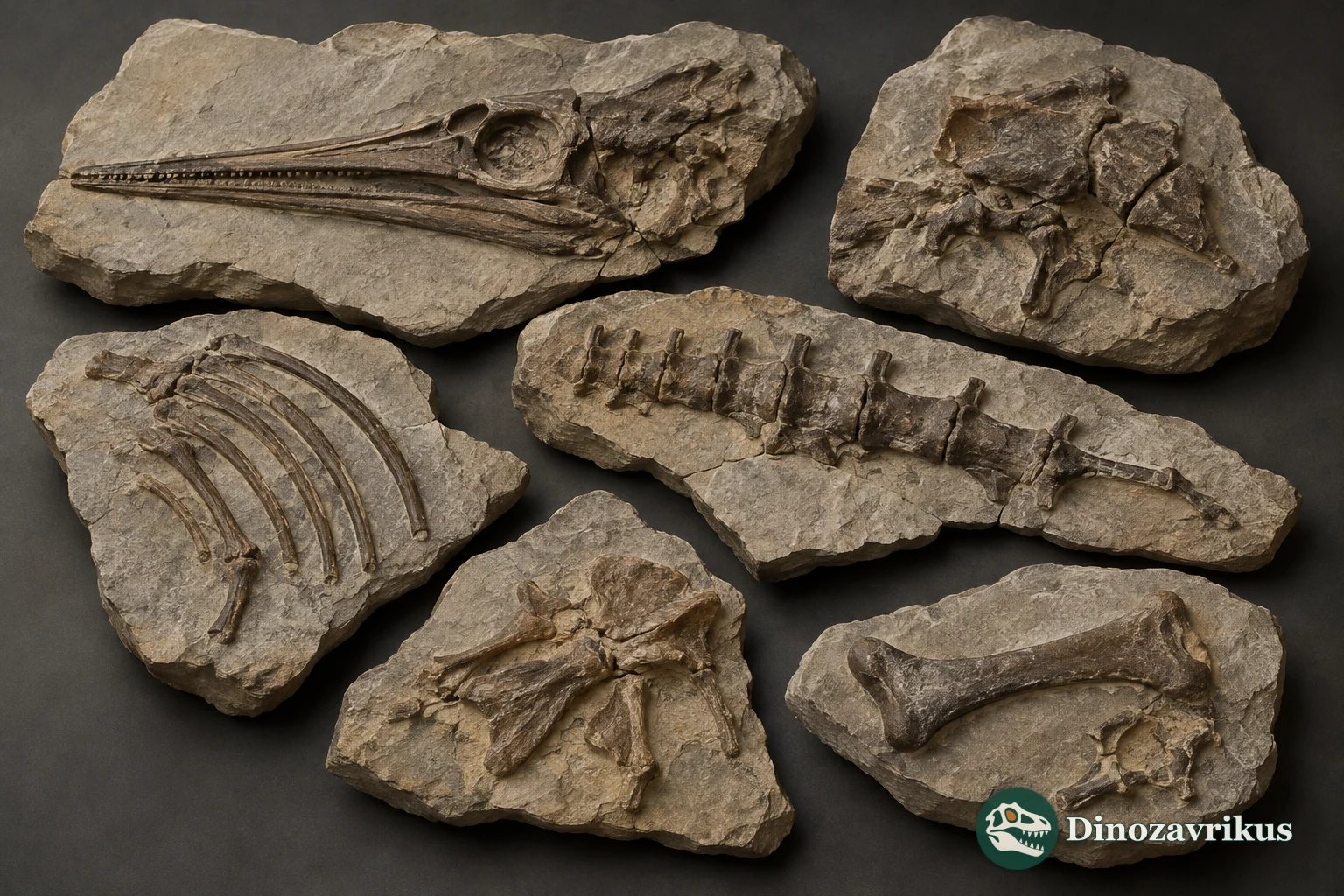
SNSB-BSPG 1992 I 39 preserves parts of the skull, vertebral sections, ribs, pelvis and hindlimb. The bones are incomplete and disarticulated; no complete skeleton is known.
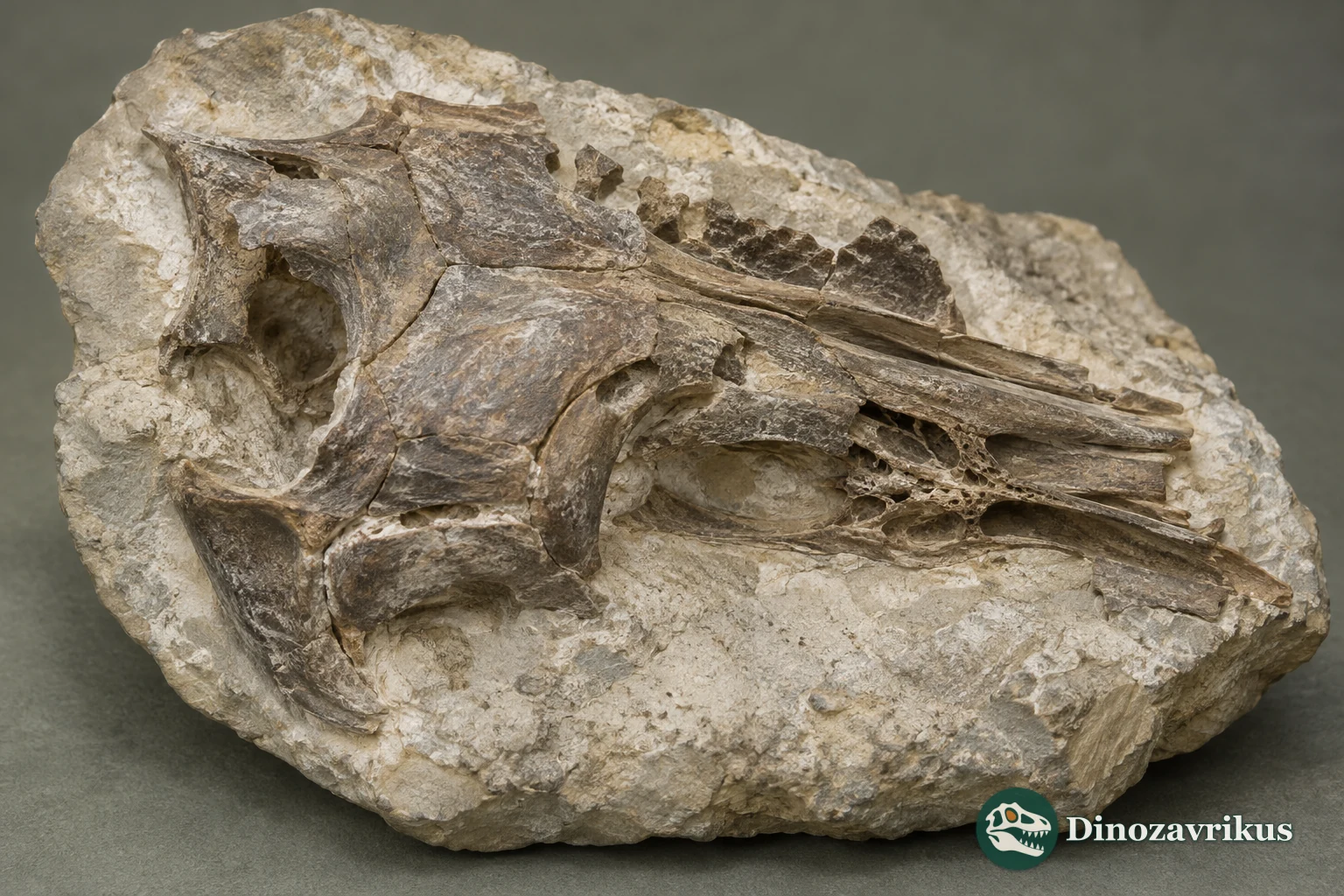
The redescription noted fused exoccipital and opisthotic bones, an enclosed metotic foramen and rudimentary postparietals. These observations describe the preserved skull, not a direct ancestor relationship.
The locality is assigned to the lower Upper Muschelkalk and pulcher/robustus zones. Correlation with Tethyan stages has uncertainty, so the age should not be narrowed beyond the published regional resolution.
Sander described the species in Shastasaurus in 1997; Maisch and Matzke established Phantomosaurus in 2000. Later syntheses retain the genus, while its precise relationships remain poorly resolved.
One partial skeleton from Bavaria
The sole known specimen, SNSB-BSPG 1992 I 39, comes from Karlstadt am Main in Franconia, Bavaria. It was discovered during railway construction and is preserved as incomplete, disarticulated remains on several slabs. The material includes skull and braincase parts, two sections of vertebral column, ribs, and elements of the pelvis and hindlimb.
The name honours Bernd Neubig, the discoverer. The specific epithet has appeared with variant spellings in secondary sources; the currently used combination is Phantomosaurus neubigi. The limited specimen record means that missing regions cannot be reconstructed as if they had been found with the holotype.
Upper Muschelkalk and Middle Triassic age
The locality is assigned to the lower part of the Upper Muschelkalk and the pulcher/robustus zones. In regional terms, the fossil is late Anisian, within the Illyrian interval of the Middle Triassic. Correlations between regional German units and Tethyan stage schemes are not exact, so a narrow calendar age would overstate the evidence.
The Upper Muschelkalk records marine environments in the Central European Basin. This geological context describes where the bones were buried; it does not by itself identify the animal’s preferred habitat or hunting behaviour.
A braincase studied in detail
A later redescription focused on the rear of the skull and posterior palate. Reported features include fusion between the exoccipital and opisthotic, a metotic foramen enclosed by those bones, rudimentary postparietals, and a concave occipital condyle. These are anatomical observations from the type and only known specimen.
Some of these features were unusual among ichthyosaurs known at the time. Their evolutionary meaning must be assessed alongside the rest of the skeleton and comparisons with other taxa. A braincase alone does not establish a direct link to a particular later group.
From Shastasaurus to Phantomosaurus
Peter Sander named the fossil Shastasaurus neubigi in 1997. Michael Maisch and Andreas Matzke transferred it to the new, single-species genus Phantomosaurus in 2000. Later reviews continue to recognise that genus, including the 2025 synopsis of Triassic reptiles from Germany.
Its placement among ichthyosaurs remains poorly resolved. Some phylogenetic analyses omitted the taxon because too few characters could be scored from its incomplete remains. Keeping the genus in a catalogue does not mean every proposed relationship is settled. The evidence can be compared with better-documented animals such as Cymbospondylus and other ichthyosaurs, including Malawania, without treating any of them as a proven ancestor.
Size, diet and reconstruction limits
The partial skeleton does not provide a reliable total body length. No stomach contents or direct traces of prey are known, and the available material does not establish reproductive biology or swimming style. General information about other ichthyosaurs cannot be assigned automatically to Phantomosaurus.
The cover artwork shows a plausible generalized ichthyosaur body plan, not a complete reconstruction based on the holotype. The supplementary braincase image is also an illustration rather than a scientific cast or specimen photograph.
Frequently asked questions
Where was Phantomosaurus found?
Its only known specimen came from Karlstadt am Main in Bavaria, Germany, and was discovered during railway construction.
Why was it first called Shastasaurus?
Sander described it as Shastasaurus neubigi in 1997. Maisch and Matzke established the separate genus Phantomosaurus in 2000.
What is unusual about its braincase?
The redescription reported fused occipital bones, an enclosed metotic foramen and rudimentary postparietals, among other features.
Are its size and diet known?
No reliable full body length or direct evidence of its prey is known from the single incomplete skeleton.