

Phenacodaptes was a small North American mammal of the late Paleocene. The most informative remains are jaws and teeth. They permit detailed comparisons of chewing surfaces, while coat colour, exact mass and routine movement remain unknown. No complete skeleton of the type species establishes those features.
The genus belongs in the ancient mammal catalogue. Its dental features invite comparison with the later Apheliscus. Bisonalveus is another small Paleocene mammal described primarily from a jaw, but sharing a preservation problem does not make the genera close relatives.
Quick facts
| Scientific name | Phenacodaptes sabulosus Jepsen, 1930 |
|---|---|
| Holotype | YPM-PU 13302, right dentary with P1–M3 |
| Type locality | Princeton Quarry, Bighorn Basin, Wyoming |
| Age | Late Paleocene, late Tiffanian |
| Group | Apheliscinae; wider affinities debated |
| Material | Jaws and isolated upper and lower teeth |
| Whole-body anatomy | Not documented by a complete skeleton |
What can the fossils tell us?
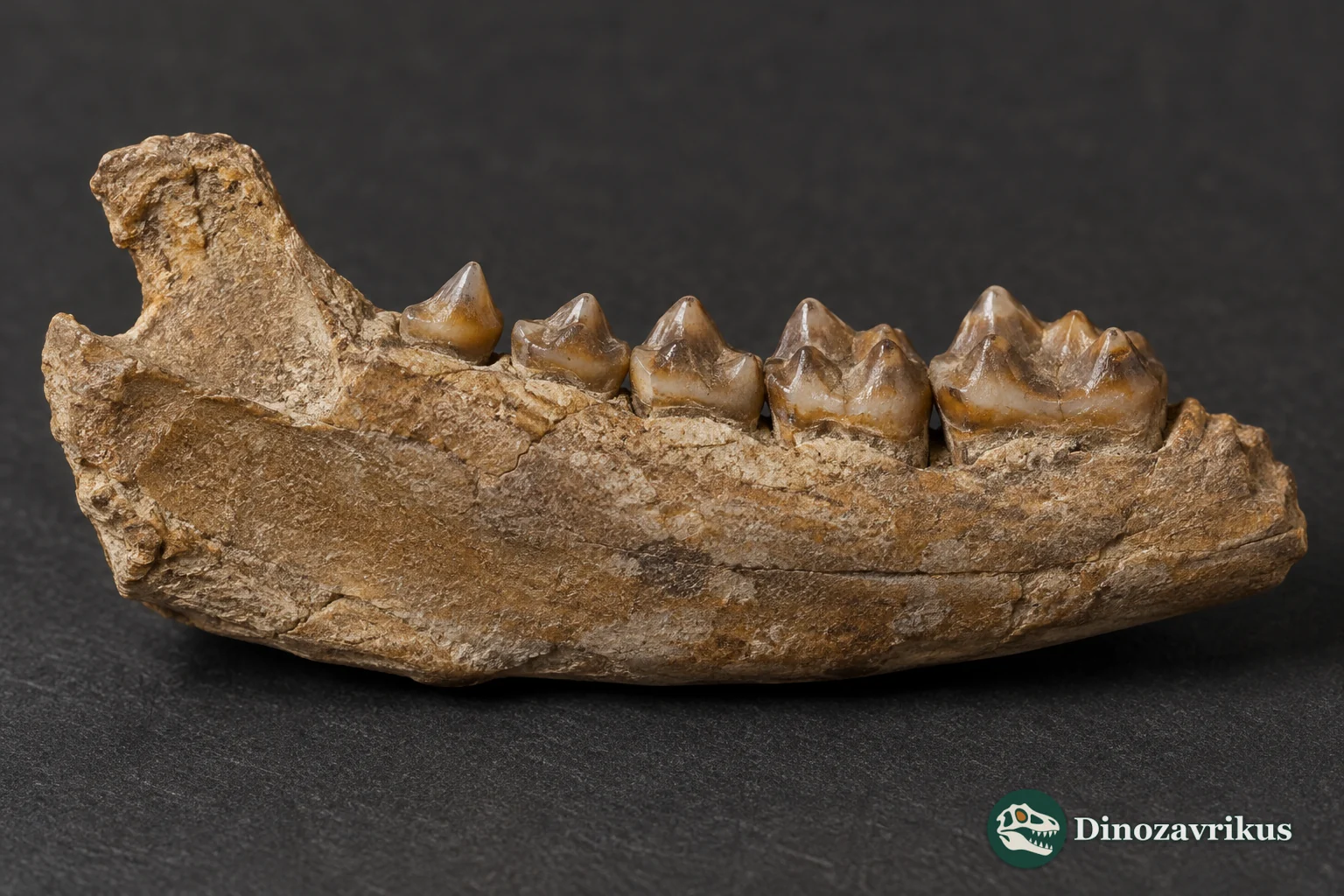
YPM-PU 13302 is a right lower jaw with teeth from the first premolar to the third molar. It establishes tooth positions and crown form, but not the size of the trunk or the length of the tail.
An enlarged fourth premolar and a combination of molar cusps connect Phenacodaptes with Apheliscus. Some later material is intermediate, so a single tooth character cannot settle every identification.
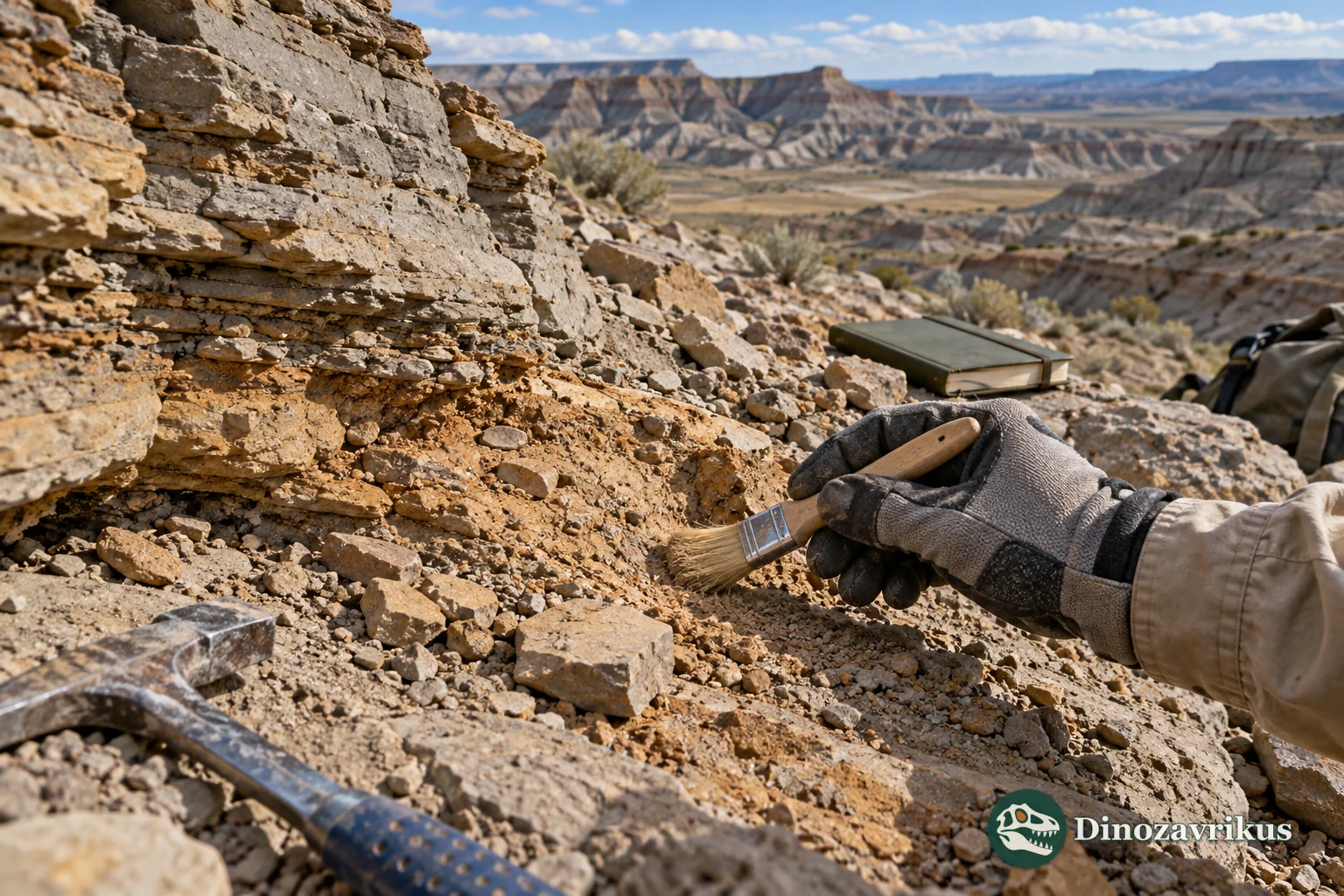
Princeton Quarry and related Bighorn Basin sites lie in late Tiffanian mammal zones. This is a stratigraphic correlation, not a direct numerical date measured on an individual jaw.
A jaw from Princeton Quarry
Glenn Jepsen named Phenacodaptes sabulosus in 1930 from material recovered at Princeton Quarry in the northern Bighorn Basin of Wyoming. The holotype YPM-PU 13302 is a right dentary carrying the first through fourth premolars and three molars. Its value is the preserved sequence: an isolated tooth may be difficult to place in the row or compare with its neighbours.
Later studies described additional jaws and teeth from Princeton and nearby Schaff Quarry. Some Schaff teeth average smaller, and their referral to the same species has been provisional. Size alone cannot show whether the difference reflects individual variation, locality or taxonomy. A recent systematic study retains that uncertainty rather than creating a species from a measurement alone.
Premolars, molars and changing relationships
The fourth premolars of Phenacodaptes and Apheliscus are enlarged. Their main cusp positions, cutting surfaces and associated molar traits provide a useful combination for comparison. A 2005 character analysis supported an apheliscine group containing these genera. Similarity at one cusp does not demonstrate that one genus was the direct ancestor of the other.
Charles Gazin's 1959 comparison instead discussed possible pantolestid insectivore affinities. Later researchers favoured apheliscine relationships and tested wider links among early placental mammals. Some late Tiffanian and early Clarkforkian specimens blur the dental boundary with Apheliscus. These are competing interpretations of preserved teeth, not changes to the fossils themselves.
Dental shape can suggest how food was processed, but no stomach contents or identifiable prey survive with the holotype. The historical term ‘insectivore’ describes a taxonomic and dietary interpretation, not a directly observed meal.
Bighorn Basin time and an uncertain body
Princeton Quarry is in the late Tiffanian North American land-mammal interval, within the late Paleocene. Researchers correlate local strata using fossils such as Probathyopsis and Plesiadapis simonsi. Those biozones place assemblages in sequence, but do not supply a day or exact year for YPM-PU 13302. Qualified Phenacodaptes-like teeth have also been reported beyond the type locality, without establishing a continuous occupied range.
The cover depicts a generalized small furred mammal near a floodplain. Fur, ears, tail and gait are artistic choices: the known jaw does not preserve them. A numerical body-mass estimate would require a stated comparative model and independently tested reference animals. The jaws and geological context are stronger evidence than a detailed silhouette.
Frequently asked questions
What is the Phenacodaptes sabulosus holotype?
YPM-PU 13302, a right lower jaw with the tooth row from P1 to M3, from Princeton Quarry in Wyoming.
Is its whole body known?
No complete skeleton of the type species is documented in the cited descriptions. Body shape and soft tissues remain reconstructions.
Why is Phenacodaptes compared with Apheliscus?
Both have a distinctive combination of enlarged fourth premolars and molar characters, although some later specimens complicate the boundary.
Do we know precisely what it ate?
No. Tooth form supports feeding hypotheses, but the known jaw does not preserve a specific meal or plant or prey remains.