

Piksi barbarulna is based on three incomplete bones of a right forelimb from Late Cretaceous Montana. The specimen was first named as a bird and later reassigned to pterosaurs. Researchers continue to dispute that identification. Artwork showing a whole winged animal therefore presents one hypothesis, not the fossil's established appearance.
Quick facts
| Named species | Piksi barbarulna, Varricchio, 2002 |
|---|---|
| Holotype | MOR 1113, parts of the right humerus, ulna and radius |
| Locality | Bob's Vacation Site, Glacier County, Montana |
| Rock unit and age | Two Medicine Formation, Campanian, Late Cretaceous |
| Original identification | Bird of uncertain relationships, 2002 |
| Later interpretation | Pterosaur proposed in 2012; assignment disputed |
| Wingspan and diet | Not securely known |
What can the fossils tell us?
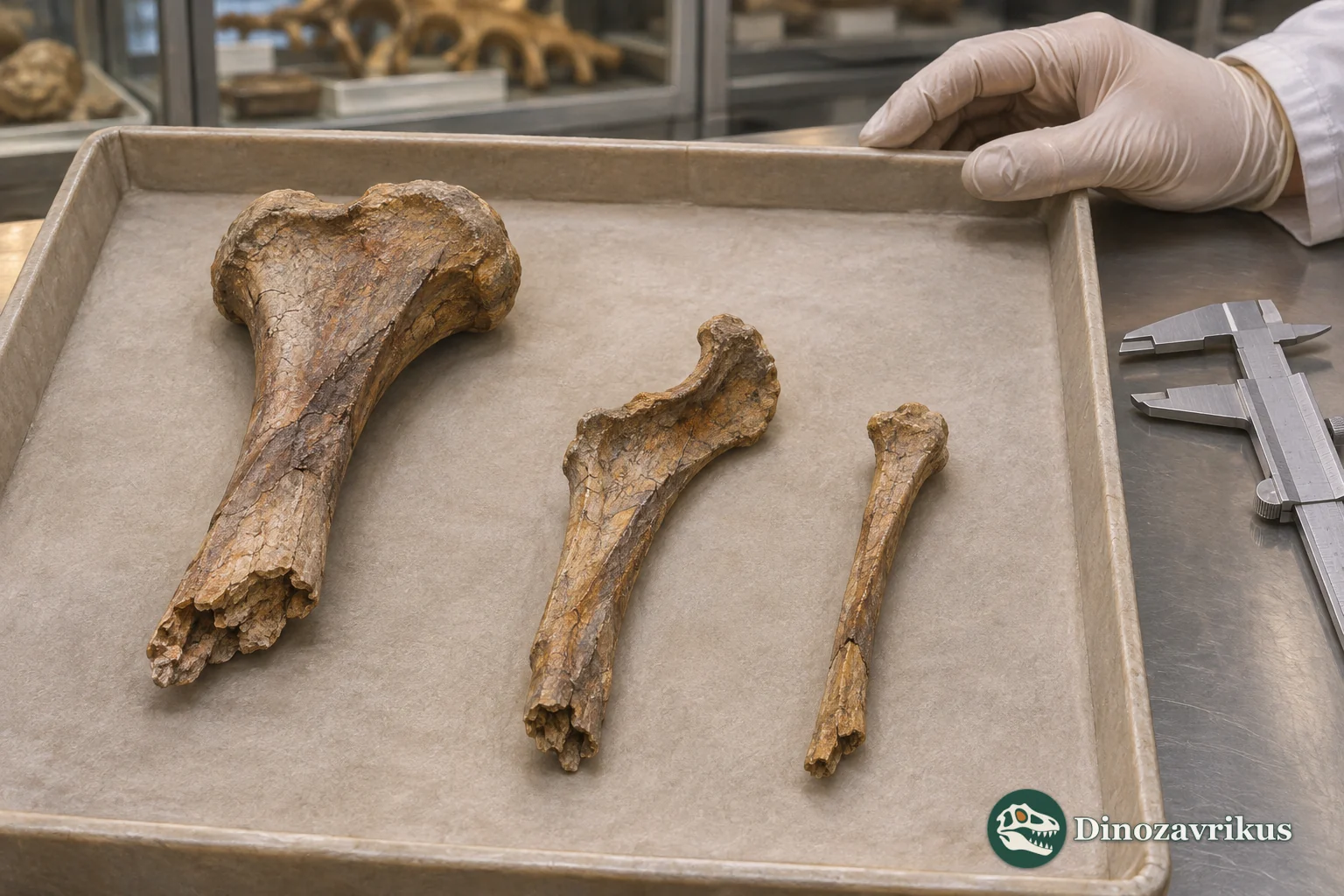
MOR 1113 comprises incomplete humerus, ulna and radius. No skull, hand, feathers or wing membrane belongs to the specimen.
The 2002 author regarded the bones as avian but already left their narrower affinities uncertain.
A 2012 study interpreted features as pterosaurian. Subsequent comparisons challenged some of those readings.
The short fragments do not establish body length, wingspan, head form or diet. Any complete silhouette depends on a disputed identification.
A find in the Two Medicine Formation
MOR 1113 came from locality TM-088, called Bob's Vacation Site, in Glacier County. The Two Medicine Formation preserves Late Cretaceous rocks assigned to the Campanian. This geological context does not pinpoint when the individual died or what happened to it.
David Varricchio described the specimen in 2002 as an unusual bird of uncertain relationships. The name was based on the three preserved pieces of one right forelimb, with attention to the elbow region. Neighbouring fossils do not supply a missing skull or a complete wing for Piksi.
Why the identity changed
In 2012, Federico Agnolín and David Varricchio reconsidered the forelimb and proposed that Piksi was a pterosaur. They compared details of the humerus and forearm with those of flying reptiles. This was a new reading of the same material, not a newly discovered skeleton.
Later analyses questioned whether the proposed pterosaur traits fit typical pterodactyloids; other authors have continued to regard a pterosaur assignment as possible. The disagreement concerns the interpretation of incomplete structures. Listing Piksi in a pterosaur catalogue follows one published hypothesis and does not settle the disputed placement.
What the bones cannot show
The holotype has no head, teeth, hand, most of the wing or soft tissues. It cannot distinguish a bird's feather covering from a pterosaur's wing membrane. Its wingspan, diet and narrower relationships cannot be established securely from the fragments.
Palaeocursornis has likewise moved between bird and pterosaur interpretations, but involves a different bone and time interval. Bakonydraco provides a comparison with a more clearly identified pterosaur. These comparisons do not prove close relationships.
An illustrated setting, not a life record
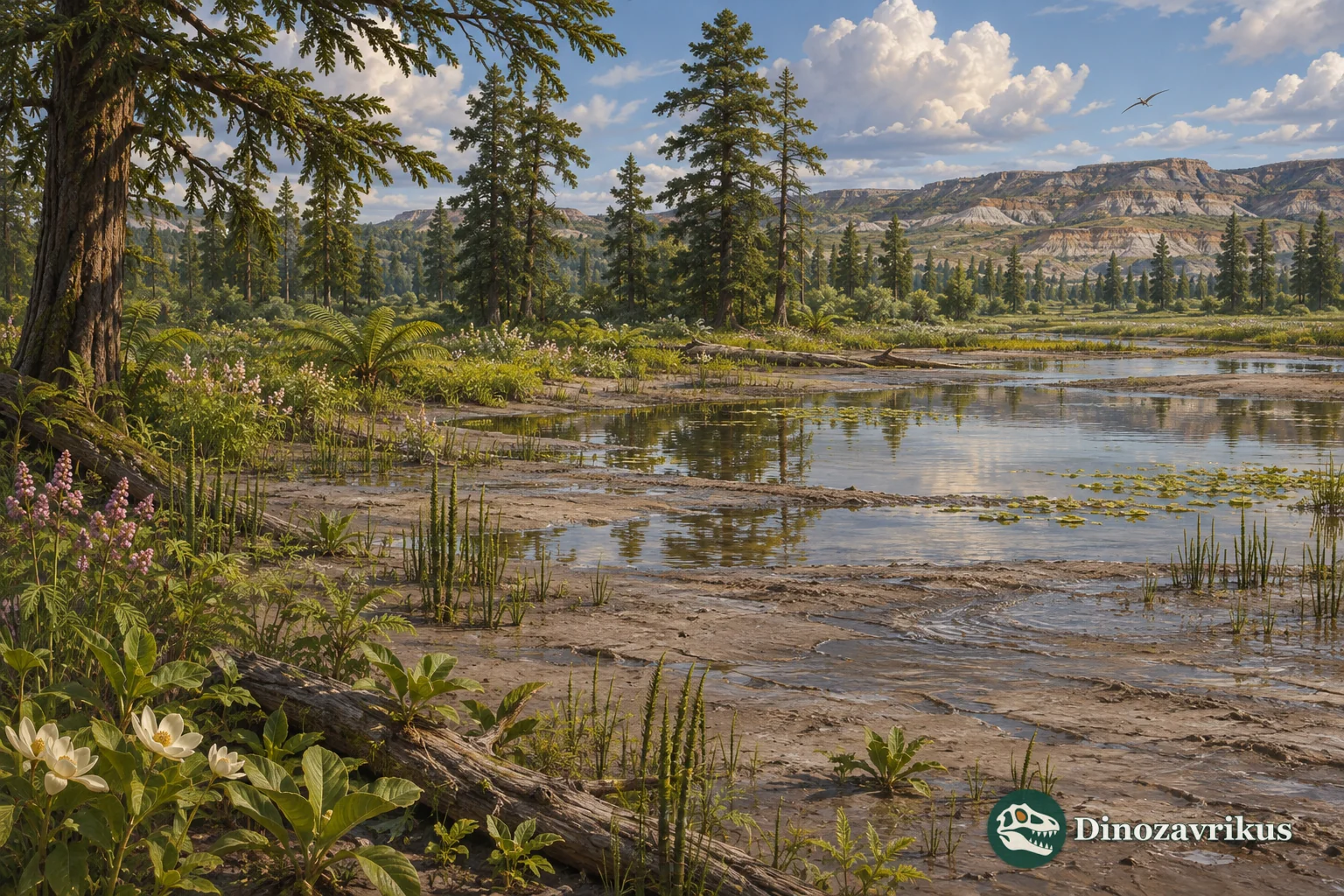
A woodland scene can evoke the broader Two Medicine environment but cannot document the individual's exact habitat or the body shape of Piksi. The museum-tray picture also explains the small amount of material rather than depicting the actual fossil. Neither illustration is a substitute for the published anatomical descriptions.
Frequently asked questions
Was Piksi certainly a pterosaur?
No. It was originally described as a bird, reassigned to pterosaurs in 2012 and debated in later work.
How many bones are known?
The holotype MOR 1113 contains incomplete parts of three right forelimb bones: humerus, ulna and radius.
Where was the specimen found?
It came from Bob's Vacation Site in the Two Medicine Formation of Glacier County, Montana, within Campanian Late Cretaceous rocks.
Are its size and diet known?
Neither is securely determined. The bones are incomplete and even the animal's bird or pterosaur identity is debated.