

Plastomenus was a North American softshell turtle. An Eocene specimen preserves an elongated skull and lower jaw. CT scans clarified the structure of its palate and gave researchers new characters with which to compare fossil and living softshells.
Quick facts
| Group | Turtles, softshell turtles |
|---|---|
| Age | Paleocene and Eocene |
| Region | North America: Wyoming and Colorado, United States |
| Type species | Plastomenus thomasii |
| Material | Skull AMNH FR 6015 and shell AMNH FR 6018, referred to the type species |
| Scientific name | Plastomenus |
| Diet | No direct evidence |
What can the fossils tell us?
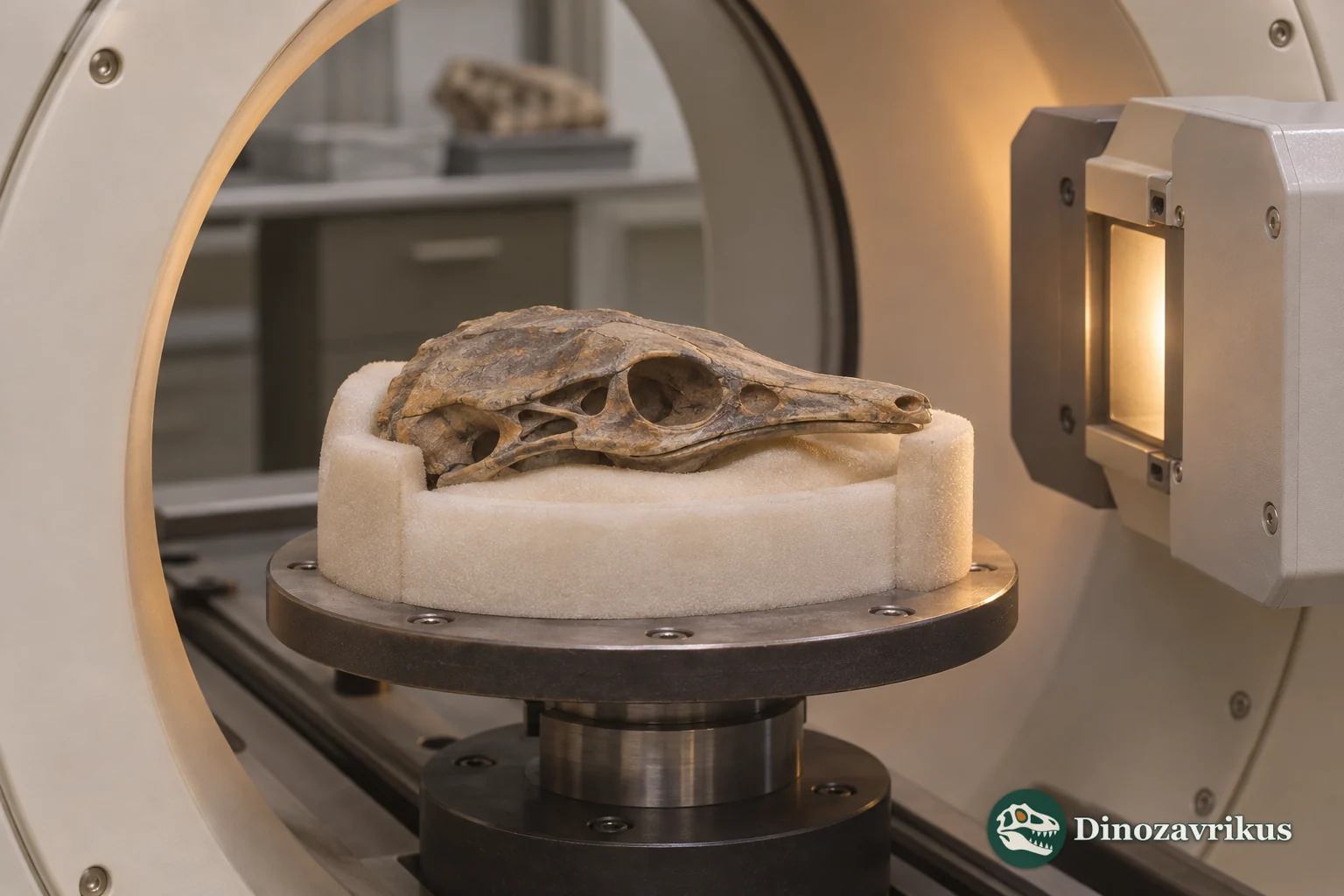
CT of AMNH FR 6015 shows that the maxilla and frontal are separate. Earlier drawings showed these two bones in contact.
The preserved midline segment measures 43 mm. The estimate of roughly 50 mm for the original skull accounts for its missing snout tip.
P. joycei preserves enough of its plastron to compare how much of the underside ossified in Paleocene and Eocene species.
The referred Eocene specimens
Edward Drinker Cope described P. thomasii from fragmentary remains. Later authors assigned two better-preserved fossils from the Bridger area of Wyoming to the species. AMNH FR 6015 includes a skull and jaw with shell remains, while AMNH FR 6018 preserves a nearly complete shell. The original material is difficult to diagnose. The CT study accepted the traditional identification of the two specimens while formal replacement of the type material remained unresolved.
A second species, P. joycei, was named from a nearly complete early Paleocene skeleton from Colorado’s Denver Formation. Its degree of plastral ossification is intermediate between Cretaceous Gilmoremys species and Eocene P. thomasii. The shell comparison provides a sequence of anatomical conditions, without establishing direct ancestry.
Inside the skull
The tip of the snout is missing in AMNH FR 6015. The skull measures 24 millimetres across the rear and 43 millimetres along the preserved midline segment to the front of the contact between the maxillae. Its complete length was estimated at roughly 50 millimetres. These values refer to one skull.
Plastomenus had a long, narrow snout. Its upper jaw bones curve inward and contribute to an extensive secondary palate. CT exposed details of small canals and openings. It also showed that the maxilla does not reach the frontal, a contact depicted in an earlier reconstruction.
What the scans mean for the family tree
The CT evidence informed a revised matrix of characters for testing relationships. In several analyses published in 2023, plastomenids sat on early branches leading to living cyclanorbines, one of the main softshell turtle groups. Exact placements of some fossils, including Hutchemys, changed with the method and characters used. Older assignments to the genus need separate scrutiny. The placement of the Cretaceous species P. vegetus, for example, changed between analyses.
The skull preserves details of how the upper and lower jaws met. The studied material gives no direct record of the food Plastomenus ate.
Frequently asked questions
Which fossil was scanned?
The CT study examined Eocene specimen AMNH FR 6015, referred to the type species Plastomenus thomasii.
How long was the scanned skull?
A preserved midline segment measures 43 mm. The authors estimated roughly 50 mm for the complete skull.
Where was the older species discovered?
The type of P. joycei is a nearly complete skeleton from the early Paleocene Denver Formation of Colorado.
Where do plastomenids fit among softshells?
Several analyses place them on early branches of the cyclanorbine lineage. The positions of some individual fossil turtles remain sensitive to the method used.