

Platyognathus hsui was a small Early Jurassic crocodyliform from Yunnan, China. Originally named from a piece of lower jaw, it is now known from a nearly complete skull and parts of the skeleton. The new skull shows how two enlarged teeth on each side of the lower jaw passed along the outside of the upper jaw.
Quick facts
| Species | Platyognathus hsui |
|---|---|
| Age | Early Jurassic, probably Sinemurian |
| Locality | Lufeng Basin, Yunnan, China |
| Neotype | IVPP V8266, partial skull and jaw |
| Most complete specimen | CVEB 21301, skull and partial skeleton |
What can the fossils tell us?
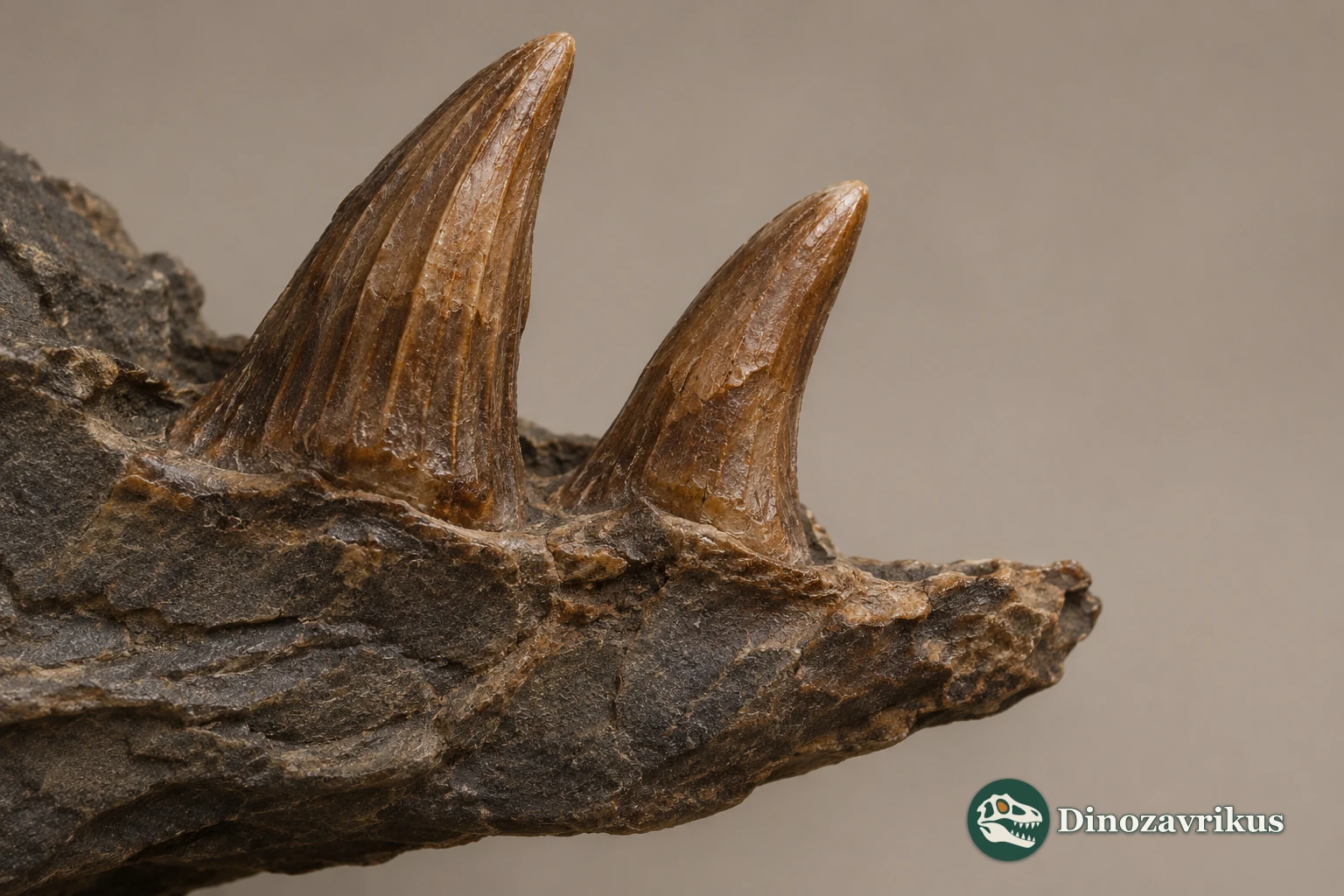
Longitudinal ridges and grooves give the caniniform crowns a polygonal cross-section. In a closed jaw they pass outside the notch between two upper jaw bones.
IVPP V8266 was designated in 1996. Its enlarged lower teeth share diagnostic features with the ones documented in the lost original.
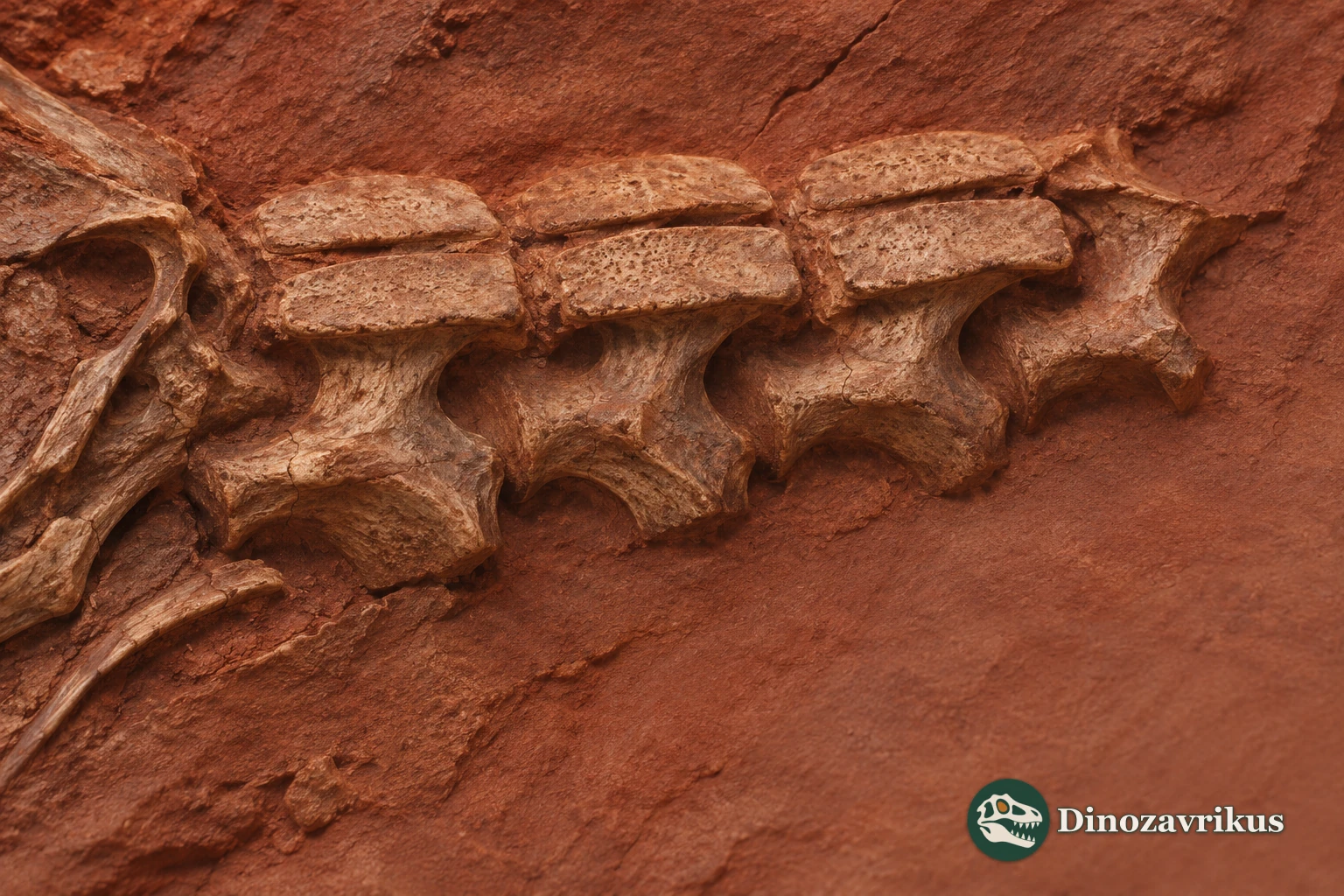
CVEB 21301 preserves dorsal osteoderms alongside its vertebrae, as well as plates from the underside and limbs.
A lost jaw and two more complete specimens
C. C. Young named Platyognathus in 1944 from the front of a lower jaw, CRL V71. The original was lost. In 1996 Xiao-Chun Wu and Hans-Dieter Sues designated IVPP V8266 as the neotype. It preserves the front of the skull and part of the lower jaw.
In 2025 Lihua Wang and colleagues described CVEB 21301 from near Dadi in Yunnan. It includes a nearly complete skull with its lower jaw, the first 17 vertebrae, limb bones and bony skin plates. It comes from the Zhangjiawa Member of the Lower Lufeng Formation, generally correlated with the Sinemurian stage using fossil vertebrates.
How the jaws closed
Each side of the fused front portion of the lower jaw carried two large caniniform teeth. Comparison with the original material places them at the fifth and sixth tooth positions. Ridges and grooves give the crowns their angular outlines in cross-section.
The nearly complete skull shows the crowns rising outside the notch between the premaxilla and maxilla to almost the level of the nasal bones. This arrangement helps distinguish the species. The shapes leave the animal’s specific prey unresolved.
Armour and an early split in the family tree
Some dorsal osteoderms remained close to the vertebrae in the Dadi specimen. The fossil also preserves plates from the belly and limbs. These bones give a clearer picture of the skeleton, while the full length of the animal has to be estimated.
In the 2025 analysis, Platyognathus branched close to the family Gobiosuchidae. The authors placed it with that family in the broader Gobiosuchoidea. Gobiosuchus itself comes from the Cretaceous of Mongolia. The Jurassic fossil extends the history of the broader group by tens of millions of years.
Frequently asked questions
Why was a neotype designated?
The original fossil, CRL V71, was lost. IVPP V8266 was designated in 1996 to anchor the name.
Which lower teeth were enlarged?
The fifth and sixth on each side. Their crowns carry longitudinal ridges and grooves.
What was preserved with the Dadi skull?
The first 17 vertebrae, skeletal elements from the limbs and bony skin plates.
How precisely are the layers dated?
Vertebrate fossils suggest a Sinemurian age for the Zhangjiawa Member. That is a biostratigraphic correlation.