

Platyspondylia was a small snake from what are now France and Germany. Most of its fossils are vertebrae from the trunk and tail, though isolated skull bones are known for some species. Different parts of the skeleton have offered different clues to its relationships.
Quick facts
| Group | Snakes (Serpentes) |
|---|---|
| Age | Eocene and Oligocene |
| Region | Europe, France and Germany |
| Type species | Platyspondylia lepta |
| Scientific name | Platyspondylia |
| Diet | Exact prey is unknown |
What can the fossils tell us?
The original sample from Pech-du-Fraysse alone contained more than two hundred trunk and tail vertebrae. Several isolated skull bones were also assigned to the species.
The small Dams vertebrae have low, broad arches and distinctive joints. Their combination of features supports identification as the Eocene species rather than either of the named Oligocene species.
In some French specimens, the paired underside processes first appear partway along the tail. Identification of these specimens at species level would help show how widely that pattern occurred within the genus.
Three species from France and Germany
Jean-Claude Rage named the type species, Platyspondylia lepta, in 1974 from the Late Oligocene site of Pech-du-Fraysse in Quercy. The material assigned to it includes vertebrae, a palatine, a quadrate and a compound bone from the lower jaw. Platyspondylia germanica was described from seven trunk vertebrae, one tail vertebra and an incomplete upper jaw, recovered from a Late Oligocene fissure fill in the Swabian Jura.
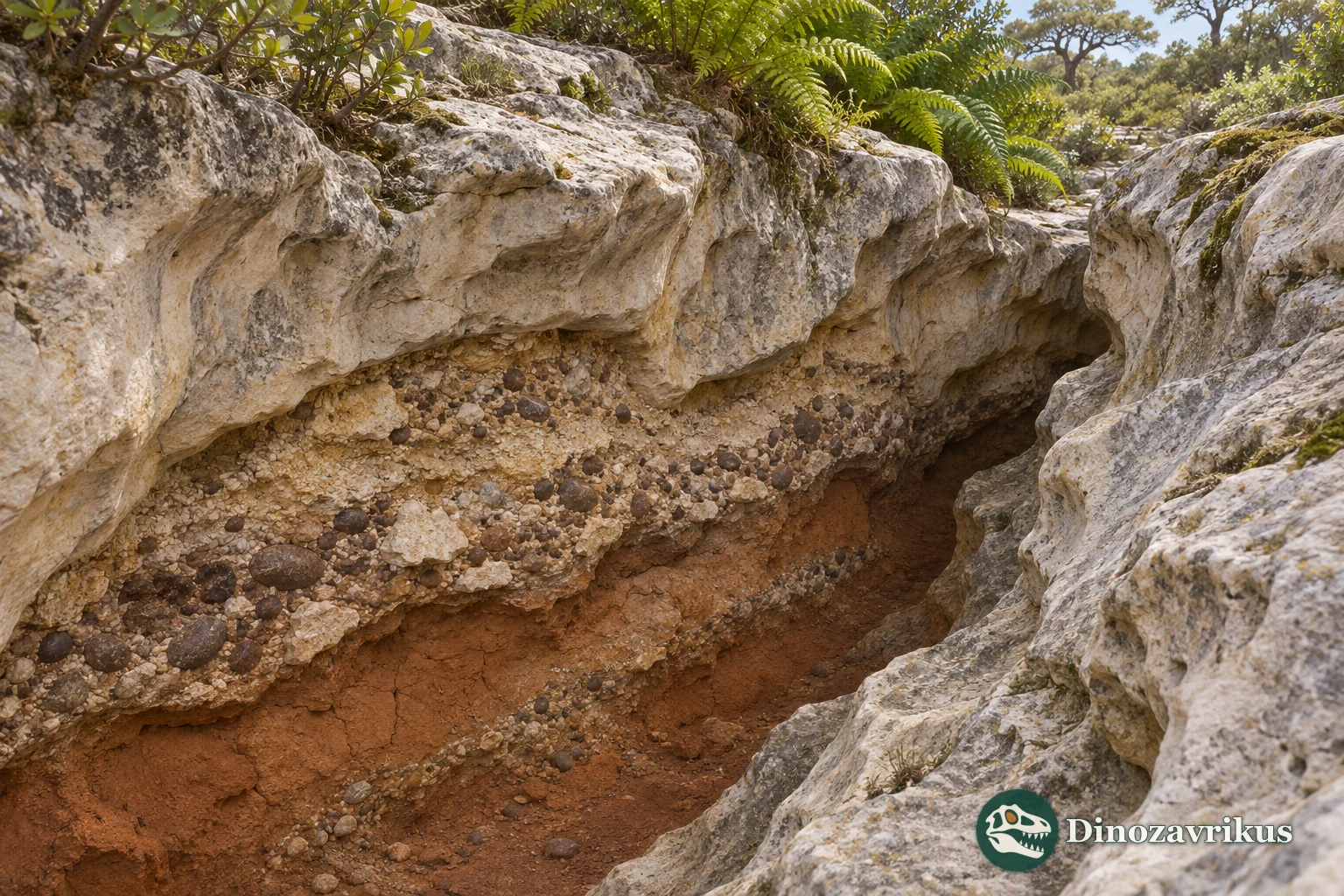
Fossils near the boundary between two epochs
The third species, Platyspondylia sudrei, was described from Le Bretou. The site is now dated to the late Middle Eocene. Later fossils provide further evidence of its range. In 2026 two small trunk vertebrae from Dams were assigned to it. Their neural arches are lower and their rib joint surfaces broader than those of the type species. Dams yielded two fossil assemblages of different ages. These vertebrae come from the Eocene fill, while the Oligocene fill contains a different set of snakes. The genus Eoanilius occurs in both samples.
Why the position of a tail bone matters
The remains from Saint-Privat-des-Vieux allow comparison of vertebrae from the front and middle of the tail. The anterior bones have a single projection or keel on the underside. The mid-tail specimen has a pair of processes. Some researchers saw similarities between this sequence and that of living dwarf boas. Others noted that the sample is identified only to genus, while the skull and vertebral evidence from the named species points in different directions. The exact position of Platyspondylia among snakes remains open.
Frequently asked questions
What fossils were used to name Platyspondylia?
Trunk and tail vertebrae and isolated skull bones from Late Oligocene deposits at Pech-du-Fraysse, France.
Which species was found in Germany?
Platyspondylia germanica was named from vertebrae and an incomplete upper jaw found in a Swabian Jura fissure.
Why is the genus recorded in both the Eocene and Oligocene?
Platyspondylia sudrei occurs in Eocene deposits. The type species and the German species are recorded from the Late Oligocene.
Can its exact body length be measured?
The vertebrae indicate a small snake. A complete skeleton with its bones in place would be needed to measure the full length directly.