

Polarornis gregorii lived near the Antarctic Peninsula in the Maastrichtian, at the end of the Cretaceous. Its incomplete skeleton preserves parts of the skull alongside hindlimb bones consistent with a diving bird. Whether it belonged close to modern loons has long been debated.
Quick facts
| Species | Polarornis gregorii |
|---|---|
| Age | Late Cretaceous, Maastrichtian |
| Locality | Seymour Island, Antarctica |
| Formation | López de Bertodano Formation |
| Holotype | TTU P 9265 |
| Material | Partial skull and postcranial bones |
| Locomotor inference | Foot-propelled diving |
What can the fossils tell us?
The bones occur together in a concretion. The outline of the head in the original description includes sections reconstructed from incomplete material.
The bowed femur and long crest near the top of the tibiotarsus resemble those of diving birds. Other types of divers sometimes evolved similar features.
Some studies link Polarornis to Vegavis. A later analysis grouped it with loons. The exact family affinity remains unsettled.
An Antarctic concretion
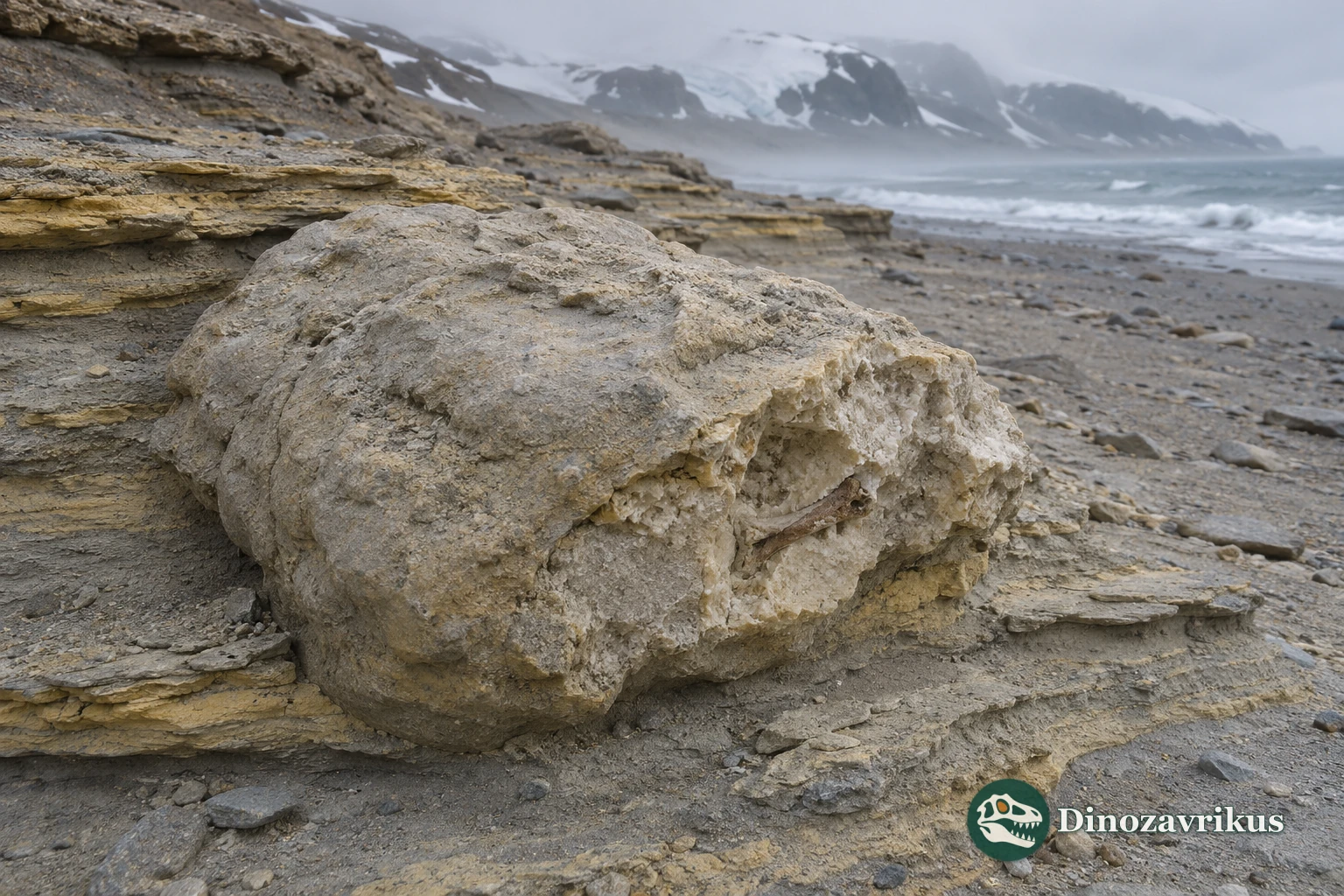
The type was collected in 1983 from a calcareous concretion in the upper part of the López de Bertodano Formation on Seymour, also known as Marambio, Island. Sankar Chatterjee formally named the species in 2002. TTU P 9265, held at Texas Tech University, includes portions of the skull, neck vertebrae, part of the sternum and hindlimb bones.
Some parts of the skull are incomplete or distorted, and the original illustration includes reconstructed areas. As a result, certain details of the jaw joint used to assess its relationships remain open to interpretation.
Evidence of foot-propelled diving
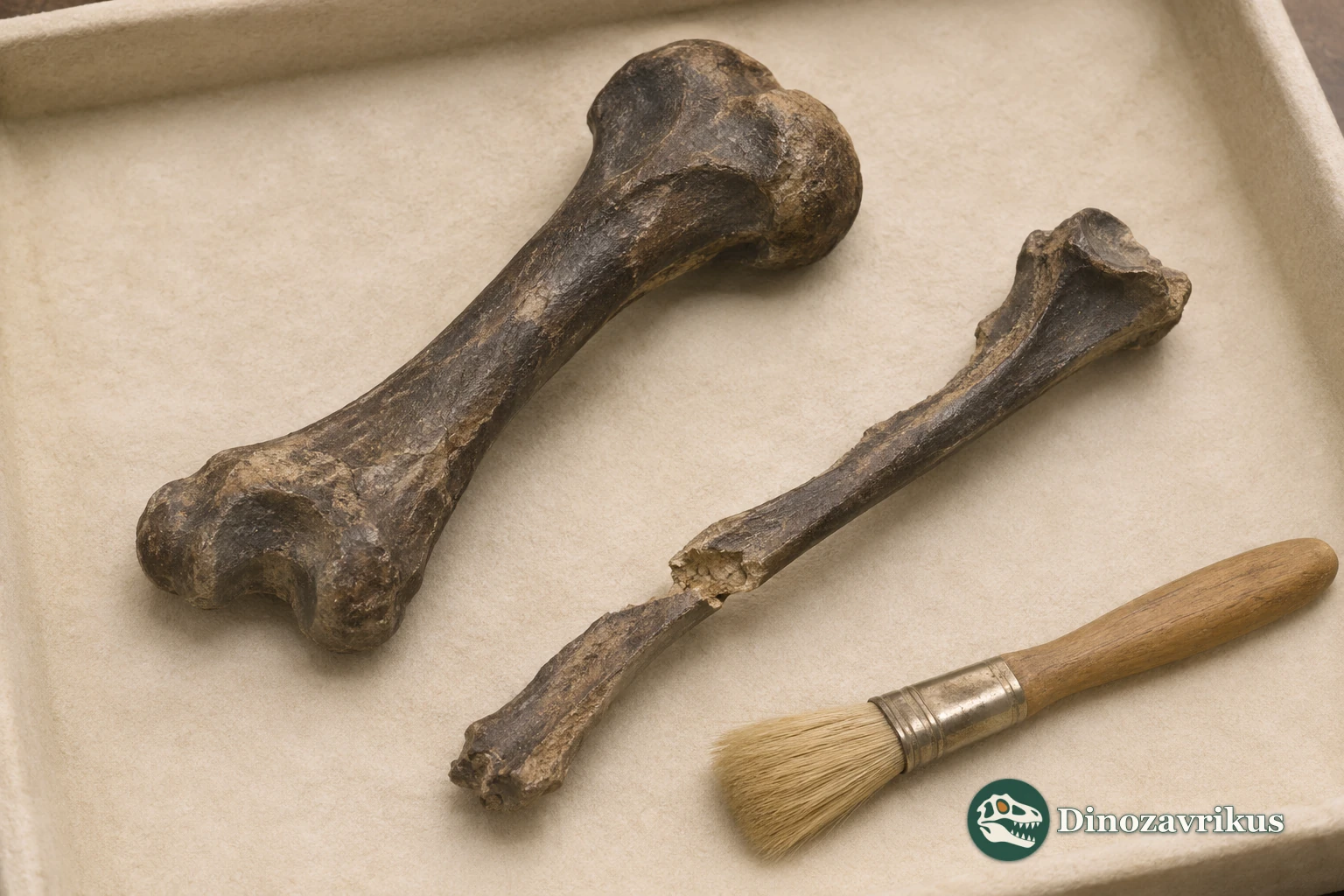
The original description noted a strongly bowed femur and a long cnemial crest at the upper end of the tibiotarsus. Those features fit a bird that used its legs for underwater propulsion. They give no direct measure of swimming depth or record of what it caught.
Carolina Acosta Hospitaleche and Javier Gelfo referred specimen MLP-PV 96-I-6-2 from Seymour Island to Polarornis in 2015. It preserves portions of both shins, providing a comparison where some details in the type are obscured by pathological change.
Comparisons with loons and Vegavis
Chatterjee placed the bird with modern loons. In 2017 Federico Agnolín and colleagues grouped it with Vegavis in Vegaviidae, partly on hindlimb similarities. One analysis in a later study of another Seymour Island bird grouped Polarornis with loons, while Vegavis fell elsewhere. Since similar leg adaptations can evolve in separate diving lineages, they are difficult to interpret as evidence of common ancestry.
There has also been a suggestion that the fossil might be synonymous with the Chilean Neogaeornis wetzeli. That name is based on a tarsometatarsus. There is no corresponding bone from securely identified Polarornis material to test the suggestion directly.
Frequently asked questions
Where did the type skeleton come from?
From Maastrichtian marine deposits on Seymour Island, off the Antarctic Peninsula.
How did it move underwater?
The hindlimb anatomy is consistent with diving using strokes of the legs.
Was it definitely a loon?
That was the original identification, but later comparisons have also supported a relationship with Vegavis.
How much of its head is known?
Parts of the skull survive and other areas were reconstructed. The full profile of the living bird is uncertain.