

Poliella was a North American Cambrian trilobite. Canadian specimens reveal the form of its articulated shell. In Nevada, the first occurrence of one species helps geologists correlate ancient marine strata.
Quick facts
| Group | Trilobites |
|---|---|
| Age | Cambrian |
| Name proposed by | Charles Doolittle Walcott, 1916 |
| Type species | Poliella anteros |
| Fossil records | United States and Canada |
| Biozone reference section | Pioche Shale, Nevada |
What can the fossils tell us?
Poliella prima from the Mount Whyte Formation has long eye lobes and rear trunk segments that partly wrap around the tail shield.
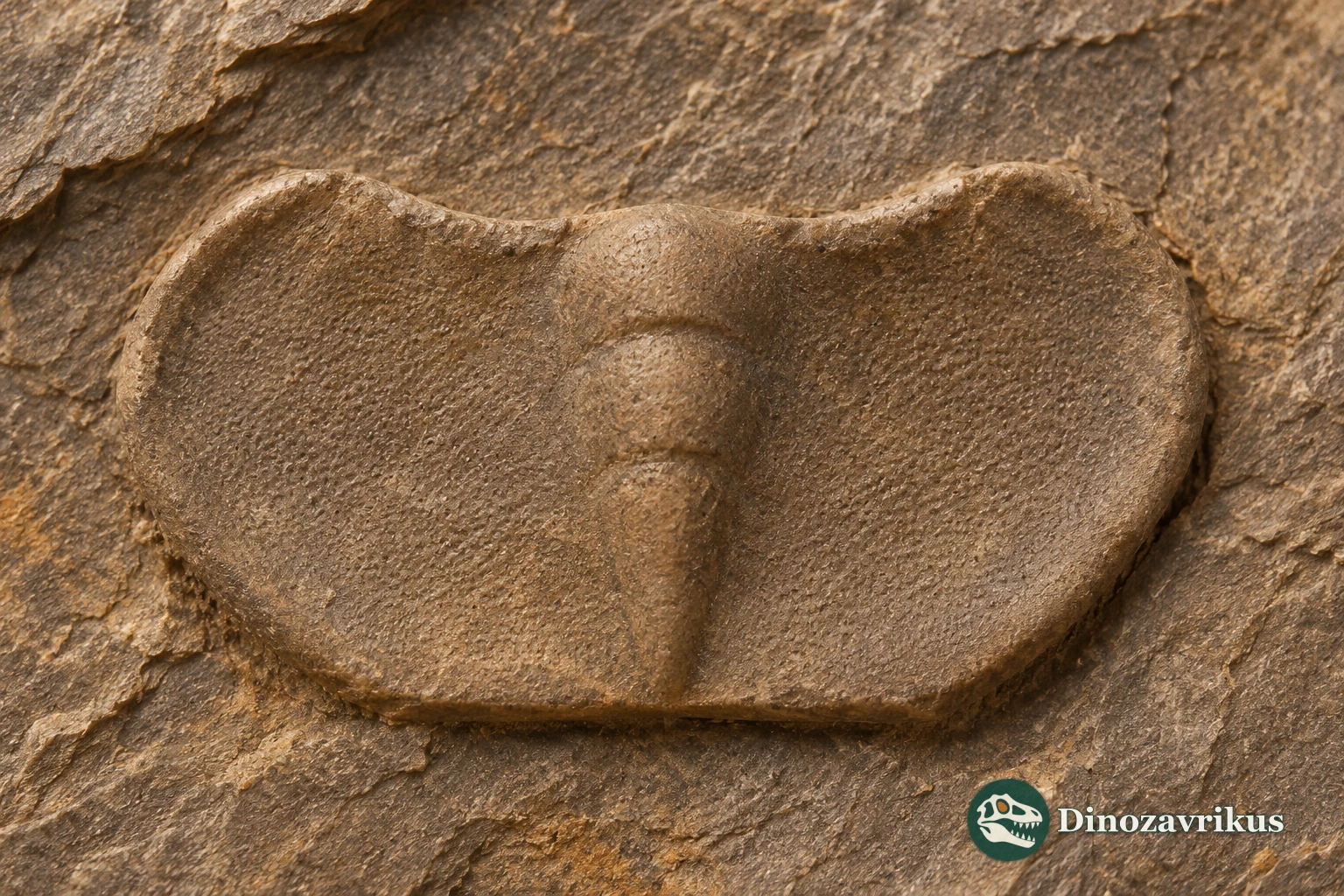
The shield of Poliella lomataspis is broad, with a concave border and two shallow ring furrows behind the articulating furrow.
In the southern Great Basin, the Poliella denticulata Biozone lies above the Amecephalus arrojosensis Biozone.
Two species and the origin of the name
In 1916 Charles Doolittle Walcott proposed Poliella as a subgenus of Bathyuriscus. Its type species was Bathyuriscus (Poliella) anteros from the Spence Shale. Poliella was later treated as a genus in its own right.
The Mount Whyte Formation of Canada preserves articulated material of another species, Poliella prima. It has long eye lobes, and the outer portions of the rear trunk segments partly enclose the small tail shield. Features such as these helped separate similar trilobites formerly grouped under one name.
A broad tail shield from Nevada
The holotype of Poliella lomataspis, USNM 177252, is a cranidium, the central part of the head shield. It comes from the Pyramid Shale Member of the Carrara Formation in the Belted Range. Tail shields assigned to the species are roughly one and a half times as wide as they are long, with a concave border, fine pitting and two weak rings behind the articulating furrow.
The Poliella denticulata Biozone
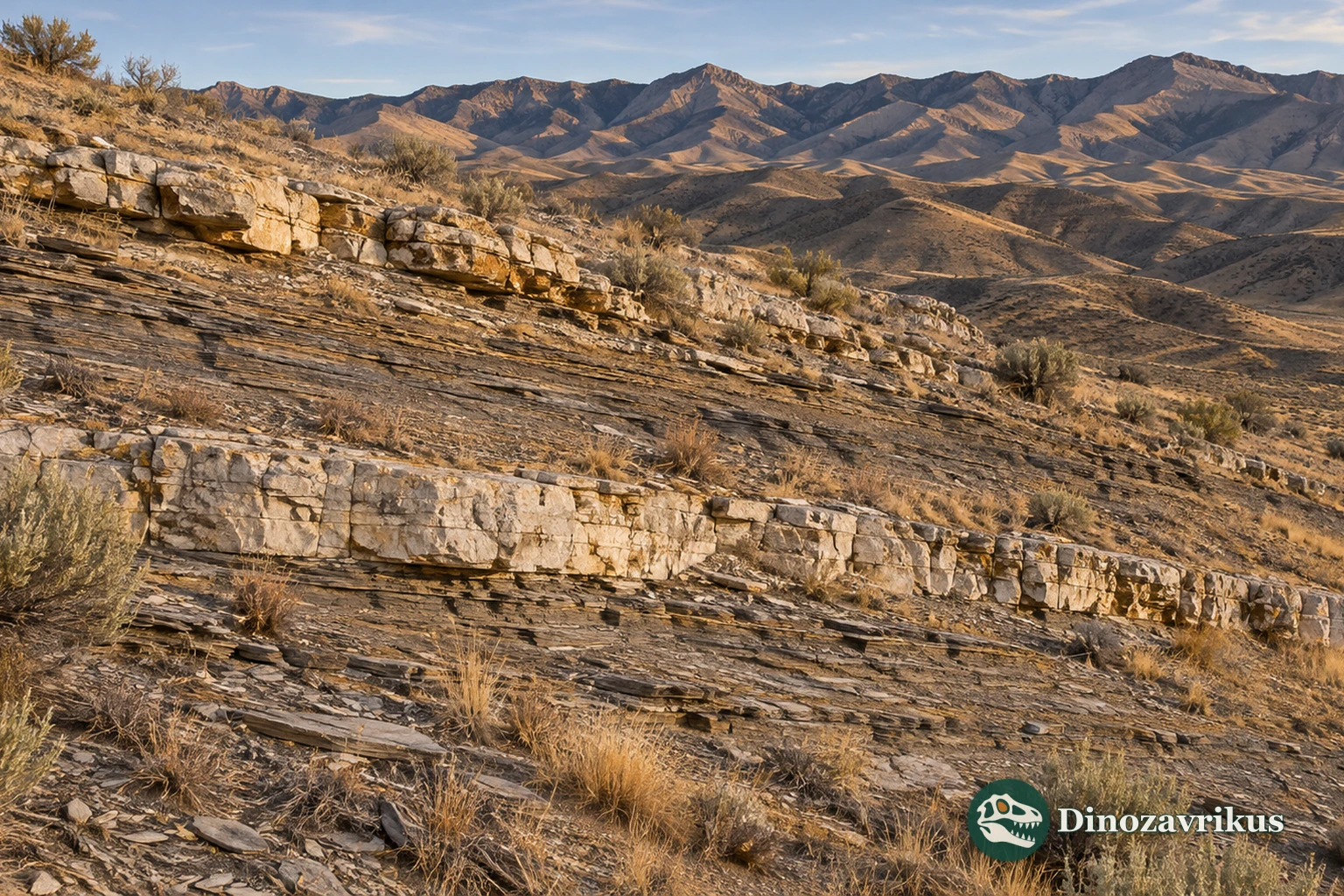
At the reference section in the Pioche Shale, the first occurrence of Poliella denticulata lies in the basal metre of the Susan Duster Limestone Member. Its biozone sits immediately above the Amecephalus arrojosensis Biozone in the southern Great Basin. Researchers distinguished five fossil assemblages in the new zone, each with a limited geographic and stratigraphic range. Their succession helps correlate local outcrops.
Frequently asked questions
What is the type species of Poliella?
It is Poliella anteros from the Spence Shale. Walcott originally placed it within Bathyuriscus.
Where do articulated Poliella prima specimens come from?
They come from the Mount Whyte Formation in Canada.
What distinguishes the tail shield of Poliella lomataspis?
It is markedly wider than long and has a concave border with shallow grooves on the axis.
How is the base of the Poliella biozone recognised?
It is marked by the first occurrence of Poliella denticulata, which lies in the basal metre of the Susan Duster Limestone Member at the Nevada reference section.