

Praesinomegaceros is a fossil deer genus known from several Asian collections. Its type species, P. asiaticus, came from Late Miocene Mongolia. Later descriptions added Tuvan material and an Early Pleistocene shed antler from Pakistan. The cover conveys a possible deer form, not the established appearance of one individual or species.
A wide time range is assembled from separate finds. It does not mean all named species lived together or crossed an uninterrupted geographic corridor.
Quick facts
| Genus | Praesinomegaceros |
|---|---|
| Type species | P. asiaticus |
| Group | Cervidae, deer |
| Finds | Mongolia, Tuva and Pakistan |
| Age | Late Miocene to Early Pleistocene |
| Evidence | Antlers, jaws and isolated limb bones |
What can the fossils tell us?
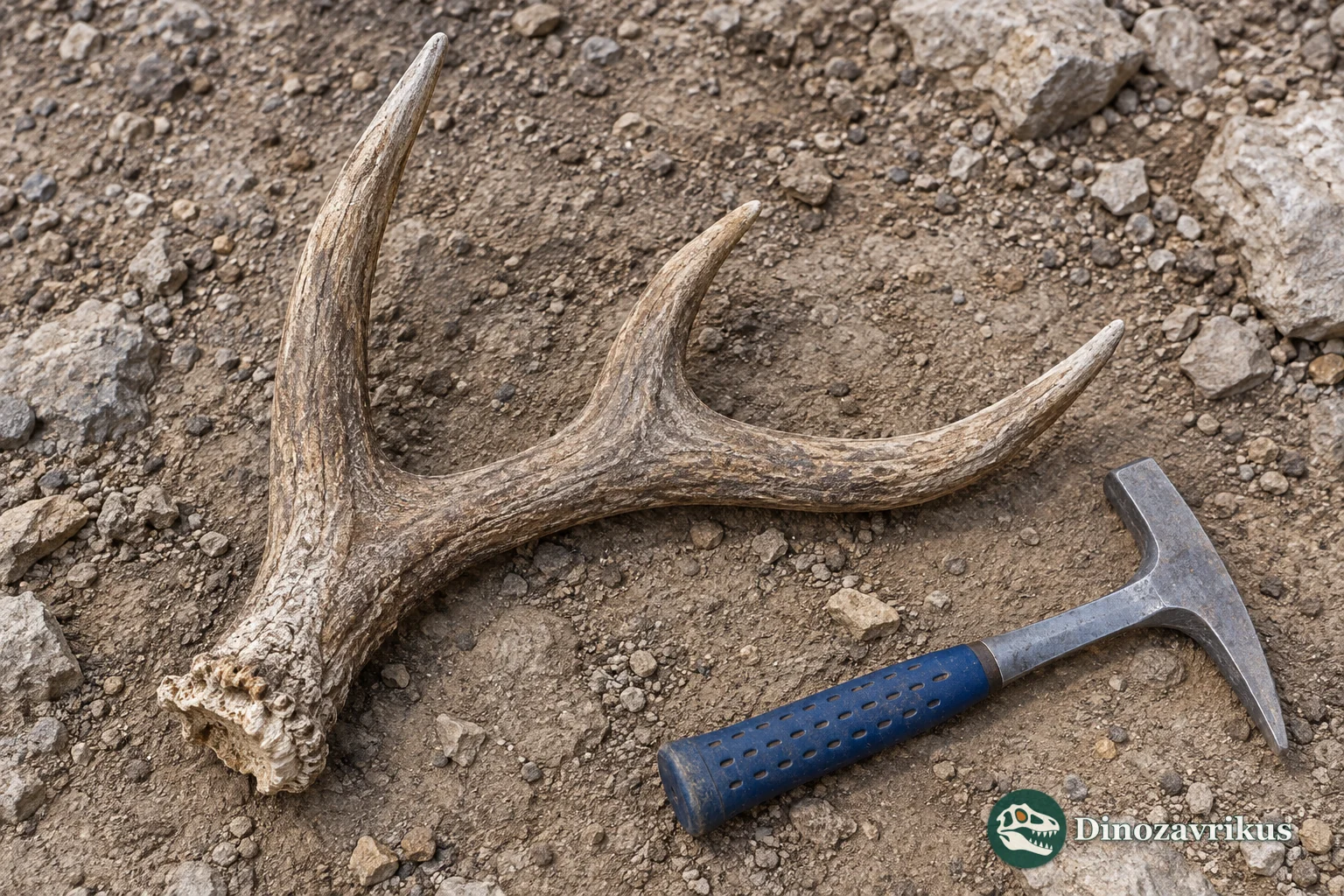
P. bakri was described from a well-preserved shed antler. This records branching but cannot reveal its full body or coat.
Mongolian and Tuvan material is Late Miocene; the Pakistani antler is Early Pleistocene. They are not a single population.
Relationships with other large-antlered deer are inferred from anatomy; no direct ancestor chain was observed.
The original Asian record
The type species was described from Khirgis-Nur II in Mongolia. In 2009, Vislobokova named P. venustus from Taralyk-Cher in Tuva, a locality dated to roughly seven million years ago. The described material includes part of a skull with antler, incomplete antlers, jaws and limb bones. These collections allow more comparison than a lone tooth, but no complete skeleton is available.
Antler form is central to comparisons among megacerine deer. Praemegaceros has a similar-looking name but is a separate genus; antler size alone cannot merge their fossils.
An Early Pleistocene antler in Pakistan
A 2021 study named P. bakri from Kurla Sharif in the Pabbi Hills of Pakistan. Its principal evidence is a well-preserved shed antler. Compared with older forms, the authors noted reduced basal palmation and fewer crown branches. A shed antler identifies aspects of headgear, not the body's exact mass or gait.
The authors suggested that changing antlers could reflect a shift in the balance of display and fighting. This is a behavioral hypothesis inferred from bone shape. The Pakistani find extends the reported range into the Quaternary; it does not map every intervening migration step.
Kinship and reconstruction limits
Vislobokova proposed an evolutionary sequence involving Cervavitus, Praesinomegaceros and Sinomegaceros. It is a phylogenetic interpretation, not a fossil record of each direct parent and descendant. New comparative material can change the branching pattern.
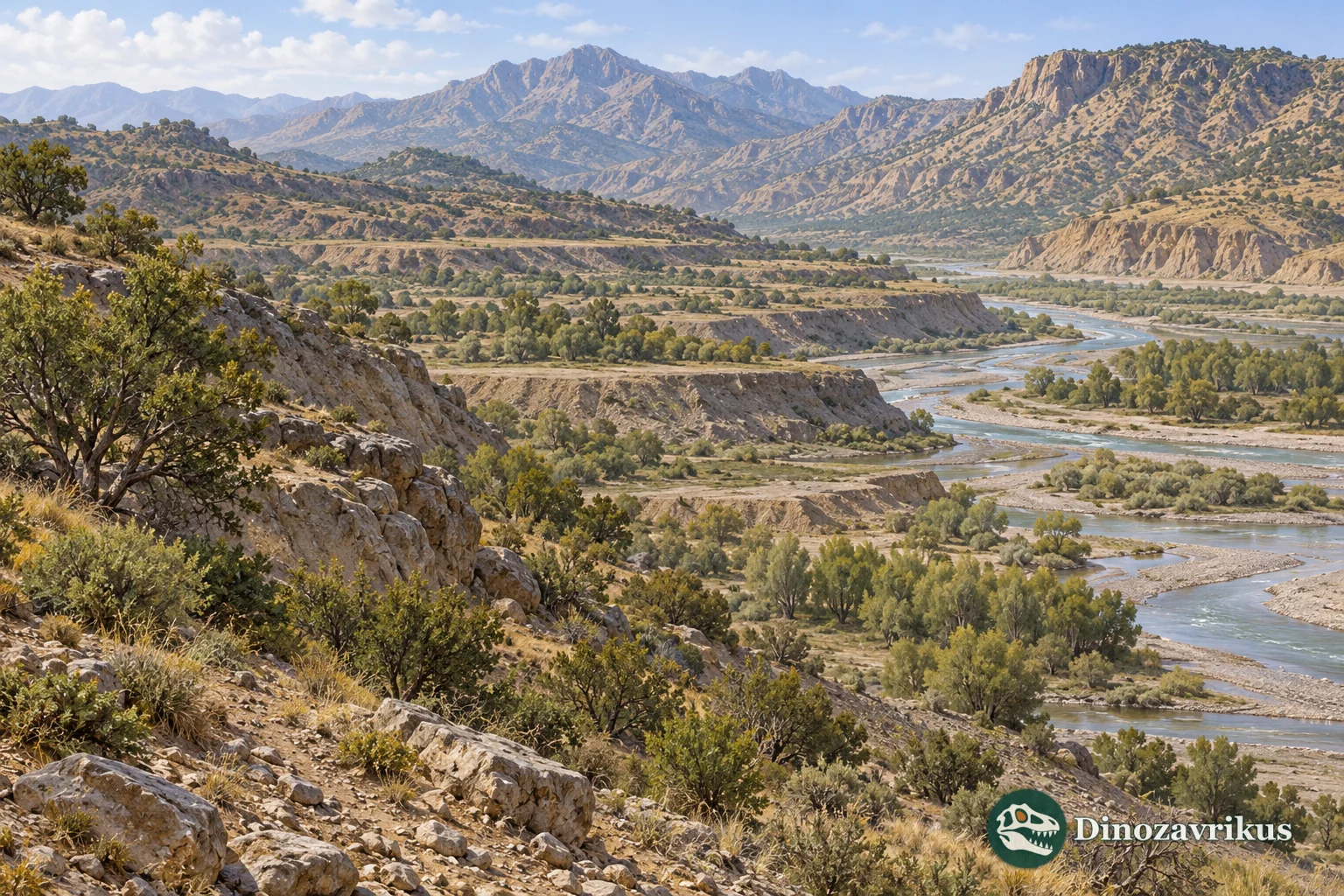
Available bones do not fix one precise mass for the genus. An antler's form also varies with age and development. Herbivory is consistent with deer relationships, while exact plants, coat color and social behavior remain unrecorded for these specimens. The supplementary images are educational illustrations, not photographs of named fossils or localities.
Frequently asked questions
Where was Praesinomegaceros found?
Its named material comes from Mongolia, Tuva and Pakistan.
Did all species live in the Pleistocene?
No. The Mongolian and Tuvan records are Late Miocene; the Pakistani species is Early Pleistocene.
What does the Pakistani antler show?
It preserves diagnostic branching and palmation, but no complete body or coat.
Is it a proven direct ancestor of giant deer?
No. Proposed relationships are anatomical hypotheses open to testing.