

Proamphiuma was an extinct salamander from Montana. It was described from vertebrae found at Bug Creek Anthills. Details of these bones place it in Amphiumidae, the family that includes living amphiumas.
Quick facts
| Group | Salamanders, Amphiumidae |
|---|---|
| Age | Uncertain: latest Maastrichtian or earliest Paleocene |
| Region | North America: Montana, United States |
| Type species | Proamphiuma cretacea |
| Scientific name | Proamphiuma |
| Diet | Unknown |
What can the fossils tell us?
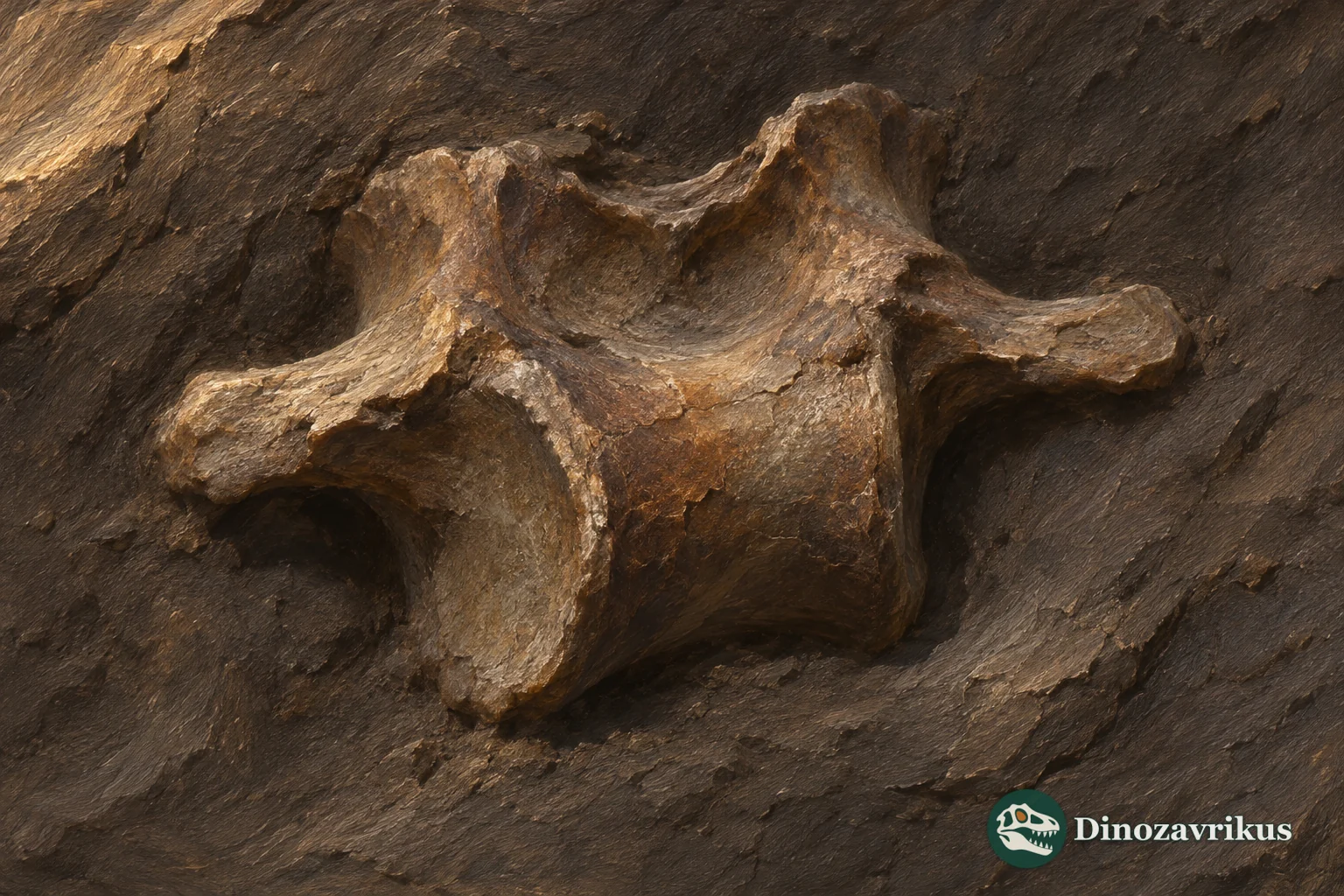
MCZ VPRA-3504 is an isolated vertebra. The site also yielded vertebrae from the neck, trunk and tail.
The shape of processes and canals can be compared with those of living members of the family.
The bones could be from the latest Maastrichtian or earliest Paleocene. Their age cannot be placed conclusively on one side of the boundary.
The Bug Creek Anthills material
Richard Estes named Proamphiuma cretacea in 1969. The holotype, MCZ VPRA-3504, is an isolated vertebra from Bug Creek Anthills in the Hell Creek Formation. In 2003 James Gardner re-examined the original series and documented additional atlases, trunk vertebrae and tail vertebrae from the type locality.
Which details distinguish Proamphiuma?
The atlas is the first vertebra and supports the skull. Its posterior articular process is indistinct in Proamphiuma. The passage for the vertebral artery is closed at the back of the trunk vertebrae, and the anterior tail vertebrae have a spinal nerve opening. These features help separate Proamphiuma from living amphiumas.
Vertebrae can help distinguish other fossil salamanders as well. Comparisons of atlases helped identify two species of Kababisha. The Proamphiuma vertebrae leave the size of its limbs and the shape of its head unresolved.
Dating bones from a channel deposit
Ancient channels in the Bug Creek area cut through older sediments, allowing fossils to be redeposited in younger channel fill. The redescription places the type collection in either the latest Maastrichtian or the earliest Paleocene. Its fossils leave open whether Proamphiuma lived before or after the Cretaceous–Paleogene boundary.
Frequently asked questions
Where was Proamphiuma found?
Its reliably identified fossils come from Bug Creek Anthills in Montana, United States.
Which bones have been found?
Isolated vertebrae include atlases and bones from the trunk and tail. An articulated skeleton is unknown.
Which family did Proamphiuma belong to?
It was an amphiumid salamander. Living amphiumas are members of the same family.
Did Proamphiuma survive the end of the Cretaceous?
The fossils could date to the latest Cretaceous or the earliest Paleocene, so survival remains unresolved.