

Proapteryx micromeros was an early Miocene member of the kiwi family from New Zealand. Its thigh bone is considerably slimmer than that of any living kiwi. The small size of the fossil prompted a question that the known skeleton still cannot answer: could this bird fly?
Quick facts
| Type species | Proapteryx micromeros |
|---|---|
| Family | Apterygidae |
| Age | Early Miocene, 19–16 million years ago |
| Locality | St Bathans, South Island, New Zealand |
| Holotype | NMNZ S.53324 |
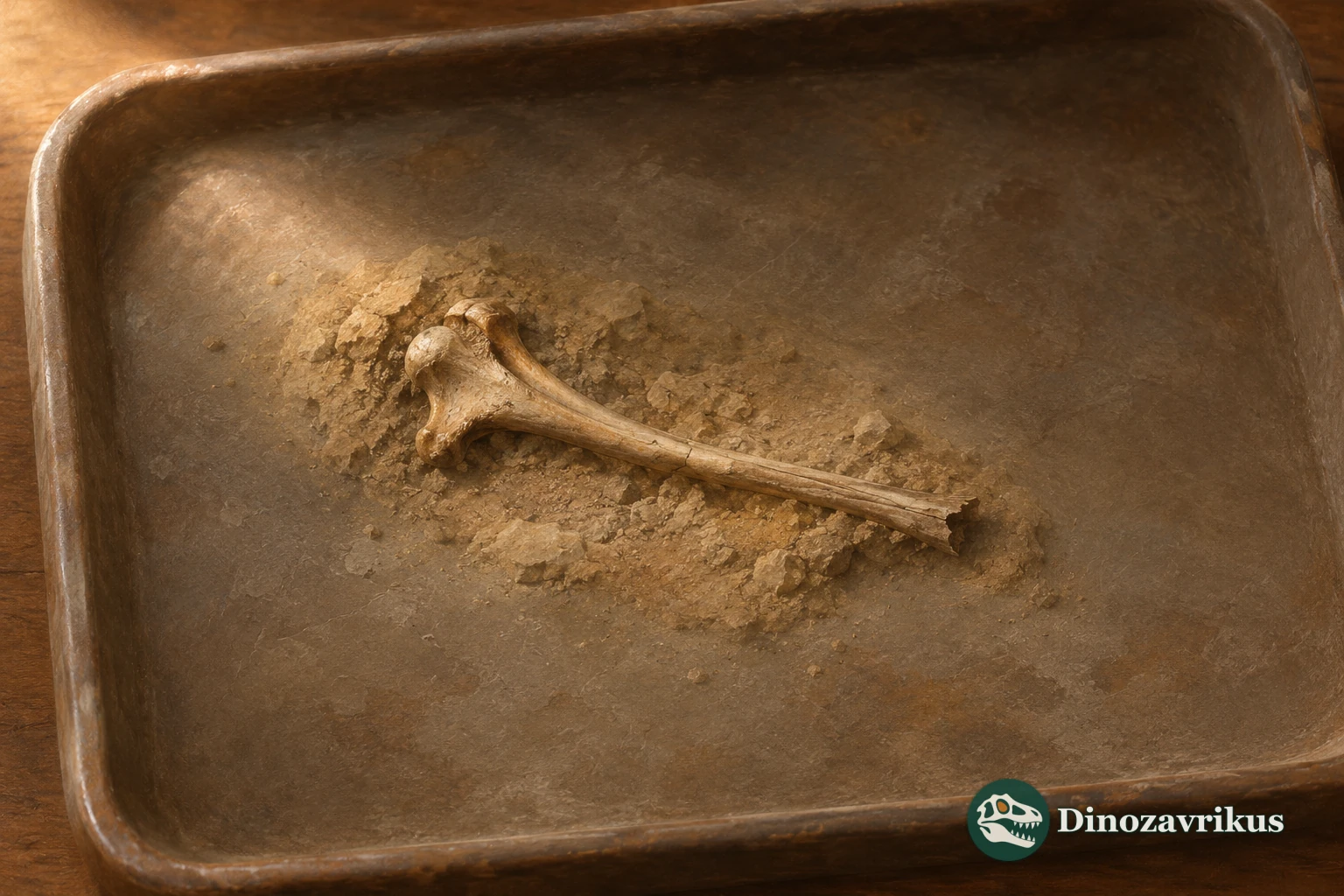
| Type material | Right femur, missing its lower joint surfaces |
What can the fossils tell us?
The shaft has a circumference of 12.4 mm at mid-length. The lower ends of the joint are missing, so the total length is unknown.
The left quadrate was referred to Proapteryx on size and anatomical grounds. It was not associated with the femur in the field.
The slender femur and estimated mass are compatible with flight. They do not show how well developed the wings were.
Two fossils from St Bathans
Trevor Worthy and colleagues named Proapteryx in 2013. The right femur NMNZ S.53324 was collected on 20 April 2012 from clay overlying stromatolites in the Bannockburn Formation. The deposits accumulated around an early Miocene lake. The same fossil fauna also includes waterfowl such as Miotadorna.
A left quadrate, NMNZ S.53209, measures 9.2 mm. The quadrate formed part of the jaw joint. It came from a different bed and was referred to the same species. Both specimens are held at the Museum of New Zealand Te Papa Tongarewa.

Why the weight estimates differ
The shaft of the fossil femur is about half as thick as that of the smallest living kiwi. The original authors estimated a body mass of about 234 grams using a sample of heavy-bodied birds and 282 grams using modern kiwi proportions. A model based on flying tinamous gave about 377 grams. All three estimates use the same femur.
A small body and slender leg bones led the authors to suggest that flight remained possible. A later paper compared a separately found St Bathans humerus and judged it unlikely to belong to Proapteryx. No wing bone has yet been identified with confidence.
Frequently asked questions
Was Proapteryx a kiwi?
It belongs to the kiwi family. It is placed in a separate genus from living species of Apteryx.
How small was it?
The original study estimated about 234 to 377 grams, depending on the birds used for comparison.
Could Proapteryx fly?
It may have been able to fly, but the fossils securely assigned to the species do not include any wing bones.
What fossils are known?
An incomplete right thigh bone is the type. A separately found left quadrate was referred to the species.