

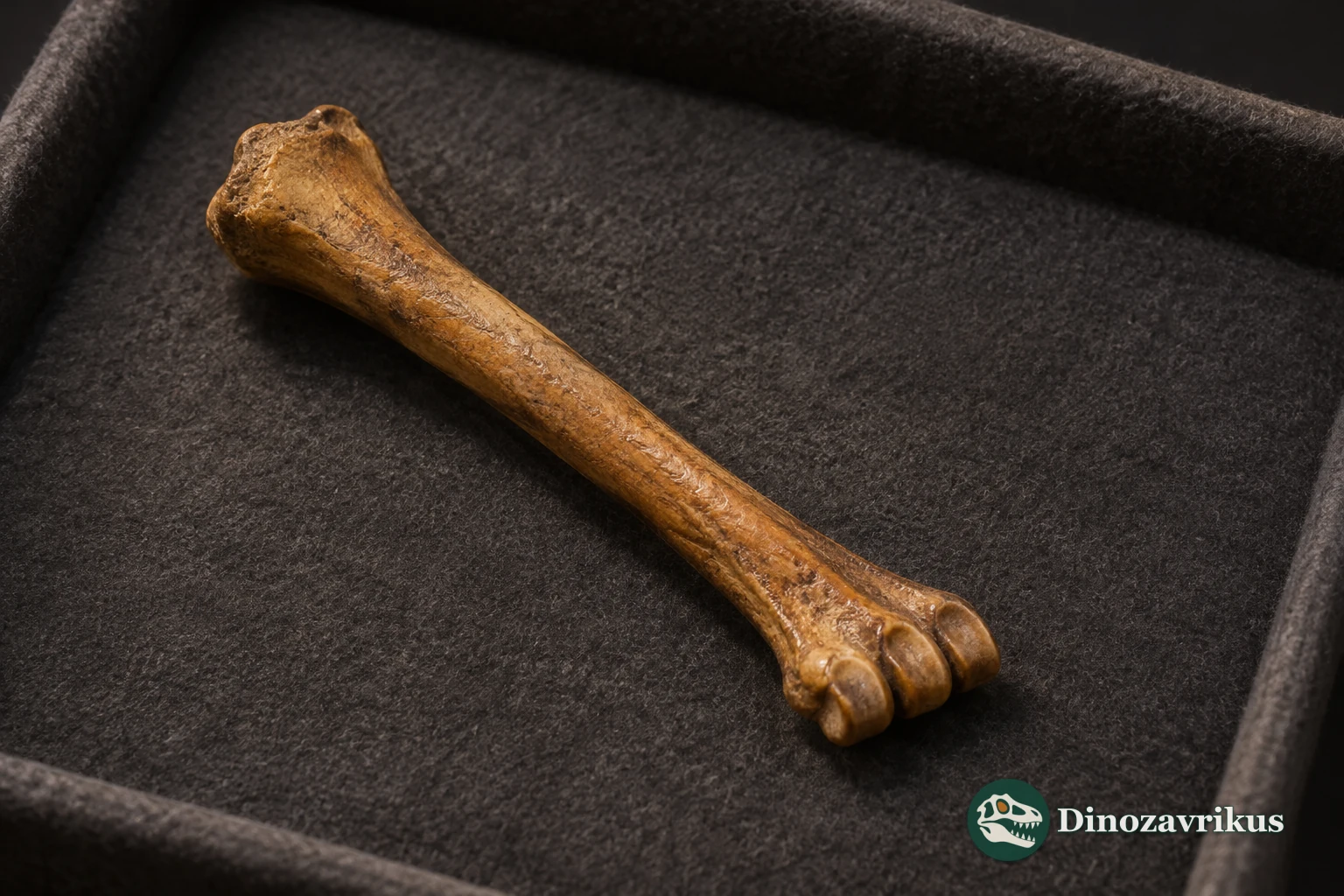
Proardeola walkeri was an early Miocene heron from central France. Its type is a lower leg bone just over five centimetres long. C. J. O. Harrison recognised its resemblance to a modern squacco heron, but used differences in the joints and grooves to establish a new genus in 1979.
Quick facts
| Type species | Proardeola walkeri |
|---|---|
| Family | Ardeidae |
| Age of the type | Early Miocene, about 21 million years ago |
| Type locality | Chavroches, Allier, France |
| Holotype | BMNH A-777 |
| Type material | Left tarsometatarsus |
What can the fossils tell us?
The trochleae for the toes are more closely crowded than in the squacco heron. The upper end of the bone is also relatively stout.
A bone from a historical French collection was referred to the species on its proportions and resemblance to a squacco heron coracoid.
Ardea formosa was associated with the coracoid. Proardeola walkeri was established on the left tarsometatarsus.
A small heron at Chavroches
Chavroches lies about 15 kilometres northeast of the better-known fossil locality of Saint-Gérand-le-Puy. The name-bearing specimen, BMNH A-777, is held at the Natural History Museum in London. A later comparison of early heron fossils dated the occurrence to about 21 million years ago.
Harrison compared the lower leg bone with that of the squacco heron, Ardeola ralloides. The fossil has a deeper longitudinal groove on the front of the shaft and more closely spaced toe joints. Other waterbirds of the French fossil fauna include Empheresula, which researchers recognised from shoulder bones.
A shoulder bone in a historical collection
Jacques Cheneval traced the historical name Ardea formosa to a right coracoid, MNHN Av-2872, in Alphonse Milne-Edwards’s collection. Cheneval referred it to Proardeola on anatomical comparisons and the proportions expected of a heron of this size. It was found separately from the type.
Modern squacco herons take small aquatic prey in shallow water. Cheneval suggested a similar habitat for Proardeola, based on skeletal comparisons and the other fossil birds. No direct evidence identifies its prey. The precise distinction between Proardeola and the separate fossil heron Proardea amissa also remains open to further comparison.
Frequently asked questions
Where did the type specimen come from?
Chavroches in the French department of Allier, near Saint-Gérand-le-Puy.
Which bone established the genus?
A left tarsometatarsus, BMNH A-777. It extended from the ankle to the bases of the toes.
Which living heron resembles it?
The squacco heron is a useful comparison for the size and shape of the bone.
What was Ardea formosa?
It was a historical name associated with an isolated coracoid. Cheneval referred that specimen to Proardeola in 1984.