

Prochelidella appears across several Argentine basins during the Cretaceous. At the type locality it left the front of a shell pressed into rock. Better-preserved individuals from younger and older deposits now help trace the early history of the chelid branch of side-necked turtles.
Quick facts
| Group | Turtles, the side-necked chelid lineage (Pan-Chelidae) |
|---|---|
| Age | Cretaceous (Aptian–Albian to Campanian) |
| Region | South America (Patagonia, Argentina) |
| Type species | Prochelidella argentinae |
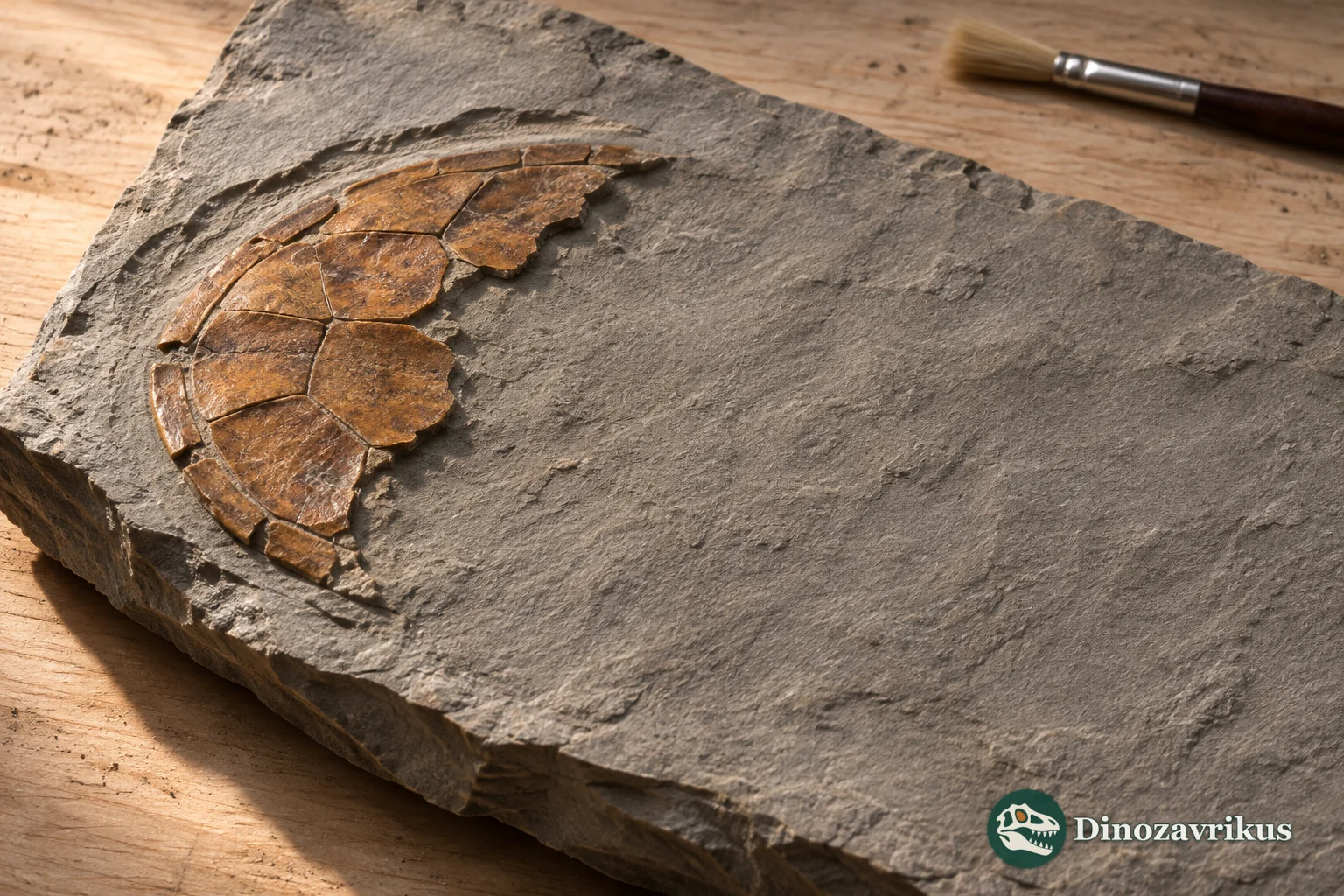
| Holotype | MACN-CH-1680, front of the carapace preserved partly as an impression |
| Scientific name | Prochelidella |
| Diet | Exact diet unknown |
What can the fossils tell us?
The front of MACN-CH-1680 records the shape of a low carapace. Its head and neck were not preserved.
The skeleton of P. portezuelae includes six neck vertebrae. These support a short neck for that particular species.
Ripples and laminations in volcanic mudstones record the environment in which the older bones accumulated.
A genus named from a shell margin
In 2001, France de Lapparent de Broin and Marcelo de la Fuente described Prochelidella argentinae from the Bajo Barreal Formation in Chubut. The type specimen consists chiefly of an impression, with a few surviving plates, from the front of a broad, low carapace. A shallow notch and the position of the wide cervical scute help characterise its leading edge. Published age assignments for the locality differ.
An early population around a lake
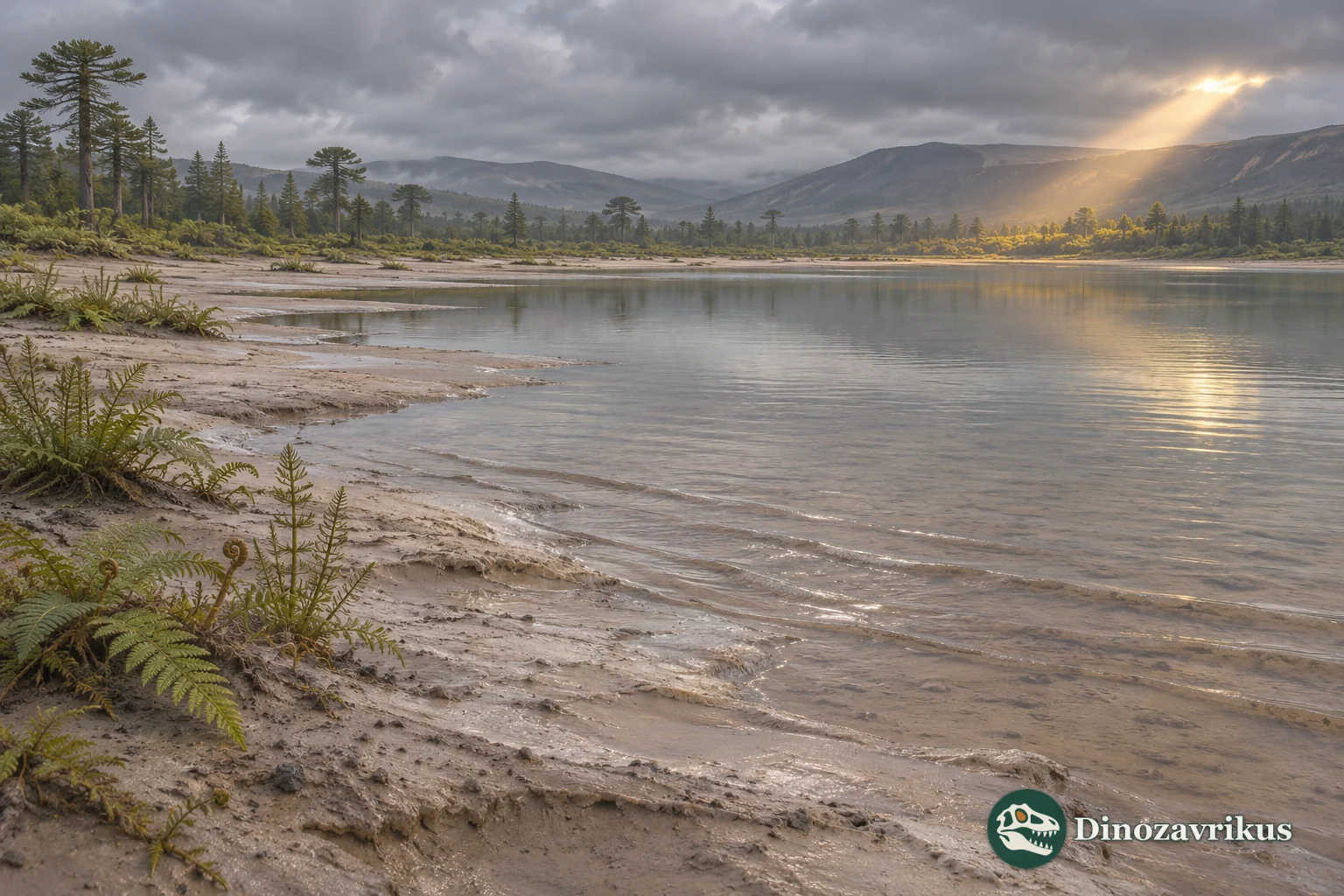
The oldest named species, P. cerrobarcinae, is from the Puesto La Paloma Member of the Cerro Barcino Formation, dated to the Aptian or Albian. The type preserves part of the upper shell, and other individuals provided plastral material. Near the centre of the shell, the second neural and first costal bones do not meet. That small detail distinguishes it from P. portezuelae.
Fine laminations and asymmetrical ripples in tuffaceous mudstones point to shallow lake deposition. The bones give an early record of the lineage that now includes the Australasian and South American chelids. Another Patagonian species, P. portezuelae, had a short neck. Some of today’s chelids are long-necked.
A skull from the late Cretaceous
The Campanian P. palomoi, found in the Anacleto Formation, is based on MAU-Pv-AG-452. The skull is incomplete but preserves parts of the roof and base. A sutured connection between pelvis and shell places it among side-necked turtles, as does the anatomy of other species in the genus. The South American Roxochelys illustrates a separate side-necked lineage, with a differently built shell.
The first skull remains assigned to the genus came from La Buitrera in Río Negro. This Cenomanian material forms the basis of P. buitreraensis, a species from the Candeleros Formation. The form of the opening for the trigeminal nerve helps distinguish it from the younger Campanian species.
The record extends south to Santa Cruz Province. There, Cenomanian bones from the Mata Amarilla Formation can be identified to genus. They expand its mapped range without adding a named species.
Frequently asked questions
What part of the skeleton names the genus?
MACN-CH-1680 preserves the front of the carapace, largely as an impression.
Which species lived at the older lake site?
Prochelidella cerrobarcinae is known from the Aptian or Albian Puesto La Paloma Member.
Which species has neck bones?
The partial skeleton of Prochelidella portezuelae contains six neck vertebrae.
What was found in Santa Cruz?
Fragmentary shell material from the Mata Amarilla Formation was identified as Prochelidella without a species assignment.