

Roxochelys was a Late Cretaceous side-necked turtle of Brazil. Its earliest known shell pieces were grouped with those of another turtle. Later discoveries showed how to distinguish its upper and lower shell, and allowed researchers to separate marks left on the bone from the original surface pattern.
Quick facts
| Group | Turtles, side-necked podocnemidoids (Podocnemidoidea) |
|---|---|
| Age | Late Cretaceous |
| Region | South America (São Paulo State, Brazil) |
| Type species | Roxochelys wanderleyi |
| Holotype | MCT (DGM) 216-R, parts of the carapace and plastron |
| Scientific name | Roxochelys |
| Diet | No direct evidence |
What can the fossils tell us?
The type preserves parts of both halves of the shell. These support comparisons of bone shapes and surface ornament.
One costal is reinforced near its join with a strut from the lower shell. The location of the thickening is more informative than shell thickness alone.
Localized traces of bioerosion record part of a fossil’s history. The fine pattern of the shell itself belongs to the animal’s anatomy.
Separating the first specimens
Llewellyn Ivor Price named Roxochelys wanderleyi in 1953 after re-examining material from the Araçatuba–Jupiá area of São Paulo State. Some of its bones had been included with “Podocnemis” brasiliensis. The type of Roxochelys, MCT (DGM) 216-R, consists of portions of the upper and lower shell and is housed at the Museu de Ciências da Terra in Rio de Janeiro.
A later study recognized “P.” brasiliensis as a distinct species on the basis of additional plastral material. Similar-looking fragments from one geological unit can conceal differences that become clear once the same parts of different shells are available.
Reading the shell
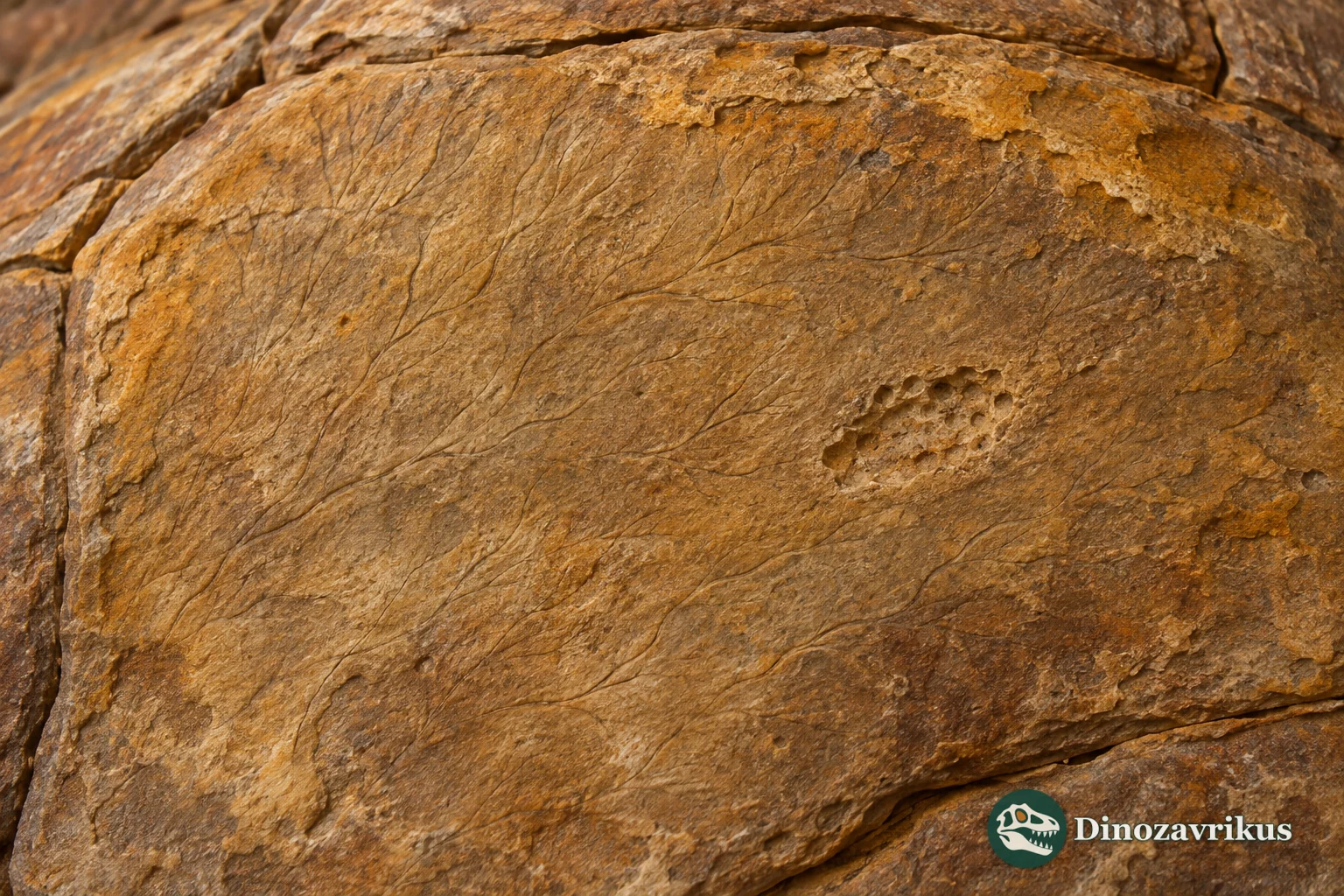
A pattern of fine polygons marks the external surface. The second to fourth vertebral scutes were hexagonal and narrower than the adjoining pleural scutes. The second costal thickens around the attachment of a buttress from the plastron, providing a feature more specific than a generally heavy build.
A crushed but nearly complete shell, MPMA-10-0003/03, came from near Monte Alto. A different specimen from the Presidente Prudente Formation preserved more of the plastron and supported an updated diagnosis. The pits in the jaws of the side-necked Bothremys offer another way to identify a turtle. Roxochelys still lacks a securely assigned skull.
Marks made by other organisms
Some of the Presidente Prudente shell bones carry small grooves and pits attributed to bioerosion. The investigators treated these traces as evidence of what happened to the remains. The repeated pattern that formed on the living shell is a separate feature.
Frequently asked questions
Where is the type material kept?
It is catalogued as MCT (DGM) 216-R at the Museu de Ciências da Terra in Rio de Janeiro.
Which bone is particularly thick?
The second costal thickens near the contact with a buttress of the lower shell.
What did the Presidente Prudente finds add?
A new partial plastron gave researchers more anatomy for distinguishing the species.
Do we know the shape of its head?
A securely assigned skull has yet to be found.