

Prodipodomys was an extinct North American heteromyid, related to living kangaroo rats. Its identification rests chiefly on jaws and teeth rather than complete skeletons. The type species comes from an older Kansas fauna, while a well documented second species occurs in Early Pleistocene Idaho. A single Pleistocene date therefore cannot describe the whole genus. The cover is an artistic relative-based reconstruction, not a portrait of a fossil individual.
Changes in molar roots and crowns distinguish several named forms. More recent Arizona collections add numerous isolated teeth, but also show why a detached incisor cannot always be identified securely.
Quick facts
| Group | Heteromyidae, the family of modern kangaroo rats |
|---|---|
| Type species | P. kansensis, originally named Dipodomys kansensis |
| Genus author | Claude W. Hibbard, 1939 |
| Time | Late Miocene to Early Pleistocene across separate localities |
| Places | Kansas, Idaho and Arizona, North America |
| Evidence | Mainly jaws, cheek teeth and isolated incisors |
| Body reconstruction | Hind limbs, tail and fur are inferred from living relatives |
What can the fossils tell us?
Hibbard erected Prodipodomys for the earlier Dipodomys kansensis from Edson Quarry. Cheek teeth support the distinction, but do not preserve fur or locomotor behavior.
Hibbard named P. idahoensis from Elmore County, Idaho, in 1962. Its Early Pleistocene context must not be assigned to the older Kansas type material.
Arizona samples include single-grooved and multi-grooved upper incisors. Without associated diagnostic cheek teeth, the latter may represent variation or another similarly sized rodent.
The Kansas name and its changing age
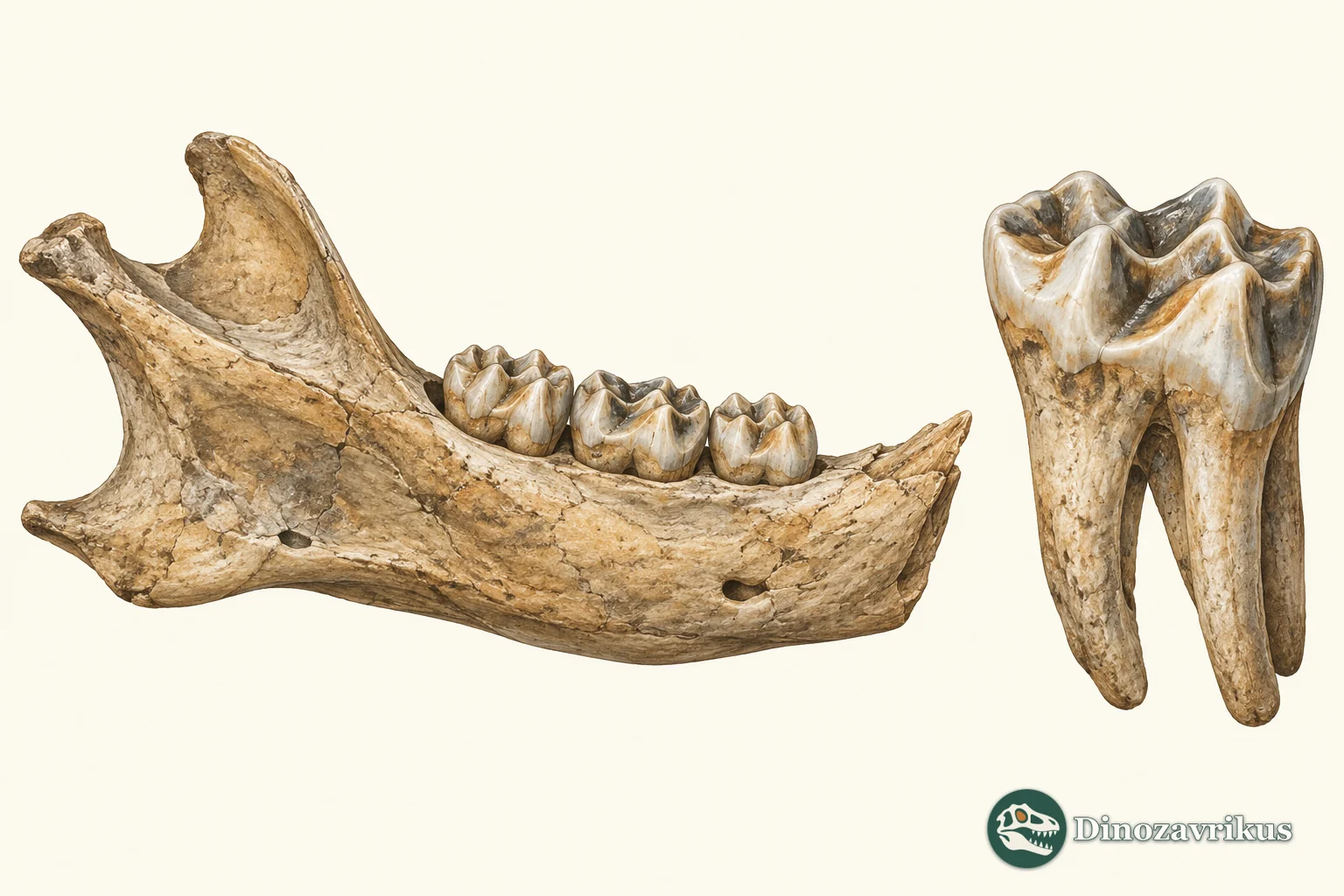
Claude W. Hibbard first named Dipodomys kansensis, then established Prodipodomys for it in 1939. The Edson Quarry fauna comes from Sherman County, Kansas. Dental root patterns set the fossil apart from living Dipodomys. A later systematic comparison also uses the roots of the cheek teeth to distinguish P. kansensis from other members of the extinct genus.
The original report called Edson Middle Pliocene. The Kansas Geological Survey instead places its fauna in the upper Ash Hollow Member of the Ogallala Formation and correlates it with the Hemphillian. That regional land-mammal interval reaches the Late Miocene. Neither historical label supplies an exact radiometric date for each jaw.
A younger species in Idaho
In 1962 Hibbard named P. idahoensis from the Hagerman Formation of Elmore County, Idaho, assigning the material to the Early Pleistocene. Compared with some previously known species, its cheek teeth have higher crowns and different degrees of root development. These dental comparisons do not measure the animal's standing height or weight.
A later Arizona study catalogued incisors, premolars and molars attributed to P. idahoensis at Wolf Ranch and Manny's Site. The inventory counts pieces, not individual animals. Upper incisors bearing a single groove resemble those in a partial skull from the Verde Formation. Several other isolated incisors show multiple grooves. The authors left open whether they represent variation within P. idahoensis or another rodent until incisors are found with identifiable cheek teeth.
Different landscapes and fossil limits
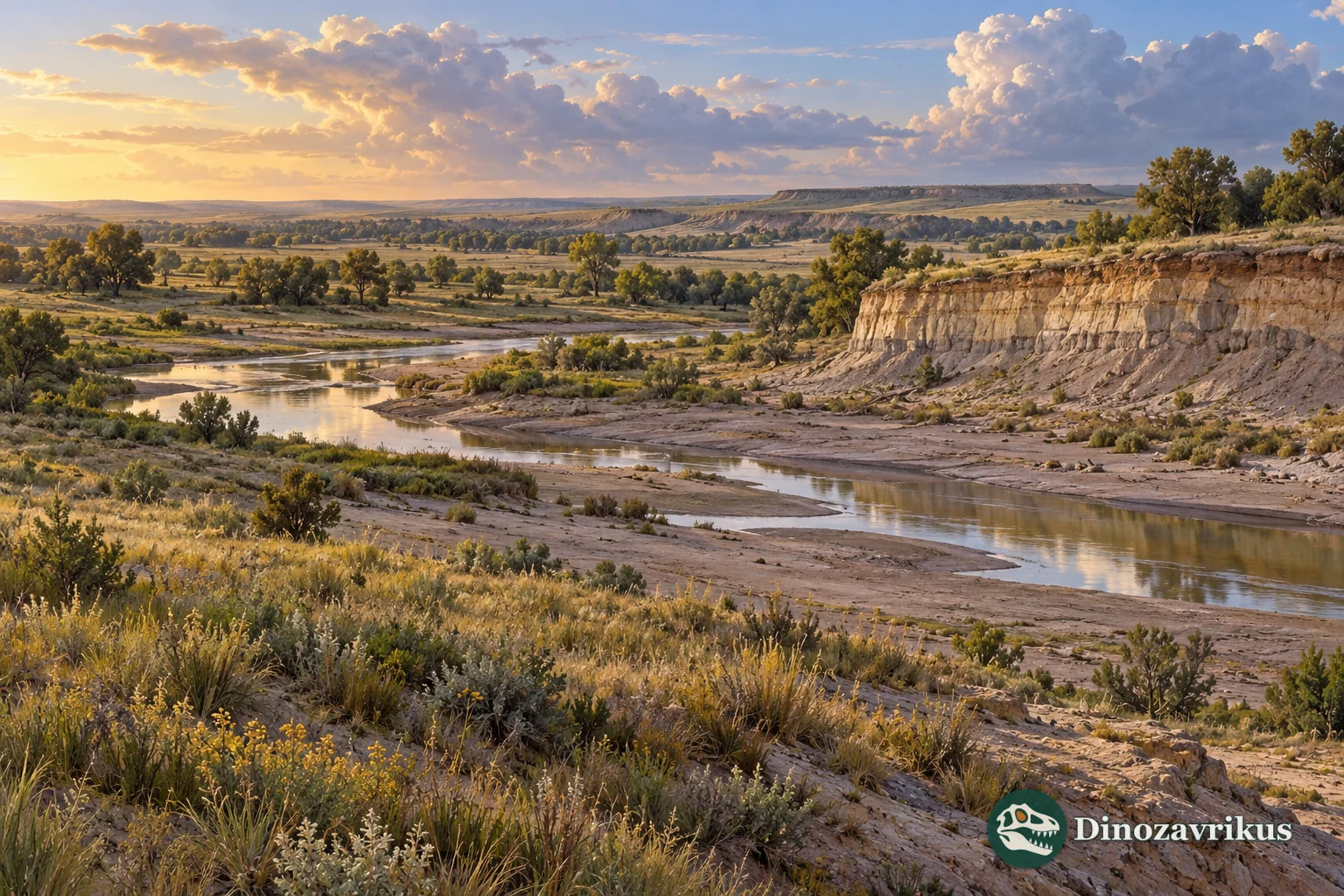
Edson is associated with Ogallala deposits, whereas the Idaho material came from sediments of the Snake River valley. These records are separated by place and time. Sediment and associated fauna describe preservation contexts, not the exact home range of every fossil animal. The landscape illustration is an imagined open setting, not a documentary view of Edson Quarry.
Teeth can establish relationships and compare species. They cannot supply a precise whole-body length, jump height or coat color without enough other remains. The cover's long tail and enlarged hind legs are inferred from living relatives. Thrichomys offers a contrast among fossil rodents, without implying close kinship. The younger Idaho record belongs to the Quaternary, while the Kansas type is older.
What remains unresolved
The multiple grooves on some loose Arizona incisors may reflect variable enamel development, but a second similar-sized taxon is also possible. Finding an incisor attached to an identified jaw would test those alternatives. Fossil tooth shape alone does not document food preference, nesting, fur or exact mode of movement for the named animal.
Frequently asked questions
Was Prodipodomys a modern kangaroo rat?
No. It was an extinct heteromyid that Hibbard separated from Dipodomys using dental characters.
Are all its fossils Pleistocene?
No. The type species comes from the older Hemphillian Edson fauna; P. idahoensis was described from Early Pleistocene Hagerman deposits.
What do grooves on Arizona incisors show?
Single-grooved incisors were compared with P. idahoensis. Some multi-grooved fragments remain uncertain without associated cheek teeth.
Do fossils reveal its coat color?
No. The named tooth and jaw material does not preserve fur; the cover's coloring is artistic.