

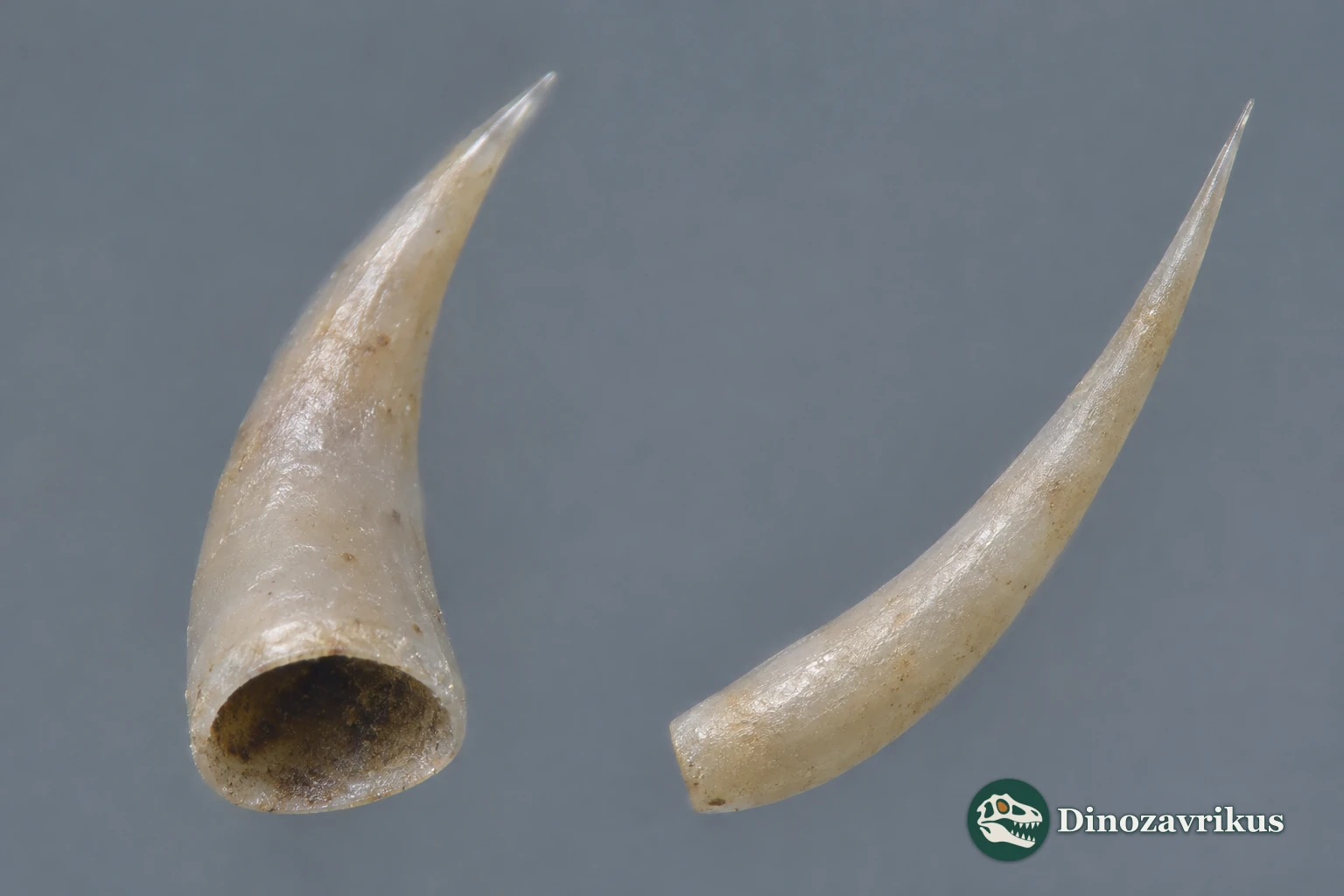
Prooneotodus is known from microscopic phosphatic elements that look like smooth pointed cones. A deep cavity opens at the base and can reach almost to the tip. Its shape and the outline of the element in cross section help distinguish species.
Quick facts
| Group | Paraconodonts |
|---|---|
| Age of finds | Cambrian to earliest Ordovician |
| Genus named | Klaus Müller and Yasuo Nogami, 1971 |
| Type species | Prooneotodus gallatini |
| Type locality | Gallatin Limestone, Wyoming |
| Fossil evidence | Isolated phosphatic elements |
What can the fossils tell us?
P. gallatini has a round tip and a variably oval base. The cross section of P. rotundatus is round through the cusp and base.
The cavity is especially deep in P. rotundatus. It is less obvious when the fossil is viewed only in profile.
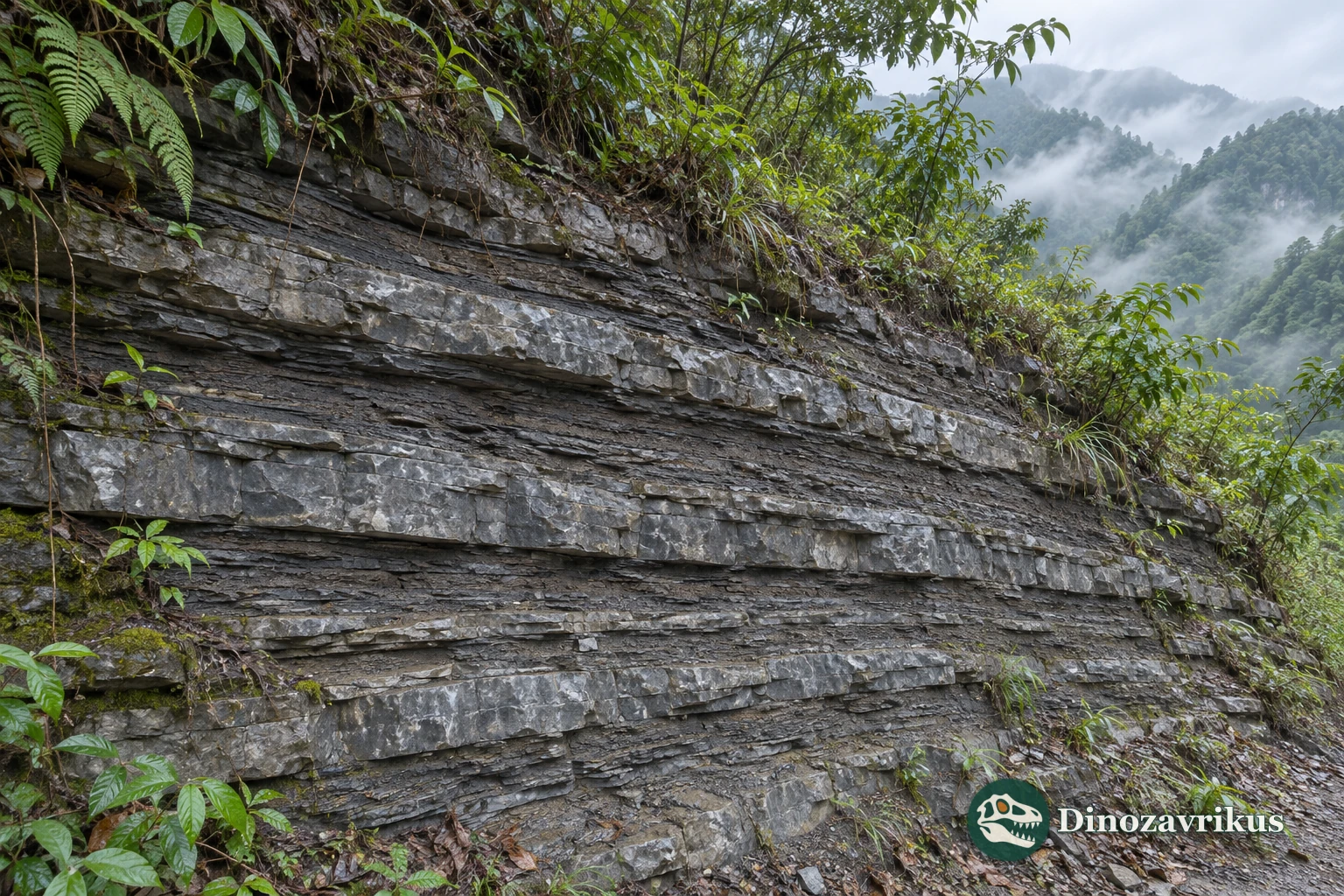
Elements from Wangcun and Wa’ergang occur on both sides of the Cambrian–Ordovician boundary.
From the Gallatin Limestone to Hunan
Klaus Müller described the type species as Oneotodus gallatini in 1959 from the Gallatin Limestone in Wyoming's Bighorn Mountains. Müller and Yasuo Nogami established Prooneotodus in 1971 and retained gallatini as the type species.
In 2017 Xi-ping Dong and Huaqiao Zhang described 300 P. gallatini elements and 90 P. rotundatus elements from western Hunan. At Wangcun and Wa’ergang, both species range into the early Ordovician Cordylodus intermedius Zone.
How to tell the smooth cones apart
The elements of P. gallatini taper relatively quickly and have an oval base. P. rotundatus tapers more gradually and remains circular in cross section. Its basal cavity nearly reaches the tip. Both have rounded edges without prominent keels or ridges.
The outline of P. rotundatus can resemble that of the early euconodont Millerodontus intermedius. In this case, microscopic differences in tissue structure help researchers assess which group an element belongs to.
An older name for a Phakelodus species
Some studies used Prooneotodus tenuis for elements now classified under Phakelodus. The latter has a protoconodont tissue structure. The application of Prooneotodus follows its own type species, P. gallatini. A single conical element records its own form and reveals little about the body that carried it.
Frequently asked questions
Which species is the type of Prooneotodus?
Prooneotodus gallatini. Müller described it under a different genus name in 1959.
How do P. rotundatus and P. gallatini differ?
P. rotundatus tapers more gradually and has a rounder base and a deeper basal cavity.
Do Prooneotodus fossils occur in Ordovician strata?
Yes. In western Hunan, two species range into the early Ordovician Cordylodus intermedius Zone.
Can a single element reveal what the whole animal looked like?
It preserves its own shape and part of its internal structure. The animal's body is unknown from such material.