

Propalaehoplophorus was an early glyptodont from Patagonia. It is known from more than isolated armor plates: skulls, jaws and skeletal parts have also been referred to the genus. These fossils offer a view of its teeth and head, but historical material from separate sites must not be assembled into a single animal without evidence.
The genus belongs in the ancient mammal catalogue. The much later Glyptodon shows how diverse this lineage became. The armored Kraglievichia belongs instead to the pampatheres, despite a superficially similar shell.
Quick facts
| Type species | Propalaehoplophorus australis Ameghino, 1887 |
|---|---|
| Group | Cingulata, early glyptodonts |
| Main age | Early Miocene, Santacrucian |
| Type region | Santa Cruz River, Patagonia |
| Fossil material | Osteoderms, skulls, jaws and skeletal parts |
| Comparative specimen | MLP 16-15, referred to P. australis |
What can the fossils tell us?
The plates record central and peripheral figures, grooves and position within a carapace. An isolated plate does not reveal the complete body outline or prove association with a nearby skull.
The specimen referred to P. australis includes a skull, mandible and skeletal parts. It can be used to compare toothrows and proportions, but should not be confused with every piece in the mixed historical type series.
The type region lies in the Santa Cruz Formation. The Santacrucian fauna gives a broad age context, while early specimen labels do not date every separate plate precisely.
From early plates to a referred skull
Florentino Ameghino introduced Propalaehoplophorus australis in 1887 from fossils of the Santa Cruz Formation along the river of that name. Historical collections were assembled at different times and often lack a precise modern bed assignment. A later revision lists armor plates and cranial material in the early series and notes that some plates came from different individuals. They should not be drawn as one articulated type carapace.
The specimen MLP 16-15, referred to P. australis, preserves a skull, mandible and skeletal elements. Its toothrow provides a basis for comparison with other early glyptodonts. It does not mean that every isolated osteoderm along the Santa Cruz River belonged to that individual. Names such as P. incisivus and P. minus also appear in historical work; their limits require examination of original specimens rather than a simple list of names.
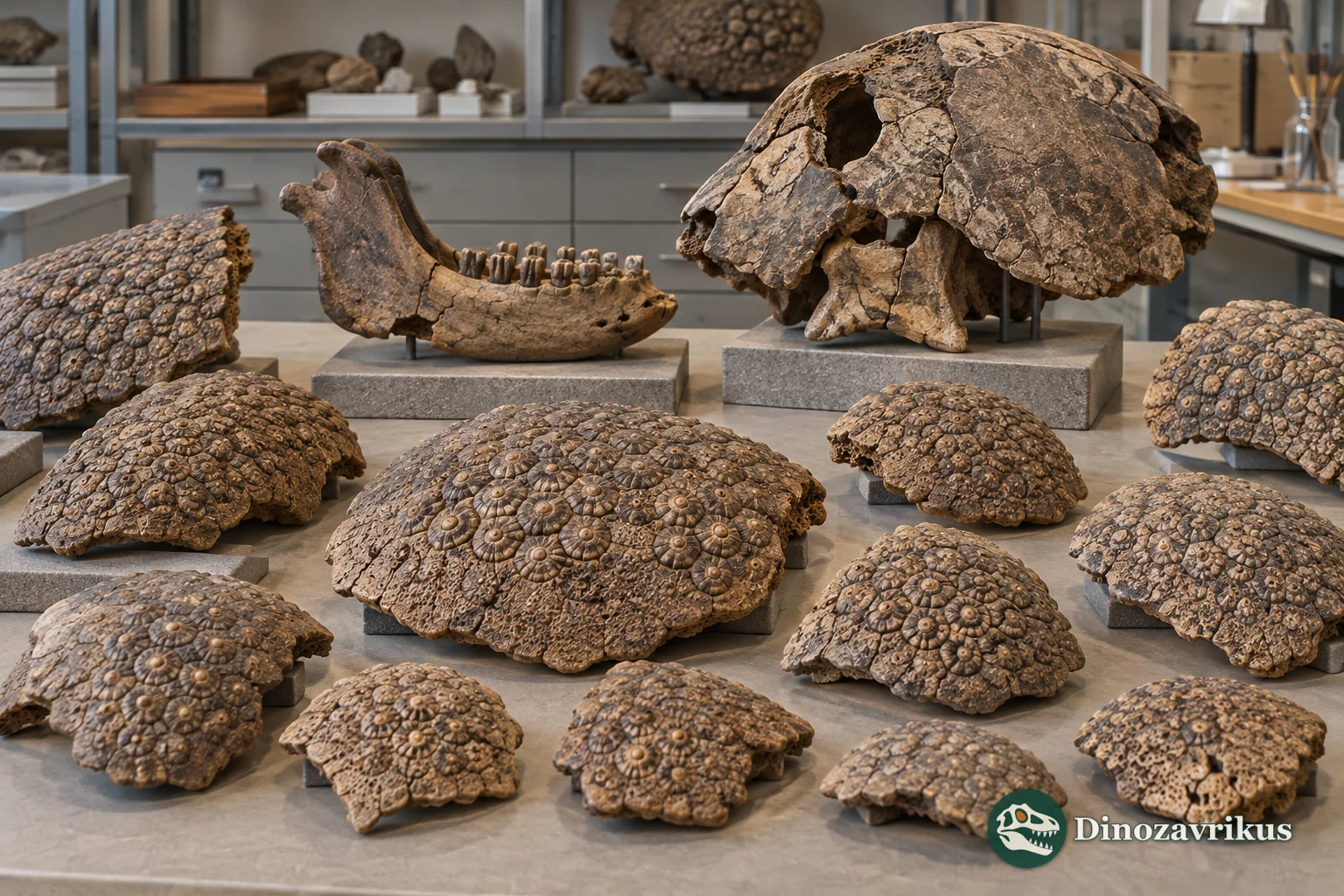
What armor and teeth can tell us
A glyptodont carapace consisted of bony osteoderms. Each visible surface may show a central figure, surrounding fields and separating grooves. Plates from different parts of one shell vary, so a researcher first locates a plate's position and then compares like with like. Wear and breakage may obscure the useful features.
Associated cranial material helps connect the armor to glyptodont relationships. The cheek teeth are consistent with processing plant matter, but they do not preserve a menu of grasses or leaves. A precise body mass for the entire genus cannot be read from one skull. Nor can the size of much later giant glyptodonts be transferred to this Miocene form.
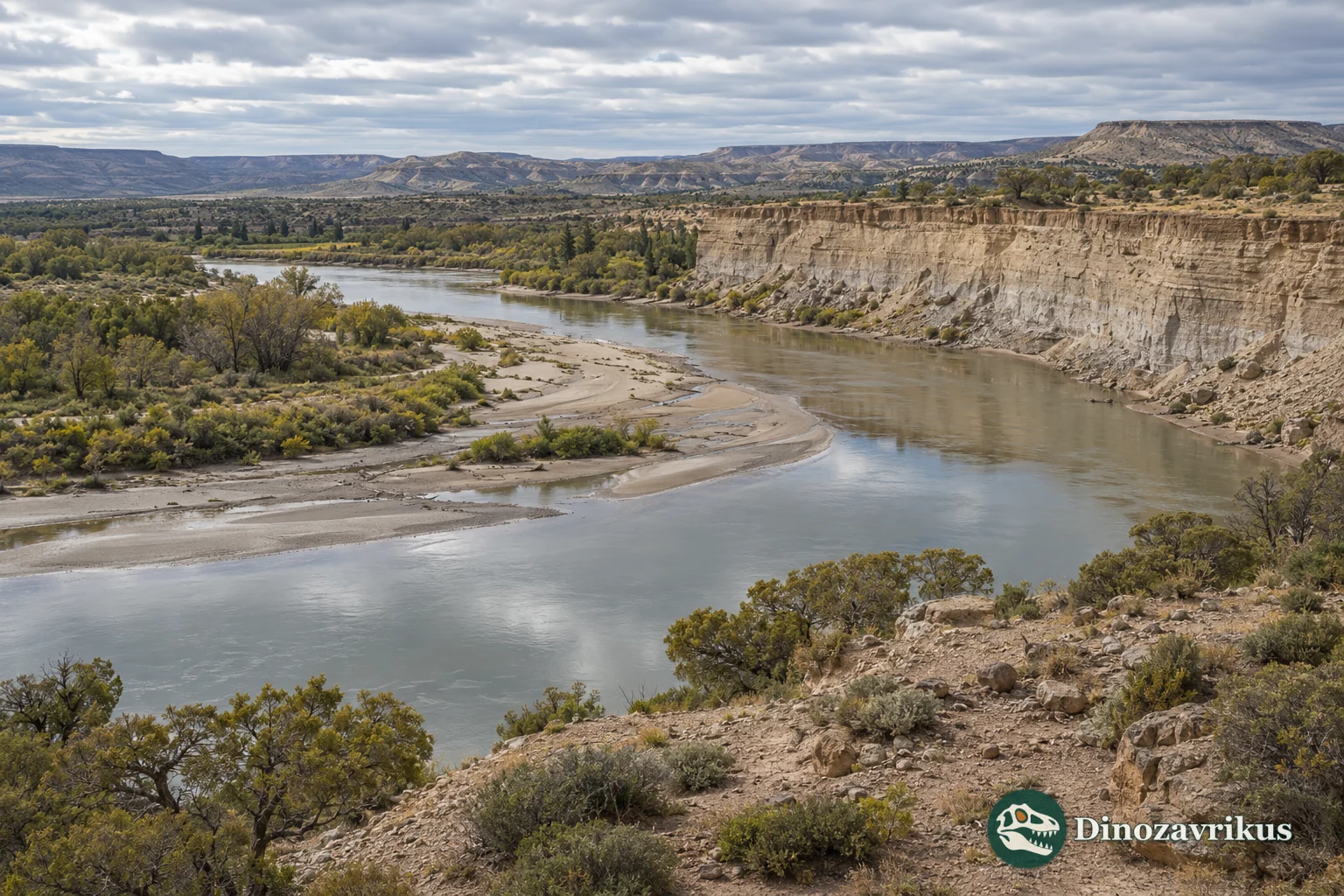
Santa Cruz beds and the limits of life art
The Santa Cruz Formation crops out in several parts of Argentine Patagonia. Its mammal assemblage belongs to the early Miocene Santacrucian land mammal age. Old riverbank finds and later coastal collections come from distinct samples with different locality records and bed positions.
Not every propalaehoplophorine plate can be named Propalaehoplophorus. New collections along the river include other glyptodonts, while a young animal's jaw fragment has only a cautious subfamily identification. An occurrence of the broader group elsewhere does not establish P. australis in a new basin.
The cover depicts a low animal with a rounded shell and short tail. Fossil osteoderms establish armor, but exact shell curvature, color, ears and behavior beside a river are artistic choices. The giant tail club of some later glyptodonts has not been imposed on this early genus.
Frequently asked questions
What is the type species of Propalaehoplophorus?
P. australis, named by Florentino Ameghino in 1887 from Patagonian Santa Cruz Formation material.
Is a complete skeleton known?
MLP 16-15 includes a skull, jaw and skeletal parts, but the wider historical material consists of separate finds rather than one complete individual.
How do osteoderms help identification?
The central figure, grooves and marginal fields can be compared between corresponding parts of a carapace. A worn isolated plate often permits only a broader assignment.
Was it a smaller version of Glyptodon?
Both are glyptodonts, but they lived in different periods and differ in cranial and armor characters. The later genus is not a safe size model.