

Propleopus was a genus of large extinct Australian rat-kangaroos known mainly from jaws and teeth. Its enlarged cutting premolar inspired the popular idea of a 'carnivorous kangaroo', but tooth shape does not reveal the entire diet. How often it hopped is also debated. The cover is an artistic reconstruction, not a portrait based on a complete fossil skeleton.
A sequence of taxonomic studies separated multiple species by details of their premolars and molars, while later work tested the more speculative claims about feeding and movement.
Quick facts
| Group | Extinct giant rat-kangaroos, Propleopinae |
|---|---|
| Type species | P. oscillans, first described by De Vis in 1888 |
| Other species | P. chillagoensis and P. wellingtonensis |
| Region | Australia, including Queensland and Wellington Caves records |
| Age | Pliocene to Pleistocene across referred material |
| Evidence | Mostly jaws, premolars and molars; limited limb material |
| Unresolved | Exact diet and habitual gait |
What can the fossils tell us?
Premolar and molar comparisons distinguish P. chillagoensis from P. oscillans. A jaw fragment cannot provide a complete skeleton or an exact body mass.
Tooth form and reported wear support discussion of animal food or omnivory. They do not establish a prey list or the fraction of meat eaten.
Proposed frequent quadrupedalism relies in part on isolated humeri attributed to P. oscillans. Attribution and function require care; the fossil record does not preserve its habitual gait directly.
From one jaw fragment to several species
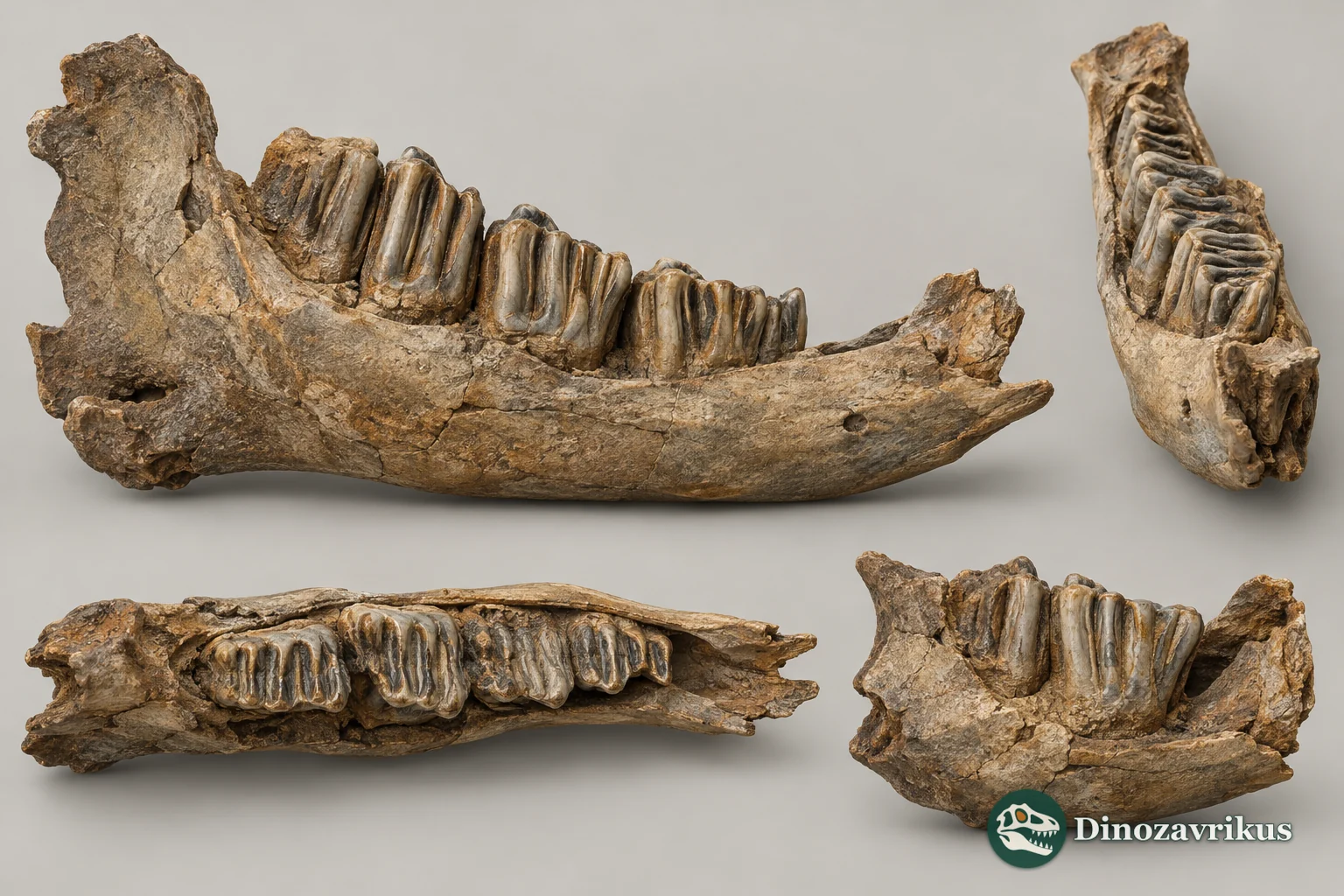
Charles Walter De Vis described the animal now called P. oscillans in 1888 from a fragmentary lower jaw. Longman introduced the genus name Propleopus in 1924. Subsequent jaws and teeth expanded the sample, but it never became a complete body from which every proportion could be measured.
In 1978 Michael Archer, Alan Bartholomai and Larry Marshall described P. chillagoensis from northern Queensland. Its premolars and molars differ from those of P. oscillans. They also discussed similar material from Wellington Caves, without equating every specimen. A later revision named P. wellingtonensis. Each name must be checked against its own fossil sample.
What teeth say about food
The enlarged premolar has cutting edges and an unusual ridged surface. It differs from the grinding teeth of many living grazing kangaroos. Researchers have proposed omnivory and animal food, drawing on tooth form and wear. Neither the jaw nor enamel patterns provide a complete prey list or demonstrate regular pursuit of large vertebrates.
'Rat-kangaroo' is a group name, not evidence that this animal ate rats. The marsupial lion was a different extinct Australian marsupial. Cutting teeth in both do not imply identical feeding behavior.
A debated way of moving
Some reconstructions have proposed frequent quadrupedal movement or even endurance running in P. oscillans. These interpretations rely on few attributed humeri and comparisons with other mammals. A later review stressed how limited the associated postcranial evidence remains. Tooth anatomy alone cannot decide whether hopping was absent.
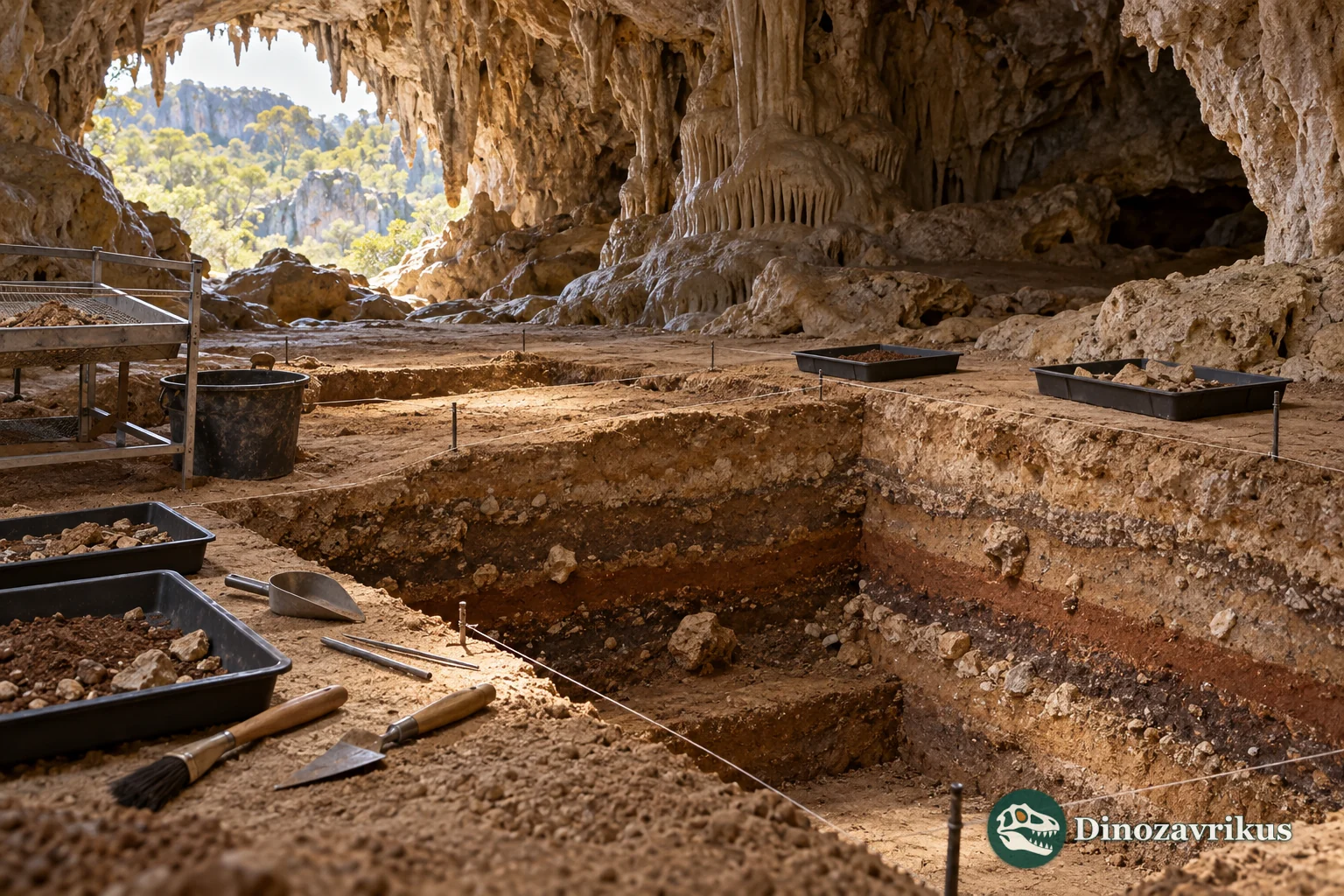
Neither a modern kangaroo pose nor a quadrupedal illustration can establish a habitual gait. Protemnodon belongs to another kangaroo lineage; its limb proportions cannot simply be assigned to Propleopus. The cave scene is interpretive, not a record of a named excavation.
Age, relationships and limits
Material assigned to the genus spans different parts of late Cenozoic Australian history. Ages come from geological settings and associated faunas, not an isolated tooth alone. Its placement among rat-kangaroos has changed with phylogenetic analyses; one analysis even raised the possibility that traditional Propleopus species do not form a single natural group.
Exact coat color, care of young and the extinction of each species are not established by the cited jaws. The cover depicts one possible broad body plan, not a measured species-specific reconstruction.
Frequently asked questions
Was Propleopus really a kangaroo?
Yes. It belonged to the kangaroo-related marsupials, although it was not a living Macropus species.
Was there only one species?
No. P. oscillans, P. chillagoensis and P. wellingtonensis have been described and distinguished mainly by dental features.
Is active hunting proved?
No. Cutting teeth and wear have supported discussion of animal food, but do not reveal meat's share in the diet or directly record hunts.
Did it always move on four limbs?
That has not been established. The hypothesis rests on limited skeletal material and functional comparisons.