

Propristis was an extinct sawfish, a ray with an elongated rostrum carrying broad flat spines along its edges. The type species P. schweinfurthi was named from Egypt. Partial rostra and detached spines from Spain and Alabama show distinctive features, although no complete body is established by these finds. The cover is a possible appearance, not a fossil photograph.
Quick facts
| Genus | Propristis Dames, 1883 |
|---|---|
| Type species | P. schweinfurthi, late Eocene of Fayum, Egypt |
| Group | Pristidae, sawfish rays |
| Type material | Part of an elongated rostrum |
| Distinctive feature | Short, broad flat rostral spines in close shallow sockets |
| Spanish find | Partial rostrum, Bartonian Vic-Manlleu Marls |
| Alabama sample | Ten isolated spines from Gosport Sand |
| Whole-body length | Not established from these fragments |
What can the fossils tell us?
Dames named P. schweinfurthi from a Fayum rostral fragment. This documents the front of the head, not total body length.
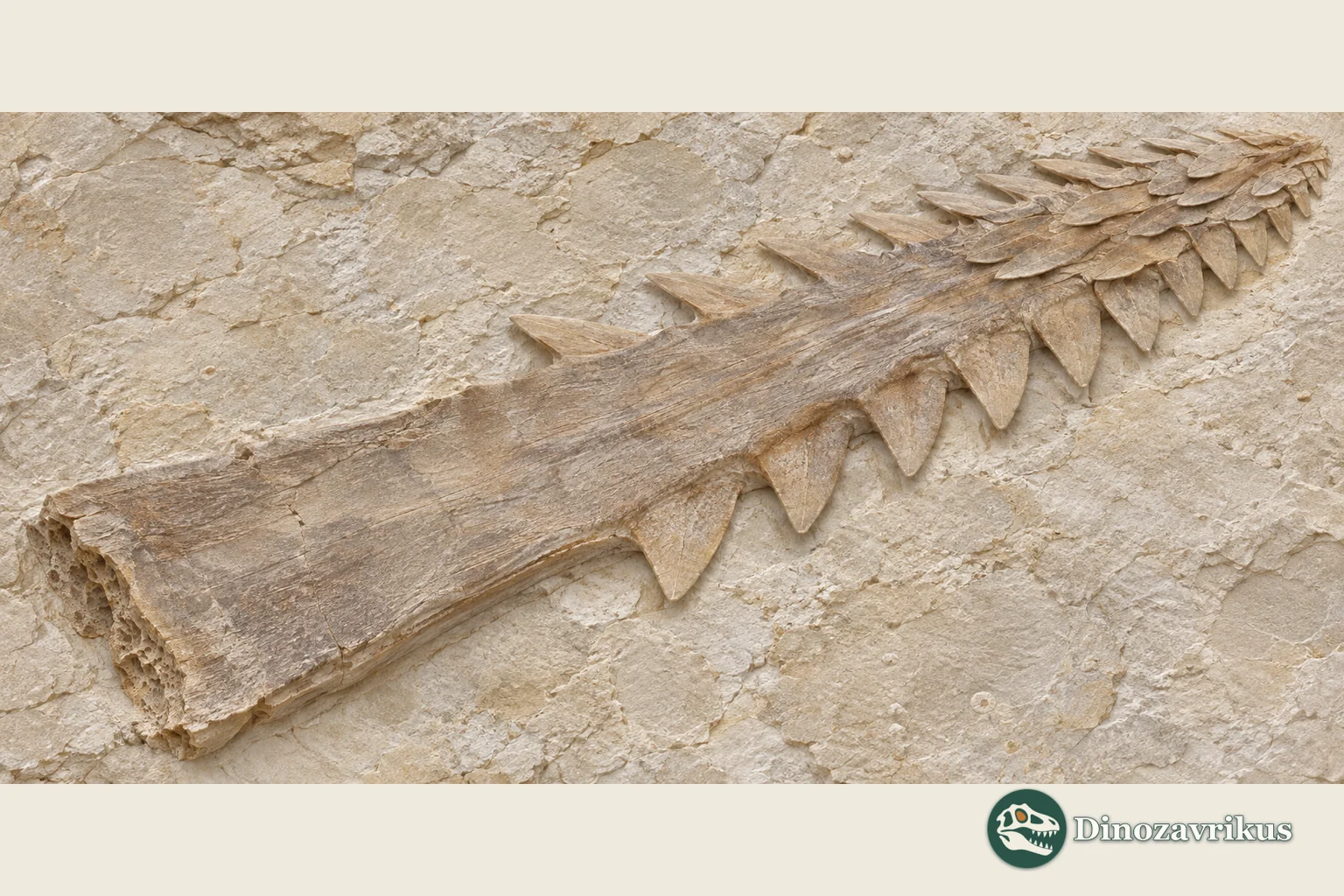
Alabama fossils show short, broad, thin spines in closely spaced shallow depressions. Neighbouring spines overlapped; they are not oral teeth.
The Bartonian Vic-Manlleu Marls specimen was identified as P. schweinfurthi. It does not document the movement of an individual between continents.
Tunisia research proposed oral teeth for Propristis but did not confidently assign every specimen to the type species without a connected rostrum.
The Fayum name and later synonyms
Wilhelm Dames named Propristis schweinfurthi in 1883 for a partial rostrum from Egypt's Fayum region. Detached spines from the same area were later called Amblypristis cheops. Stromer linked those spines to the rostrum and treated the second name as a junior synonym. An old museum label can therefore differ even where the material belongs to the same interpreted species.
The 2019 Alabama revision also recognized the Miocene P. mayumbensis as a named species. Its age and morphology should not automatically be assigned to the Eocene type species.
A distinctive saw edge
Its rostral spines are short, broad from front to back and very thin vertically. They occupied shallow, closely spaced depressions along the cartilage. Adjacent spines partly overlapped to make an irregular cutting edge. This arrangement differs from the longer, more deeply anchored lateral structures of other sawfishes.
Ten isolated Alabama spines from the Gosport Sand show a sharpened, sinuous edge and faint growth striations near the base. These are observations of fossil parts, not evidence for the animal's colour or total mass. A similar saw outline in Onchopristis does not alone establish close kinship.
The Spanish rostrum and its setting
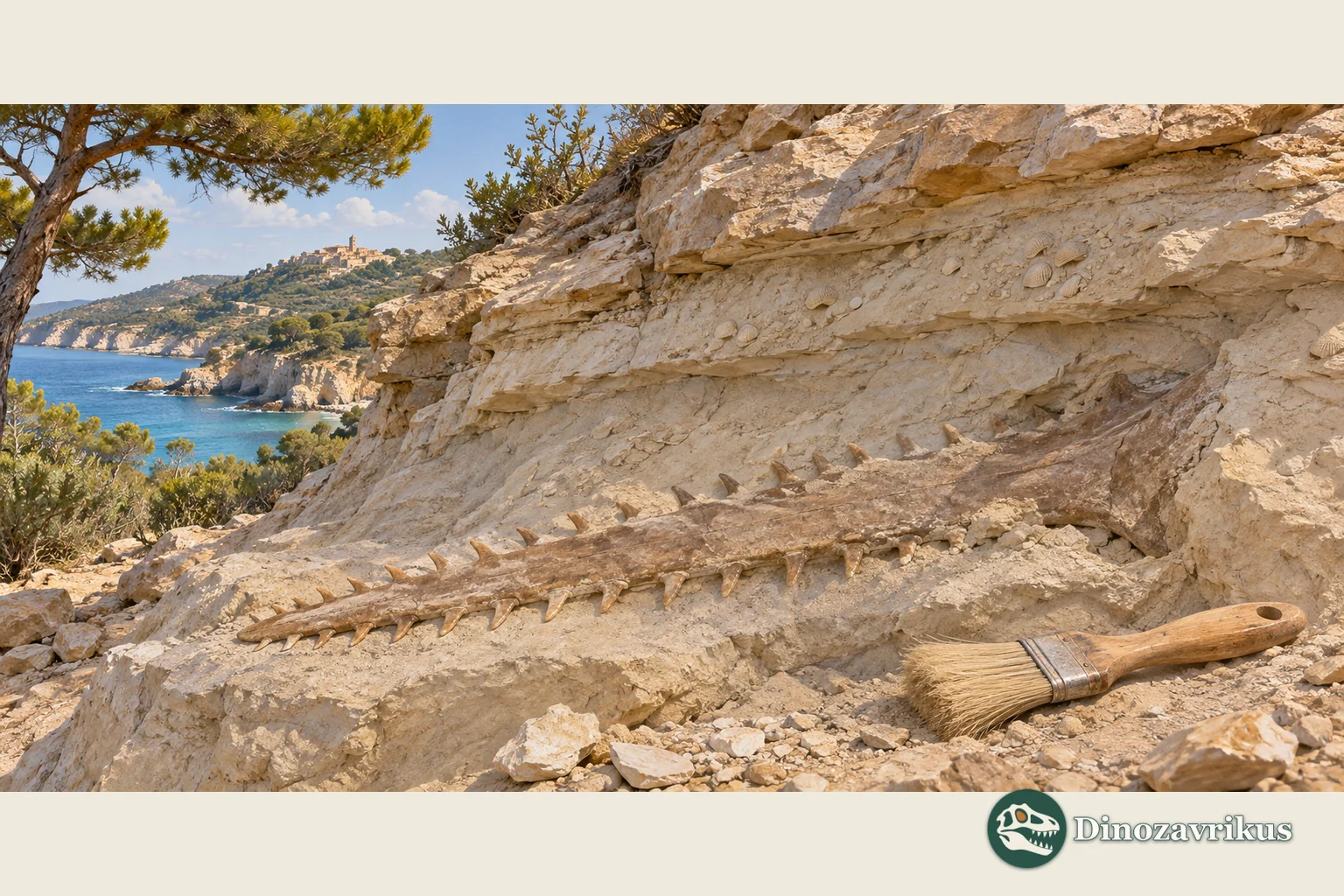
Farrés and Fierstine described a partial P. schweinfurthi rostrum from the Bartonian Vic-Manlleu Marls of northeastern Spain. They considered it the second European record. The age and locality extend the known fossil distribution; they cannot trace a particular animal's journey between Spain and Egypt.
The Alabama spines come from Bartonian Gosport Sand, whereas the Egyptian type material is late Eocene. A preference for warm nearshore water is inferred from depositional settings and comparison with living sawfishes, not observed directly in the fossil.
Rostral spines are not mouth teeth
The lateral spines belong to the elongated snout. Oral teeth sit in the mouth and are a different line of evidence. Tunisian researchers proposed that some isolated mouth teeth belong to Propristis, but were cautious about attaching them to P. schweinfurthi without secure association. A tooth from the same bed is not automatically from the same species.
This differs from the record of Pseudodalatias, whose published evidence is primarily dental. The Propristis rostrum reveals head anatomy, but fin outlines, precise hunting actions and body size remain unmeasured.
What the reconstruction can show
The cover uses the broad, overlapping rostral spines as its evidence-based element. Its disc colour, tail proportions and full-body length are artistic choices. Functions similar to those of living sawfishes can be proposed, but the cited fragments do not preserve a record of individual strikes or prey.
Frequently asked questions
Was Propristis a shark or a ray?
It was a sawfish ray in the family Pristidae. A saw-like snout alone does not make it a sawshark.
What makes its rostrum distinctive?
Short, broad, flat lateral spines sat closely in shallow depressions and partly overlapped to make an irregular cutting edge.
Where did the Spanish fossil come from?
A partial rostrum came from Bartonian Vic-Manlleu Marls in northeastern Spain.
Is its entire body length known?
No reliable whole-body measurement follows from the partial rostra and detached spines discussed here.