

Prosaukia lived in late Cambrian seas. A species from Nevada has eye lobes that touch the central lobe of the head and a pair of very small spines on its tail shield. Silicified fossils preserve these details in relief, making them easier to compare with those of related trilobites.
Quick facts
| Group | Trilobites |
|---|---|
| Age | Late Cambrian |
| Genus established | Edward Ulrich and Charles Resser, 1933 |
| Type species | Prosaukia misa |
| Type beds | Lone Rock Formation, Wisconsin |
| Nevada specimen | Cranidium SUI 99054 |
What can the fossils tell us?
The lobe and the central ridge meet in P. oldyelleri, whereas a strip of fixed cheek separates them in many relatives.
Comparisons identify three rings in P. misa and five in P. hartti.
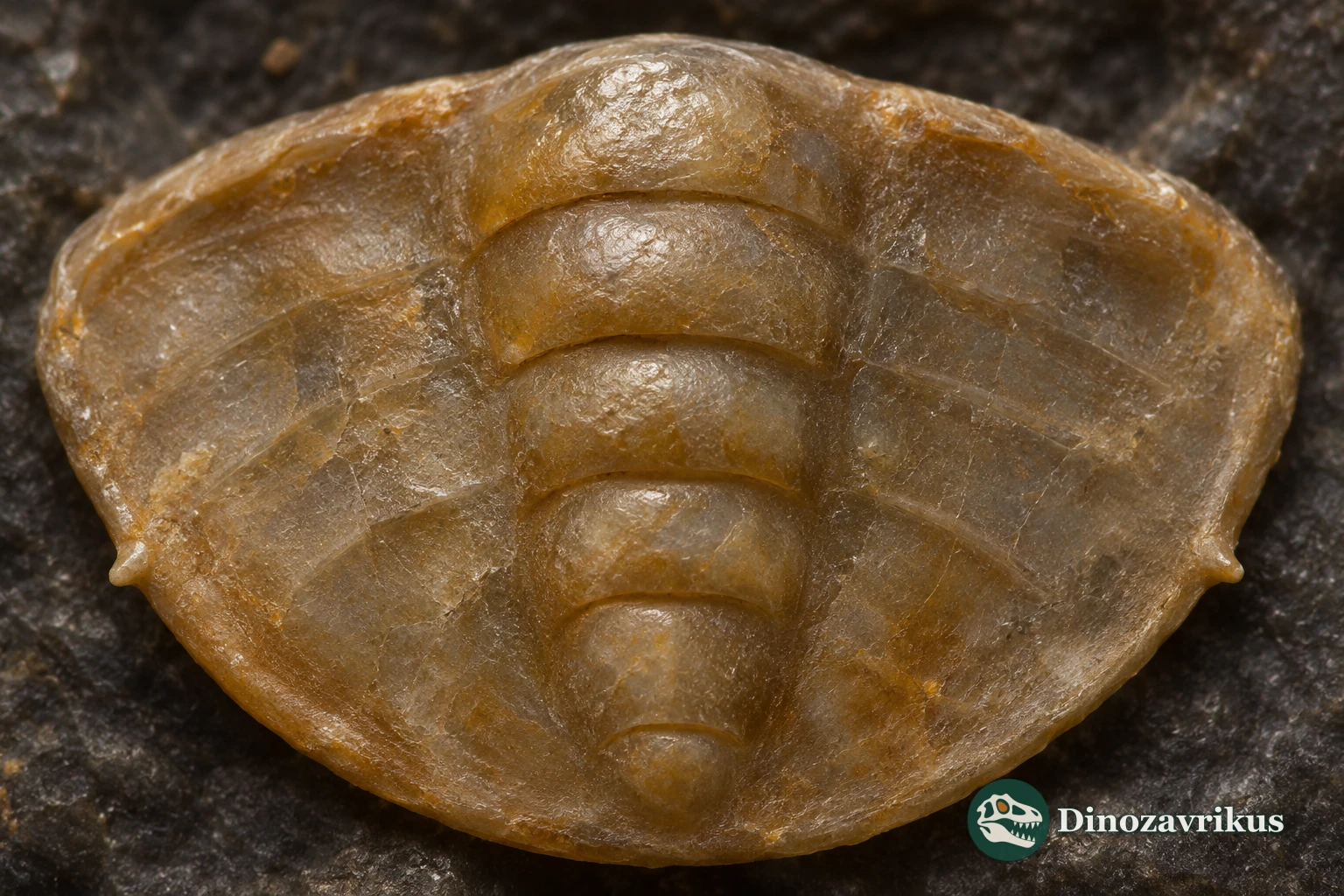
The Nevada pygidia retain a pair of minute marginal spines, the kind of feature that can be hard to find when a rock splits.
From Wisconsin to Nevada
James Hall named Dikelocephalus misa in 1863 from material found in Wisconsin. Edward Ulrich and Charles Resser designated it the type of Prosaukia in 1933.
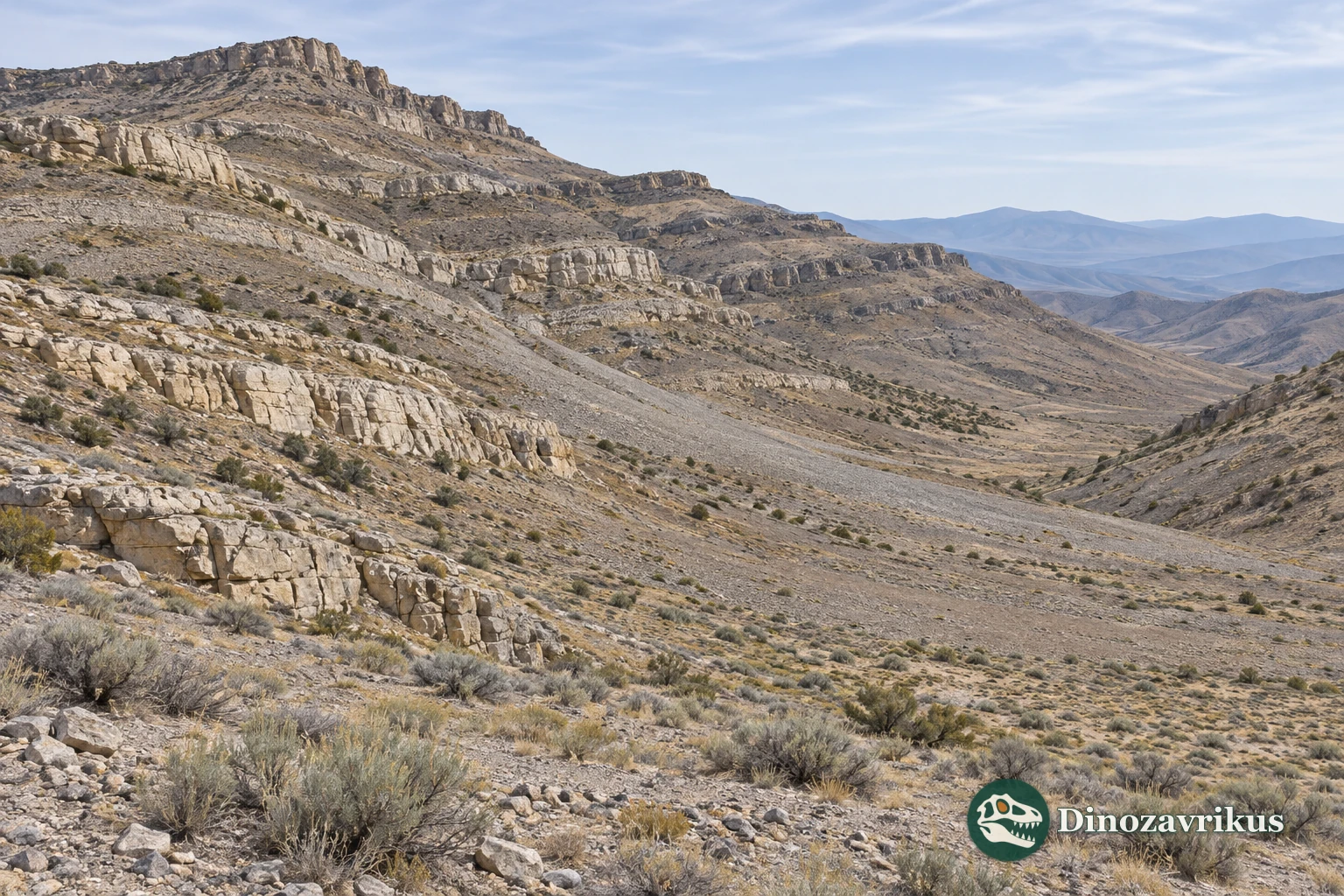
In 2004, Jonathan Adrain and Stephen Westrop described P. oldyelleri from Barton Canyon, Nevada. Its holotype, SUI 99054, is a cranidium from the Bullwhacker Member of the Windfall Formation. The same silicified fauna also includes a species of Euptychaspis.
Eye lobes and tiny pygidial spines
The curved eye lobes extend forward alongside the raised midline of the head, or glabella. At the back, a narrow strip of fixed cheek separates the two structures. Toward the front, that strip disappears and the eye furrow joins the axial furrow.
The tail shield preserves four axial rings, a rounded terminal piece and a pair of small marginal spines. The number of rings helps distinguish species. The comparable tail shields of P. misa and P. hartti have three and five rings respectively.
How much of the shell is known?
The Nevada description figures eleven cranidia, four free cheeks and fourteen tail shields. A separate thoracic segment was also recovered. Its coarse granules are absent from the shields confidently assigned to P. oldyelleri, so the segment could belong to a different trilobite. It cannot establish how many segments made up the thorax of the Nevada species.
Frequently asked questions
Where does the type species of Prosaukia come from?
From the Lone Rock Formation of Wisconsin. Hall described it in 1863.
Where was the P. oldyelleri holotype found?
In the Bullwhacker Member of the Windfall Formation at Barton Canyon, Nevada. The cranidium is catalogued as SUI 99054.
How many axial rings are on the P. oldyelleri pygidium?
Four, followed by a rounded terminal piece. The type species P. misa has three.
How many thoracic segments did the Nevada species have?
The detached segment from the locality could not confidently be assigned to the species. The published sample does not establish a thoracic count.