

Protestudo is a name proposed for a group of fossil tortoises. Its type species was described from Late Miocene shells found in Moldova. Fossils from Ukraine subsequently revealed which features of the shell were consistent and which varied among individuals.
Quick facts
| Group | Turtles, true tortoises (Testudinidae) |
|---|---|
| Age | Miocene, Late Miocene for the type species |
| Region | Europe (Moldova and Ukraine) |
| Type species | Protestudo bessarabica |
| Lectotype | PIN 1451, shell from Tudorovo |
| Carapace length | 189 mm and about 250 mm in two Belka specimens |
| Scientific name | Protestudo |
| Diet | Exact diet unknown |
What can the fossils tell us?
PIN 1451 from Tudorovo was selected as the lectotype. Some of the sutures and scute borders are difficult to trace on the original material.
Two carapaces from Belka measure 189 mm and about 250 mm in length. These figures describe individual shells.
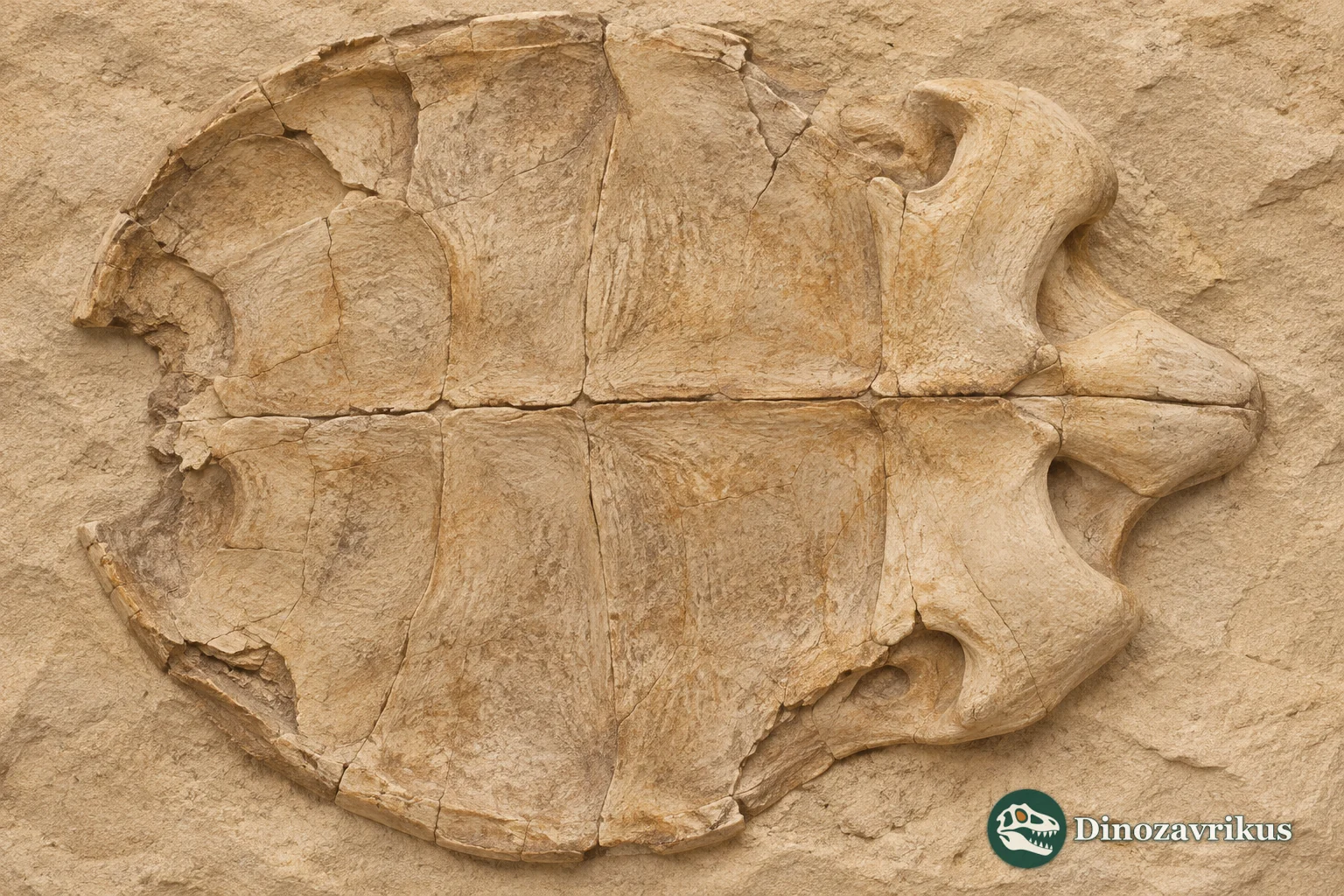
The lectotype has seven neural bones. Two Belka shells have eight. The count can be interpreted alongside other shell characters.
How the genus was named
Anatoly Riabinin described Testudo bessarabica in 1918 from fossils from Taraclia and Tudorovo in Moldova. PIN 1451 from Tudorovo was later selected as the lectotype. It is held at the Borissiak Paleontological Institute in Moscow.
In 1970 V. M. Chkhikvadze made the Bessarabian tortoise the type species of Protestudo. The status of the genus remains disputed. Some comparative work has placed the type species near living Central Asian tortoises and used the name Agrionemys. The description of the Belka shells retained the combination Protestudo bessarabica.
Three shells from Belka
In 2019 Elena Syromyatnikova and colleagues described three incomplete shells from Belka in the Odesa region of Ukraine. The most complete, NMNHU-P 48-7118, has a carapace 189 mm long, 172 mm wide and 117 mm high. The length of a second carapace was estimated at about 250 mm.
The front of the lower shell has thick bones and a well-developed lip. The lectotype has seven bones along the midline of the carapace. Two of the Belka carapaces have eight. The outline of these bones also differs between individuals, so a count alone provides limited evidence for identifying the species.
Late Miocene occurrences
The material from Moldova and Ukraine documents the type species in Eastern Europe. At Belka the bones occur in loam and sandy loam, and shells of river mussels were found in neighbouring layers. These finds help establish the setting in which the bones were buried. They leave the precise diet of the tortoise open.
An incomplete juvenile shell from the Konya area of Turkey has also been referred to the Bessarabian species on shell characters. Other fossil tortoises can be compared on the same parts of the skeleton, including Stylemys from much older beds in North America.
Frequently asked questions
Which species anchors the name Protestudo?
The Bessarabian tortoise, originally described as Testudo bessarabica. The lectotype comes from Tudorovo.
What was found at Belka?
Three incomplete shells. Two carapaces measure 189 mm and about 250 mm in length.
Why does the number of bones vary?
Shells assigned to the same species vary in the number and shape of bones along the middle of the carapace.
Do all studies recognise Protestudo as a separate genus?
Its status remains disputed. The type species has also been treated as a member of the Central Asian tortoise lineage called Agrionemys.