

Protochelydra lived in North American fresh waters during the Paleocene. Its type skull was badly compressed. When a second skull was described, the bones behind the eyes turned out to have shifted appreciably in the first specimen.
Quick facts
| Group | Turtles, stem snapping turtles (Pan-Chelydridae) |
|---|---|
| Age | Late Paleocene |
| Region | North America: North Dakota, USA, and Alberta, Canada |
| Type species | Protochelydra zangerli |
| Holotype | SMM P72.34.20, skull |
| Scientific name | Protochelydra |
| Diet | No direct evidence |
What can the fossils tell us?
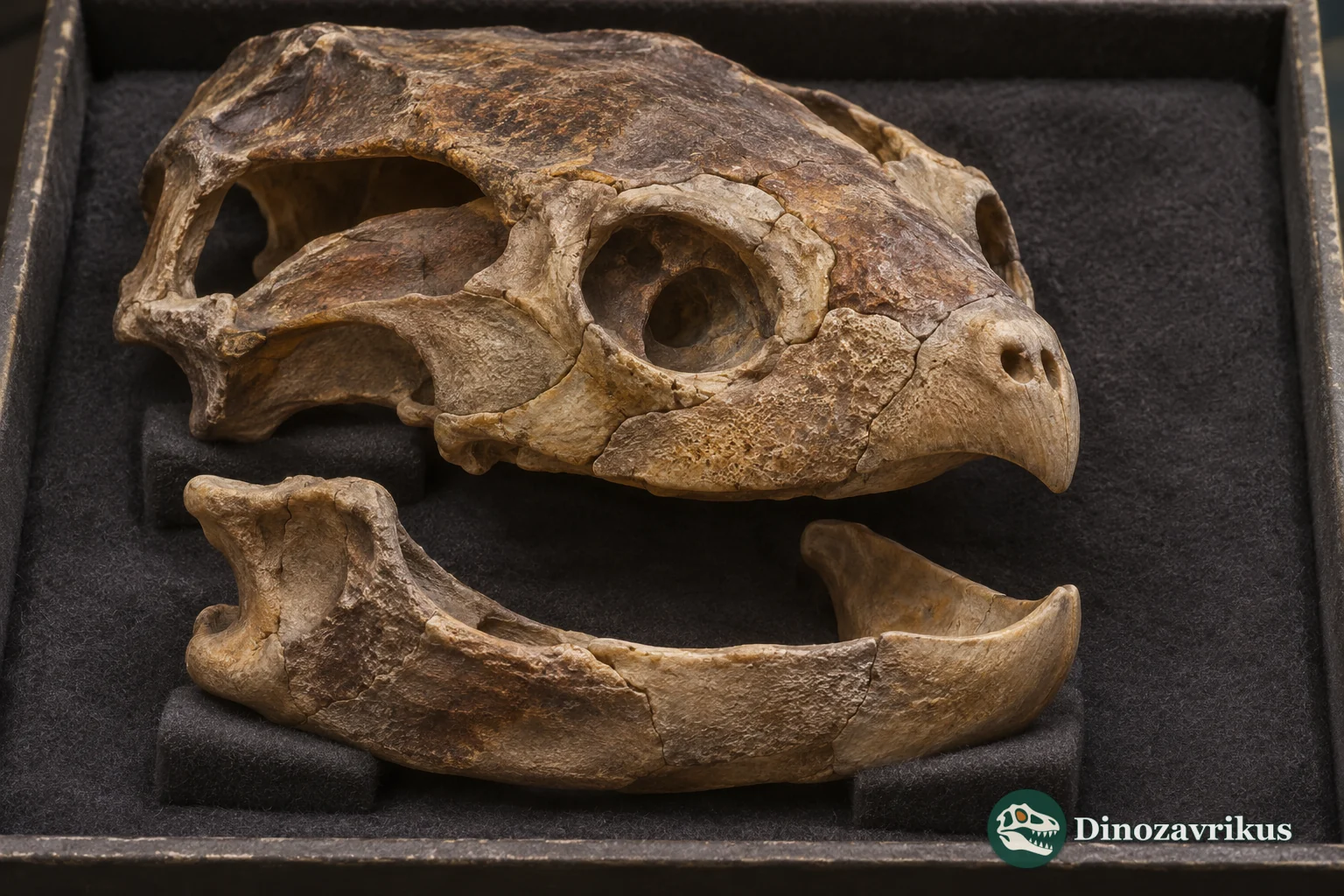
The back of the type skull was compressed and bones on either side shifted forwards, altering its apparent shape.
The better-preserved skull puts the squamosals and quadrates farther back from the eye sockets.
A 2025 analysis placed Protochelydra near living snapping turtles. The older Tavachelydra provides an additional early record of their stem group.
From Wannagan Creek Quarry
Bruce Erickson named Protochelydra zangerli in 1973 in honour of the turtle palaeontologist Rainer Zangerl. The skull SMM P72.34.20 comes from Wannagan Creek Quarry in Billings County, North Dakota. Erickson’s later account places these deposits in the Bullion Creek Formation. Separate specimens from the quarry include elements of the lower shell and bones of the limbs and girdles.
How a new skull corrected the picture
Compression displaced the squamosal and quadrate bones forwards on the type skull. In the second skull that Erickson described in 2010, the bones remain farther behind the eye sockets. A separately collected lower jaw gives another anatomical comparison. Its shape is preserved, but the animal’s actual diet remains unknown.
Freshwater fossils in the US and Canada
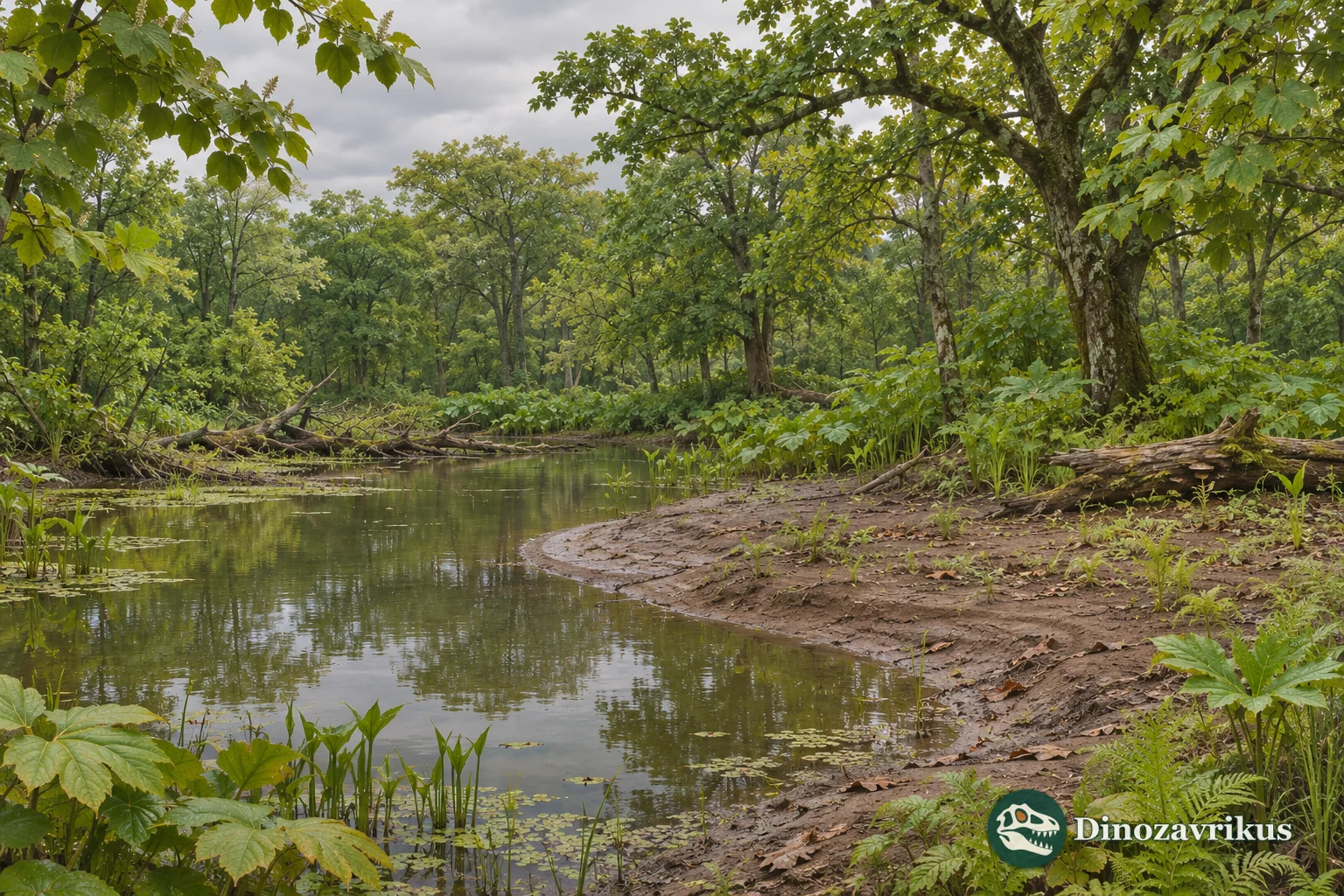
The North Dakota bones came from the deposits of a flood basin on a low floodplain. Shells from the Paleocene of Alberta have also been attributed to P. zangerli. The two areas provide complementary evidence for the range of this turtle. In Europe, shell features are the main evidence for a much younger freshwater genus, Palaeochelys.
Where it sits in the snapping turtle lineage
In a study published in 2025, Protochelydra branched near the living snapping turtles. The same study described Tavachelydra stevensoni from deposits of early Paleocene age in Colorado. That older form already displays features associated with the snapping turtle lineage. The relationships in the analysis establish the proximity of the groups without resolving the direct ancestry of living species.
Frequently asked questions
What is the type specimen?
It is the skull SMM P72.34.20 from Wannagan Creek Quarry.
Why did the second skull matter?
It shows where the bones behind the eyes sat before crushing displaced them.
Where is it known from in Canada?
Paleocene shell material from Alberta has been identified as Protochelydra zangerli.
Are there older fossil relatives of snapping turtles?
Yes. Tavachelydra stevensoni is known from early Paleocene deposits in Colorado.