

Protocitta is a name applied to two kinds of North American fossil corvids. The type species was named from an upper wing bone in Florida. A later comparison placed it with magpies. The standing of the second species, named from a foot bone, remains open to reassessment.
Quick facts
| Group | Corvidae |
|---|---|
| Fossil ages | Pliocene and Pleistocene |
| Type locality | Reddick, Florida |
| Type specimen of first species | Left humerus PB 428 |
| Taxonomy | Type species proposed as a magpie synonym |
What can the fossils tell us?
Steven Emslie’s comparison did not find substantial differences from the magpies in his sample.
UCMP 43386 anchors the second name. A foot bone provides different characters from the type humerus from Florida.
A partial humerus from Coleman was compared with the second species. Its species assignment is uncertain.
How the first species was named
Pierce Brodkorb named Protocitta dixi in 1957. The type, PB 428, is a left humerus from Pleistocene deposits near Reddick, Florida. Other parts of the wing, shoulder and leg were assigned to the species. Brodkorb used the anatomy of the material to distinguish a fossil form within the corvids.
In 1998 Steven Emslie compared the Reddick fossils with magpie bones. Their size and shape, including details of the inner tuberosity of the humerus, fell within the range observed in his sample. He proposed treating P. dixi as a synonym of Pica pica in the sense used in that study. Re-examination of Pandanaris likewise changed the interpretation of two fossil names, chiefly through comparisons of the jaws.
A foot bone in Texas and a wing bone in Florida
Brodkorb named a second species, Protocitta ajax, in 1972. Its type is a left tarsometatarsus, UCMP 43386, from the Palo Duro Falls site in Texas, reported from the Late Pliocene. Material from Rexroad Ranch in Kansas was also referred to this species. In his later account Emslie called for its identification to be re-examined.
The Pleistocene locality of Coleman in Florida yielded a fragment from the lower end of a humerus. It is 10.8 millimetres wide and is catalogued as UF 16705. The author provisionally compared it with the Texas form. A wing bone and a foot bone preserve different characters, so the Coleman fossil alone does not establish that the Texas form occurred in Florida.
Limits of the reconstruction
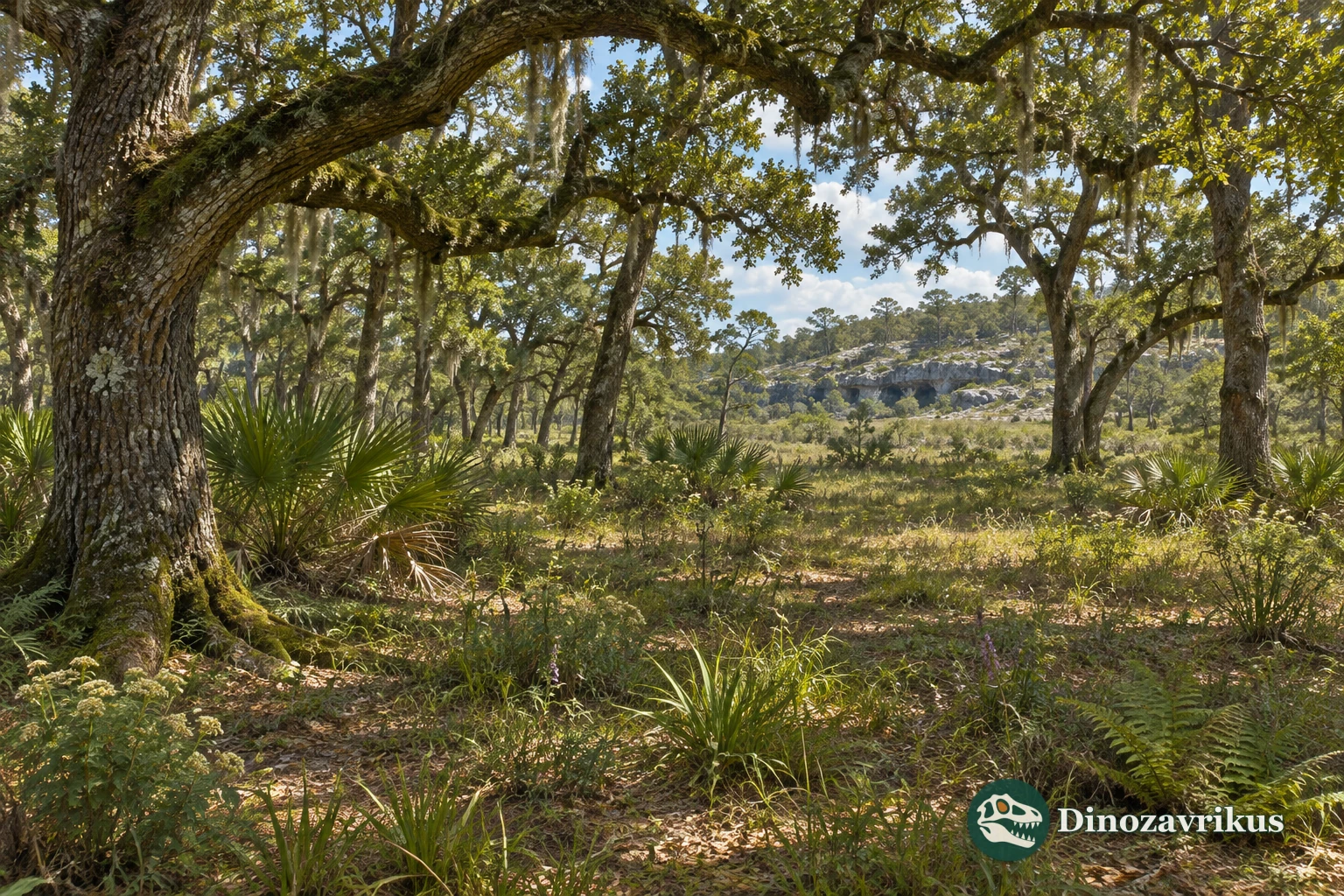
The known fossils allow comparisons of the shape and size of joints in the wing and leg. They give little direct evidence of plumage or diet. The artwork depicts a generalized corvid in Pleistocene Florida. It offers a broad impression of the family rather than a species diagnosis.
Frequently asked questions
Is Protocitta a distinct extinct genus?
The type species has been proposed as a synonym of a magpie. The assignment of the second species remains open to further study.
Where did the first type specimen come from?
Pleistocene deposits near Reddick in Florida yielded the left humerus used as the type.
What fossil is the second species based on?
A left tarsometatarsus from Texas. Fossils from Kansas have also been referred to it.
Do the fossils preserve the bird’s colour?
The known bones carry no plumage evidence. The illustration shows a generalized corvid.