

Protocyon was an extinct South American canid with a broad, relatively short muzzle and teeth specialized for cutting meat. P. troglodytes has the richest fossil record. Other species and incomplete finds trace a wider history without turning every bone into one population or one precisely dated event.
This profile belongs in the ice-age animal catalogue. Xenocyon provides another extinct canid comparison; similar meat-rich diets do not make the genera identical.
Quick facts
| Family | Canidae |
|---|---|
| Type species | Protocyon troglodytes |
| Time | Middle and late Pleistocene |
| Region | South America |
| Material | Skulls, jaws and teeth |
| Direct date | 17,338 ± 85 radiocarbon years BP for one P. troglodytes |
What can the fossils tell us?
Reduced crushing surfaces and stronger cutting edges distinguish Protocyon from less specialized canids. Anatomy supports hypercarnivory but does not identify a particular kill.
A P. troglodytes specimen yielded 17,338 ± 85 radiocarbon years BP. This is firmer for that individual than a date borrowed from nearby sediment, but it is not the genus's extinction date.
Stable carbon and nitrogen isotopes agree with a high level of carnivory. Candidate prey were proposed from the ecosystem; isotopes cannot name one animal consumed by the dated canid.
Names, species and shifting geography
Peter Wilhelm Lund's Brazilian cave material provided the type species, first described under another genus. Christian Giebel introduced the replacement genus name Protocyon in 1855. Systematic studies have discussed P. troglodytes, Ecuadorian P. orcesi and Argentine P. scagliarum; more fragmentary material has repeatedly altered species lists.
A 2005 revision reassessed the age of the oldest Argentine P. scagliarum specimen near Santa Elena Creek. Biostratigraphic and palaeomagnetic evidence places it around 0.78–0.5 million years ago rather than in much older deposits. P. troglodytes occurs in Brazil, Bolivia and Ecuador, and a cautious referral from Formosa added a possible northern Argentine record.
What teeth and isotopes can establish
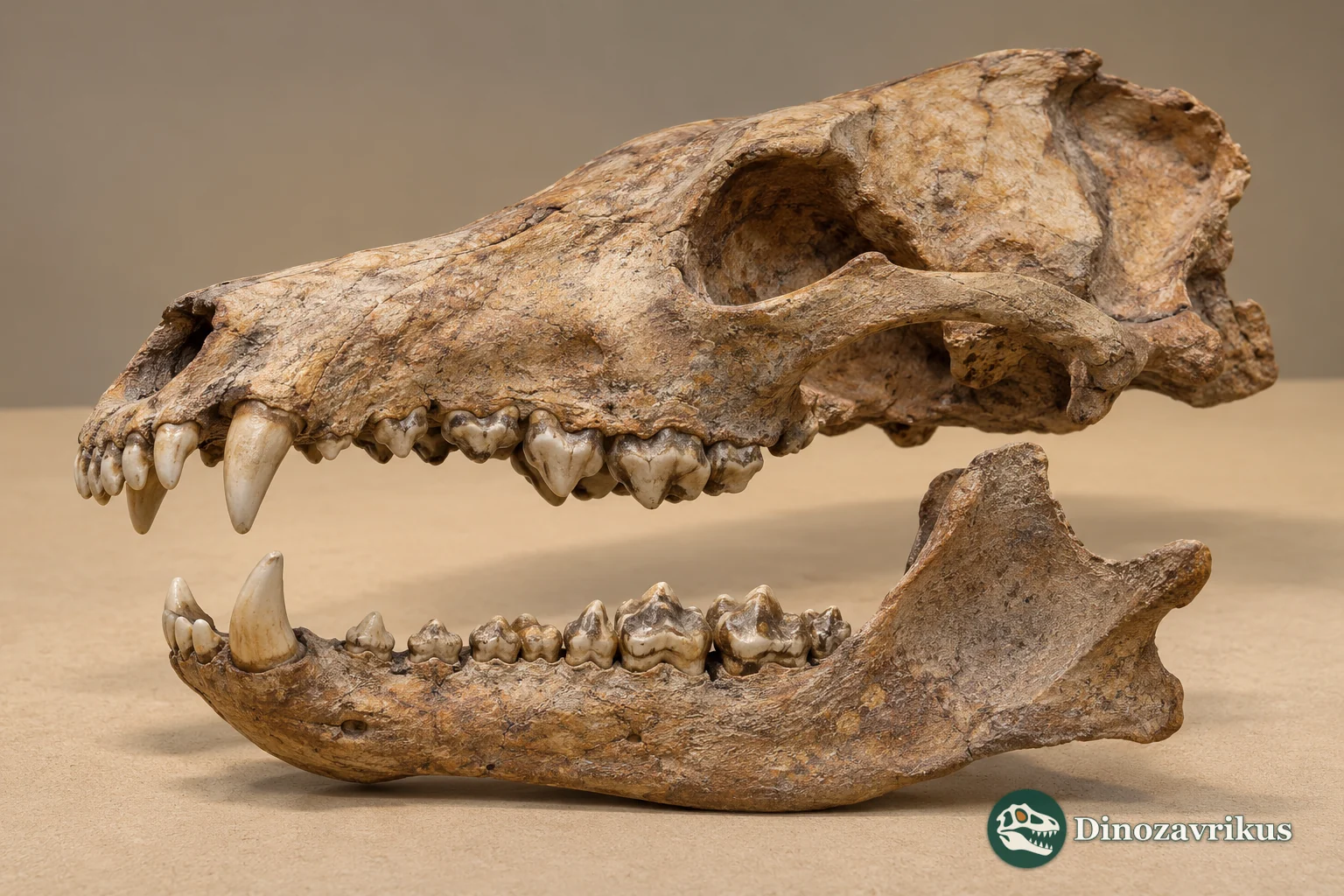
Protocyon jaws are comparatively short and deep, with enlarged cutting regions and reduced grinding structures. A partial maxilla with P4 and M1 from Rio Grande do Sul let researchers distinguish P. troglodytes from the related Theriodictis by preserved tooth details. This is direct anatomical comparison, not an impression drawn from a life image.
Dental form supports a high proportion of meat. The Brazilian authors suggested medium-sized prey or juveniles of larger mammals were more plausible than routine attacks on adult megafauna. Stable carbon and nitrogen isotopes from another specimen support its high trophic position. Possible prey taxa are food-web inferences, not documented meals, and neither method reveals pack size or a specific hunting episode.
The dated fossil and its limits
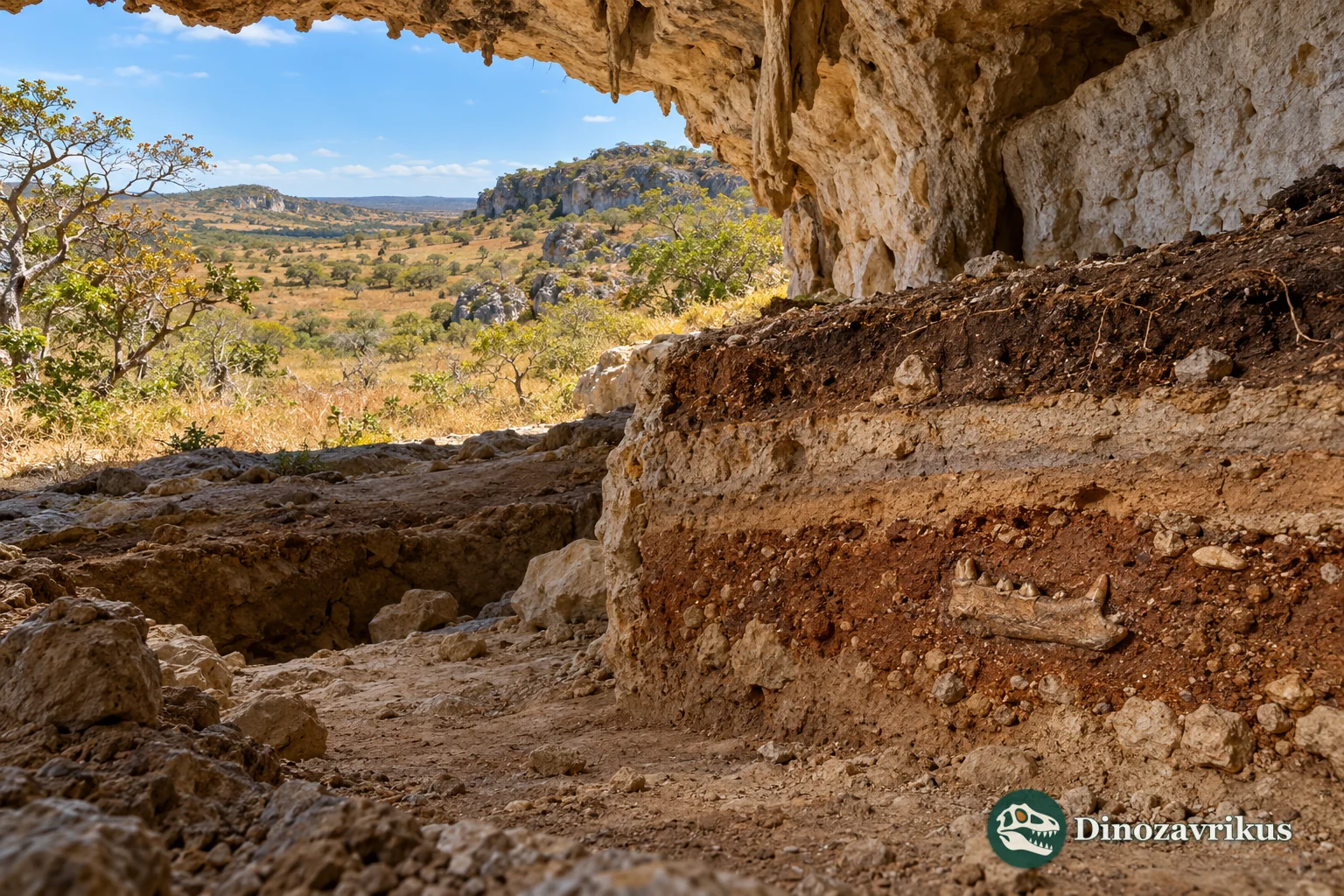
One P. troglodytes specimen yielded a direct radiocarbon age of 17,338 ± 85 years before present. Earlier age estimates often came from associated fossils or sediments. Direct dating improves the placement of this individual, but a single point cannot mark the extinction of all members of the genus.
The cover imagines a canid in an open landscape. Its coat and pose are artistic choices. The inner jaw and cave images are generalized illustrations rather than photographs of Lund's material or any named collection specimen.
Frequently asked questions
Was Protocyon a wolf?
It was a canid, but not a member of the living wolf genus Canis. Its skull and teeth support its own genus.
Where are Protocyon fossils found?
Different species have been reported from Brazil, Bolivia, Ecuador and Argentina, with varying ages and completeness.
What does the 17,338 ± 85 year date mean?
It is a direct radiocarbon age for one P. troglodytes fossil, not the exact time the entire genus disappeared.
Did Protocyon hunt giant prey in packs?
Teeth and isotopes support carnivory, but they do not demonstrate pack size or a particular hunt of adult megafauna.