

Pseudhyrax is a South American typothere genus most often identified from cheek teeth and small jaw fragments. Its records span Patagonia, north-western Argentina and central Chile, but the number of accepted species and the status of some localities have changed as researchers compared dental characters.
The genus belongs in the ancient mammal catalogue. Comparing its teeth with other typotheres helps test species boundaries. The later hegetotheriid Hegetotherium offers a contrast within the wider notoungulate radiation, not a close stand-in or a direct ancestor.
Quick facts
| Scientific name | Pseudhyrax Ameghino, 1901; type species P. eutrachytheroides |
|---|---|
| Group | Typotheres; traditionally associated with Archaeohyracidae |
| Time | Mustersan to Tinguirirican South American land-mammal intervals |
| Region | Patagonia, north-western Argentina and central Chile |
| Known remains | Mostly isolated teeth and fragments of upper and lower jaws |
| Classification | Archaeohyracidae in its traditional broad sense is paraphyletic |
| Evidence limit | No complete skeleton or secure body-mass estimate |
What can Pseudhyrax fossils actually show?
Upper molars have a well-developed paracone and parastyle; fossettes and fossetids have been described on upper and lower teeth. Their form changes with wear, so comparisons need to account for tooth position and wear stage.
Published material includes separate premolars and molars as well as fragments of maxillae and mandibles. These show parts of the tooth row but do not preserve a complete skeleton or directly reveal whole-body proportions.
Mustersan Patagonian deposits and Tinguirirican layers in central Chile provide much of the reported context. These South American land-mammal intervals are correlated with stratigraphy and fauna, not exact calendar dates for every isolated specimen.
Several historical names have been discussed in connection with P. eutrachytheroides. Their synonymy depends on how dental differences are interpreted and is not evidence that all specimens belonged to one individual or population.
Name, type species and taxonomic revisions
Florentino Ameghino established Pseudhyrax in 1901; its type species is P. eutrachytheroides. The type material must be distinguished from later teeth referred to the species or genus. A name appearing in a faunal list does not, by itself, represent a new examination of the type specimen.
Later systematic work discussed Pseudopithecus modestus, Degonia kollmanni, Rankelia elegans and Degonia modesta in the synonymy of P. eutrachytheroides. Recent reviews report these combinations in the context of taxonomic reassessment, but synonymy depends on dental diagnosis and on whether differences are considered taxonomic or intraspecific. The list is therefore best read as a record of changing interpretations rather than as several unquestionably established species.
The defensible conclusion is narrower: Pseudhyrax is a typothere recognised through a combination of dental characters, while some species boundaries and referrals need comparison with type material and better documented series. Archaeohyracidae in its traditional broad composition has been recovered as paraphyletic in modern assessments.
Geographic and geological context
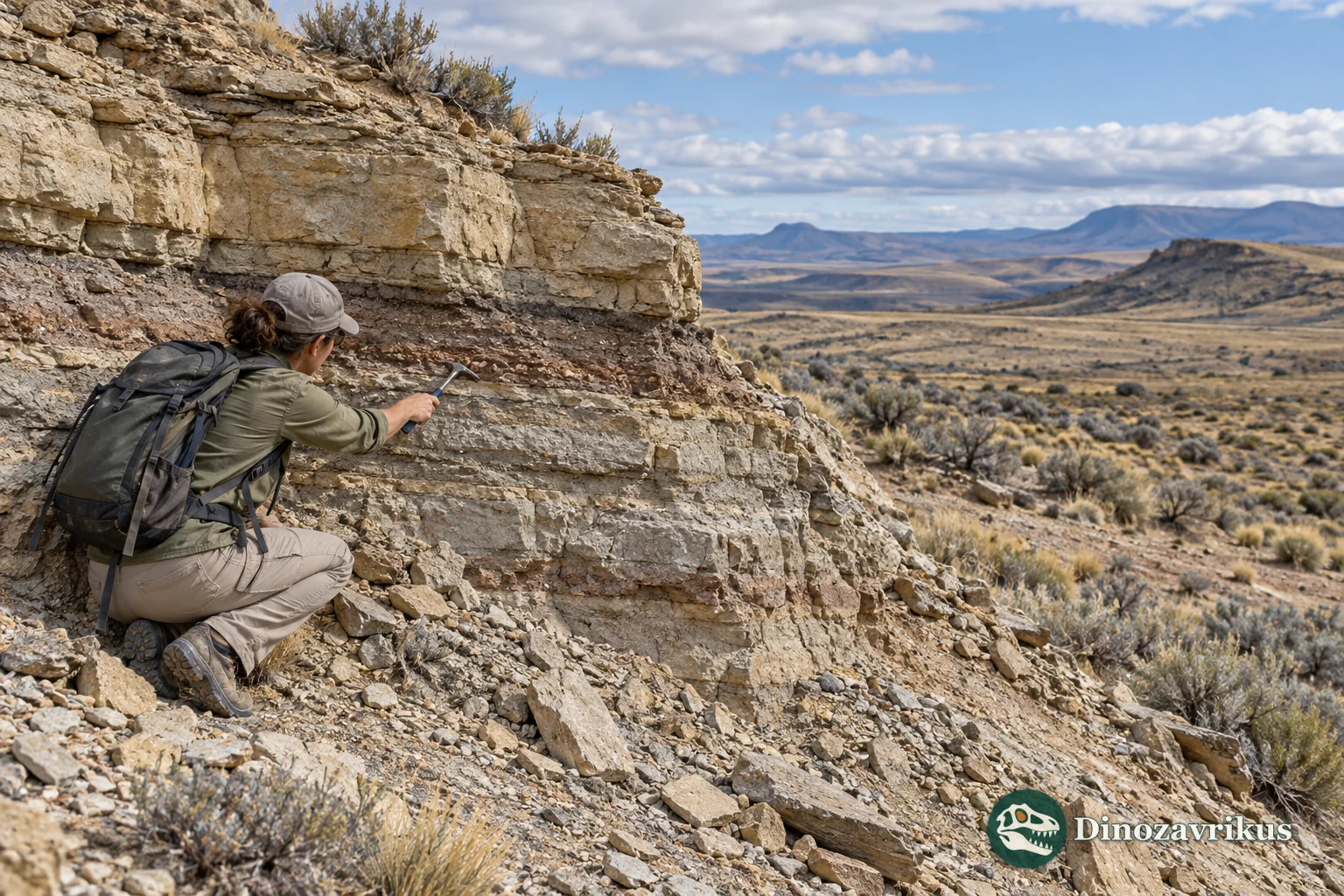
Reported fossils come from Patagonia, north-western Argentina and central Chile. Better documented records include Mustersan faunas of central Patagonia, including deposits of the Geste Formation. Other reports are associated with Tinguirirican layers in central Chile. Mustersan and Tinguirirican are regional South American land-mammal intervals correlated with stratigraphy and faunal assemblages, not precise dates shared by every specimen.
Some fragmentary teeth from Barrancas Blancas in the Sarmiento Formation have been compared cautiously with P. eutrachytheroides. Their age and identification remain uncertain, so they should not be used without qualification to extend the secure range of the genus. Similar molars may belong to a related typothere, especially when no associated jaw or additional diagnostic anatomy is present.
The geographic spread also does not show that all forms lived in one landscape or at the same time. Continental deposits accumulated in separate basins, and their correlation carries its own uncertainty.
Teeth and the limits of anatomical reconstruction
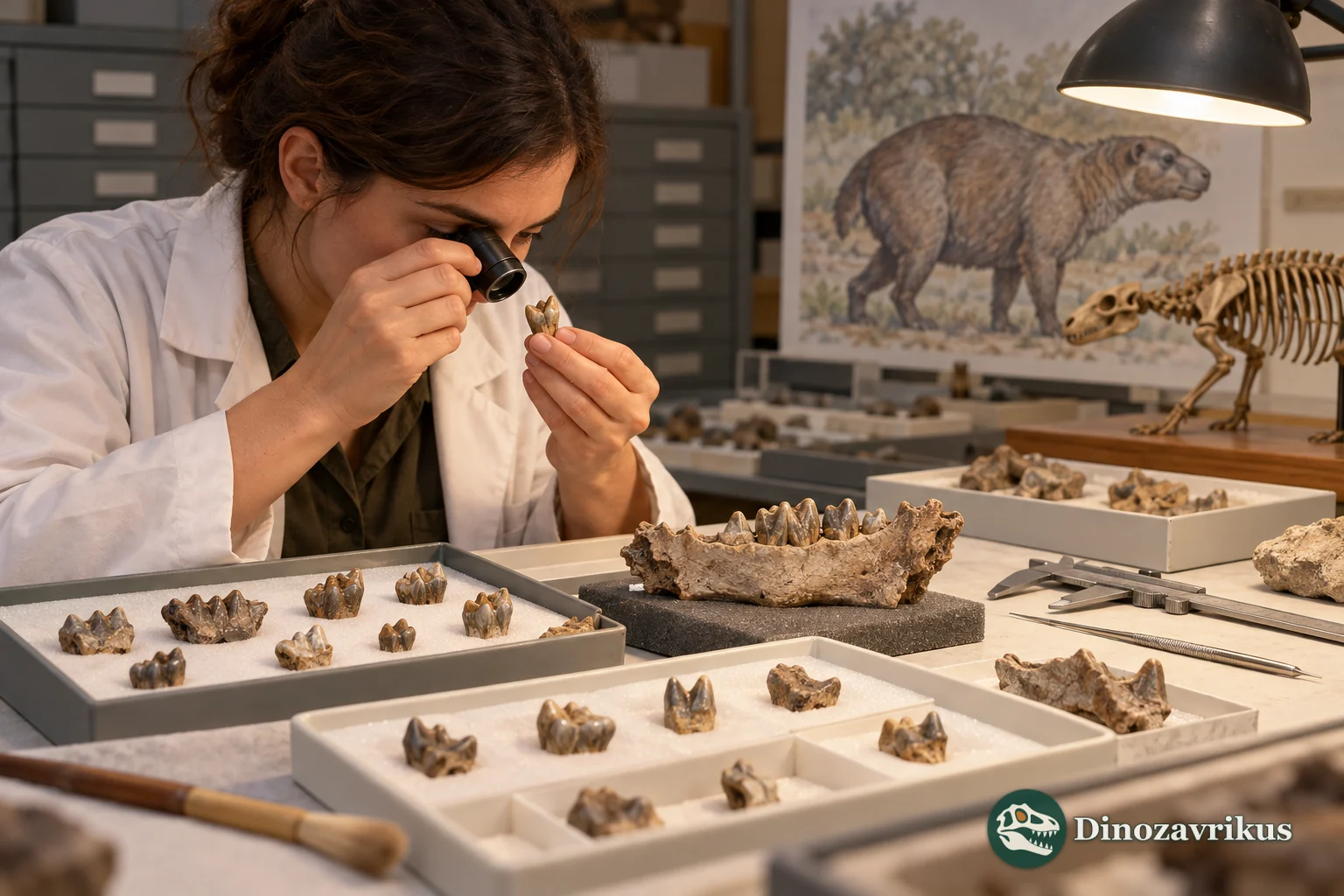
Cheek teeth provide the main diagnostic evidence. Upper molars have been described with a well-developed paracone and parastyle; enamel fossettes on upper teeth and fossetids on lower teeth persist and change shape through moderate wear. Identification depends on position, wear and comparison among several teeth rather than a single superficial resemblance.
Teeth can reveal similarities and differences among typotheres, but they do not make a complete portrait. Isolated jaws do not reconstruct posture, gait or limb proportions. The known material does not support a reliable body-mass estimate or direct observations of coat, colour and soft tissues. The cover is a schematic artistic reconstruction, not a scale model.
High crowns and enamel features may relate to food processing, but a confident dietary interpretation needs independent evidence such as microwear or isotopes tied to a securely identified specimen. Membership in Typotheria alone cannot establish a specific menu.
Relationships among South American typotheres
Pseudhyrax belongs to Typotheria, one of the major branches of South American notoungulate mammals. It can be compared with other typotheres such as Eohyrax and Punahyrax, but shared high-crowned teeth alone do not establish a close relationship at genus level or prove identical ecology.
Its contrast with Hegetotherium is useful at a broader scale: the two names refer to distinct notoungulate families, faunas and anatomical evidence. The comparison helps illustrate the group’s diversity, not a direct ancestor–descendant sequence.
Diet, movement and unresolved questions
No direct stomach contents, reproductive evidence, growth series, social grouping or diagnosed life injuries are available for Pseudhyrax in the material reviewed here. Isolated teeth do not establish seasonal diet or distinguish reliably between soft browse and more abrasive foods. Damage from burial should not be called a life injury without signs of healing.
The number of accepted species, relationships among regional forms and precise range remain open to revision. Resolving them requires renewed study of type material and comparable dental series, rather than filling gaps with a generalized account of all South American hoofed mammals.
Frequently asked questions
When did Pseudhyrax live?
Reported records are associated with the Mustersan and Tinguirirican South American intervals, spanning the Eocene–early Oligocene transition. The age of some referred specimens is uncertain.
What fossils are known?
Mostly isolated premolars and molars, along with fragments of upper and lower jaws. No complete skeleton is known.
Which features help identify it?
Researchers compare crown shape, the paracone and parastyle on upper molars, and enamel fossettes or fossetids while accounting for wear.
Are all names synonymised with P. eutrachytheroides settled?
No. The synonymy of several historical names is a taxonomic interpretation that depends on comparison of type teeth and judgments about variation.