

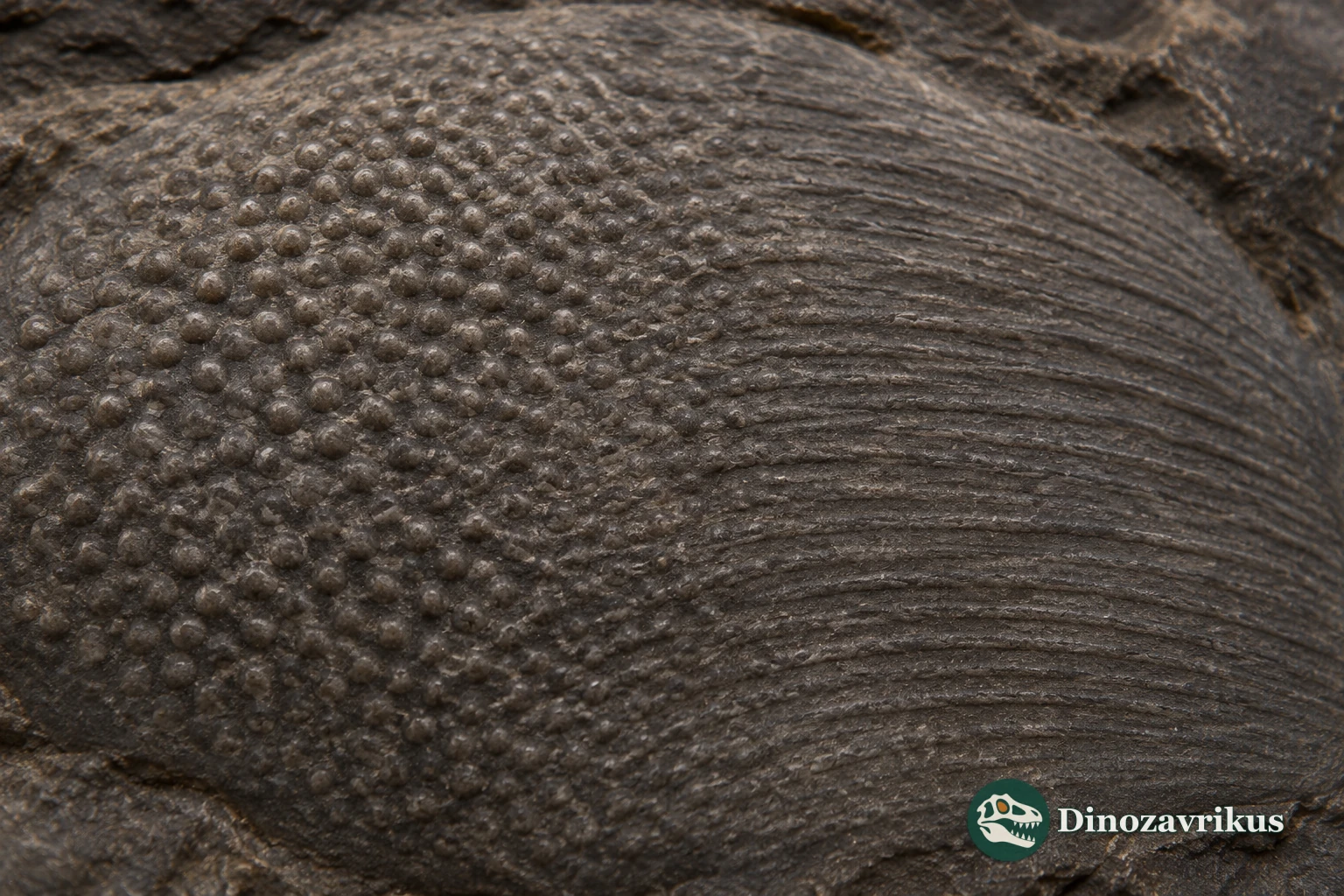
Ptychaspis was a late Cambrian trilobite whose species can be recognized from fine details of the head shield. In Ptychaspis occulta, tightly packed tubercles give way to narrow ridges near the front edge. The ridges are distinct enough to appear on some fossils that have lost the original shell.
Quick facts
| Group | Trilobites |
|---|---|
| Age | Late Cambrian |
| Genus named | James Hall, 1863 |
| Type species | Ptychaspis miniscaensis |
| Type beds | Lone Rock Formation, Minnesota |
| P. occulta holotype | Cranidium USNM 185472, Texas |
What can the fossils tell us?
Frontal ridges on the moulds of P. occulta stand out more sharply than those of P. matuszaki.
The lobes are larger and farther back in P. occulta than in P. bullasa.
Incomplete Oklahoma head shields can be assigned to Ptychaspis, but finer identification is uncertain.
The name and its type species
James Hall established the genus in 1863. The type species, Ptychaspis miniscaensis, was originally named Dikelocephalus miniscaensis by David Dale Owen in 1852 and comes from the Lone Rock Formation of Minnesota. The similarly named Euptychaspis is a separate genus also known from late Cambrian shields.
How the head shields differ
In 2023, Sean Blackwell and Stephen Westrop re-examined Texas cranidia previously assigned to Ptychaspis bullasa. Ptychaspis occulta has larger eye lobes positioned farther back and more densely spaced, larger tubercles on the glabella and fixed cheeks. Striate ridges are expressed even on internal moulds.
Ptychaspis granulosa has a granular surface without striate ridges. Ptychaspis matuszaki has fewer frontal ridges, and they are comparatively faint on its internal moulds. The researchers used both shell ornament and the shape of the head to identify the fossils.
A Texas holotype and Oklahoma material
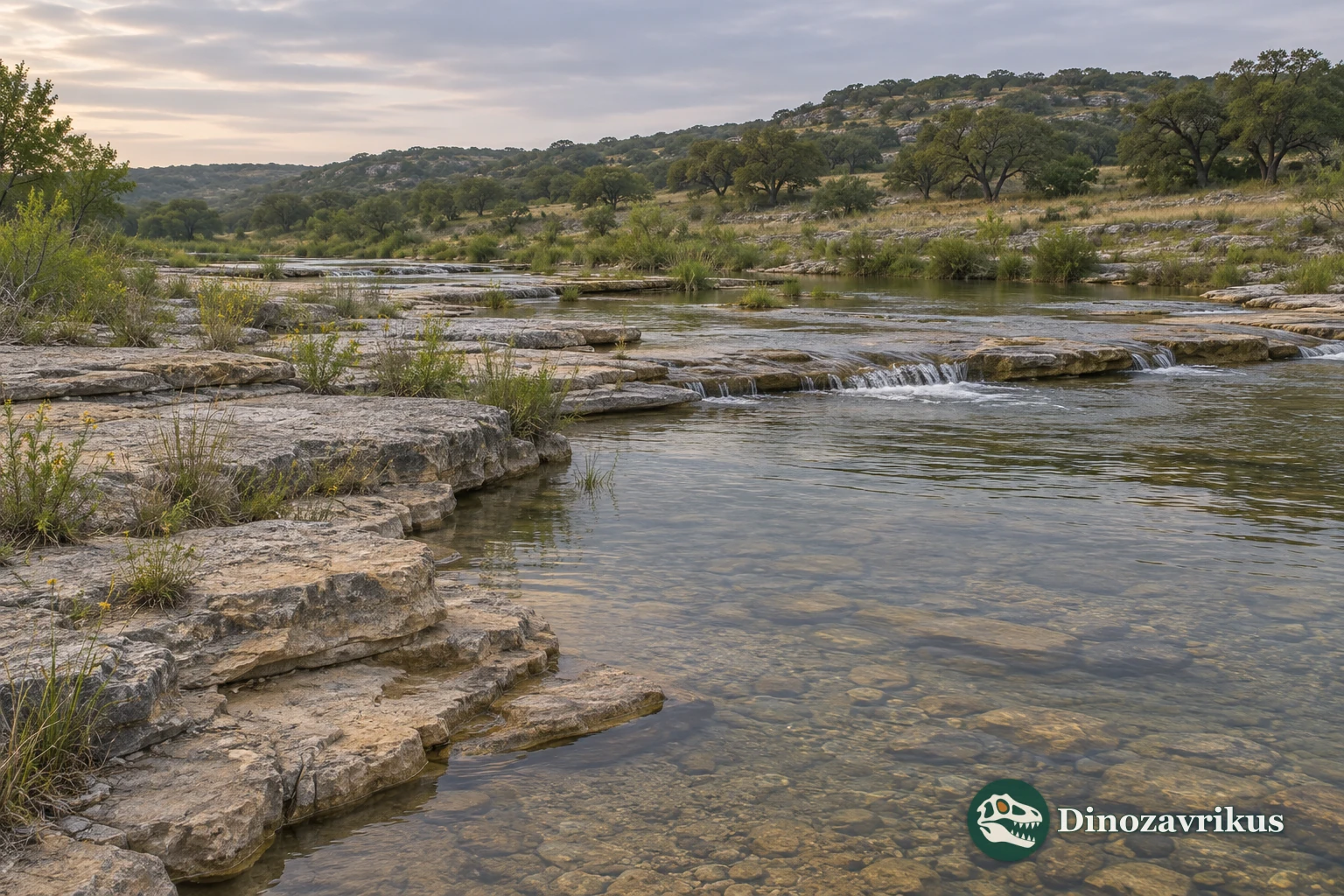
The P. occulta holotype, cranidium USNM 185472, came from the Wilberns Formation at Little Llano River. Its bed lies about 6.4 m below the top of the Morgan Creek Member. Incomplete cranidia from the uppermost Honey Creek and basal Fort Sill formations near Bally Mountain, Oklahoma, could be assigned only to the genus. The oldest of those fossils may be the earliest record of Ptychaspis.
Frequently asked questions
Which species is the type of Ptychaspis?
Ptychaspis miniscaensis, originally described by Owen in 1852 from material found in Minnesota.
What is a trilobite cranidium?
It is the central part of the upper head shield, made up of the glabella and the fixed cheeks.
How does P. occulta differ from P. granulosa?
P. occulta has striate frontal ridges. The surface of P. granulosa is granular without those ridges, and its eye lobes are smaller and sit farther forward.
Where was the P. occulta holotype discovered?
In the Morgan Creek Member of the Wilberns Formation at Little Llano River, Texas. The specimen is catalogued as USNM 185472.