

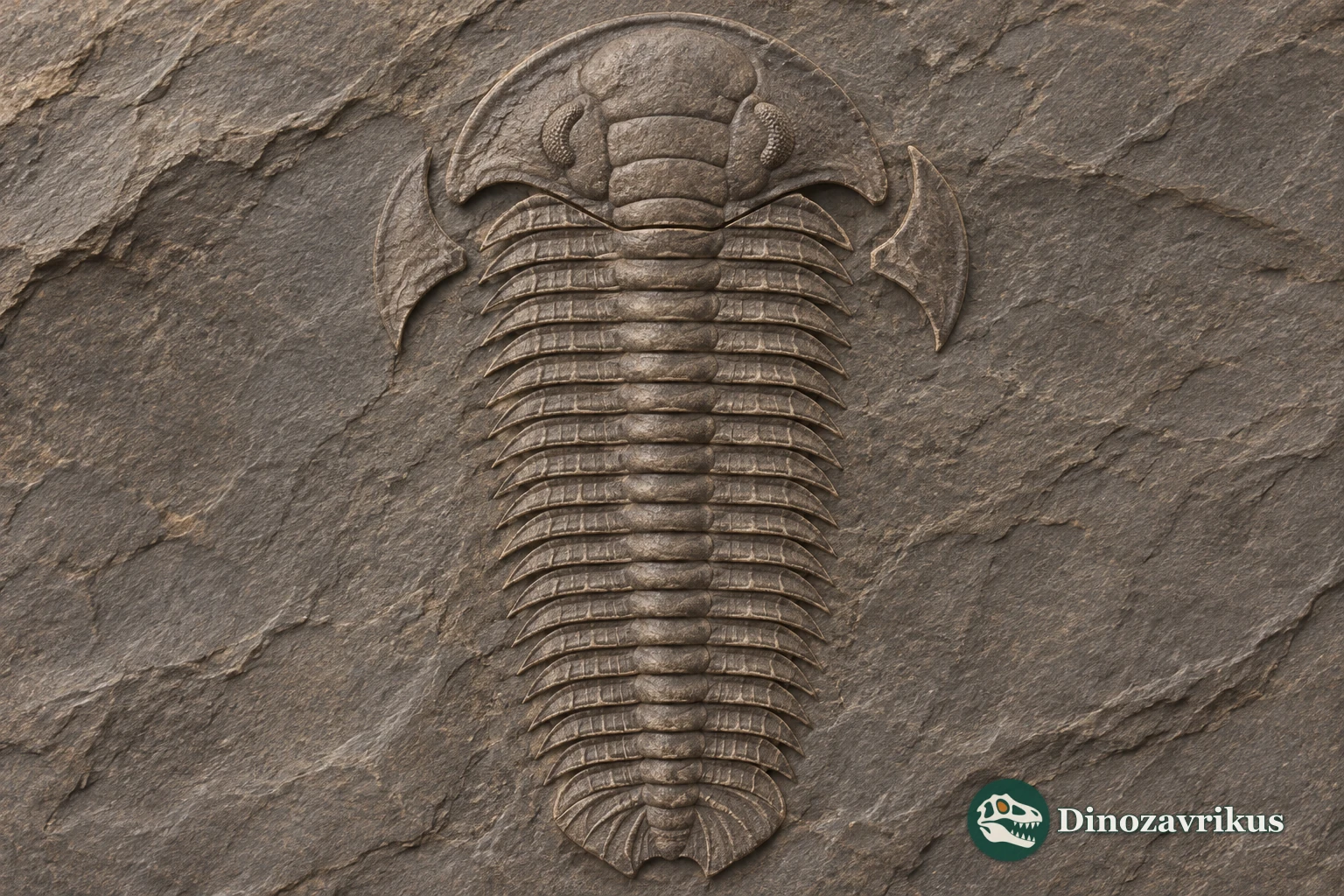
Ptychoparella was a Cambrian trilobite with a small tail shield. Three shells of a species from western Utah preserve different combinations of missing or displaced head pieces. Palaeontologists interpreted them as moulted exoskeletons.
Quick facts
| Group | Trilobites |
|---|---|
| Age | Cambrian |
| Genus named | Christian Poulsen, 1927 |
| Type species | Ptychoparella brevicauda |
| Measured shell | 18 mm, P. mettae holotype |
| Utah fossil beds | Wheeler Formation |
What can the fossils tell us?
A cranidium preserves the central head shield. A separate tail shield or a complete shell supplies characters absent from that piece.
The free cheeks were lost in one specimen. In another the central shield is missing. A third preserves displaced parts alongside one another.
P. mettae has 19 or 20 movable trunk segments. This count comes from articulated fossils of this species.
Greenland and the generic name
Christian Poulsen established Ptychoparella in 1927 from fossils found in northwestern Greenland. The type species is P. brevicauda. Valdemar Poulsen subsequently designated cranidium MMH 2323 as its name-bearing specimen. Recorded localities include Cape Frederik VII.
The type species has a very short tail shield with a well-developed border. Some other Cambrian trilobites have a similar central head shield and many small trunk segments. Those traits alone are insufficient to place them in Ptychoparella.

The exoskeleton of Ptychoparella mettae
Richard Robison and Loren Babcock named P. mettae in 2011 from the upper Wheeler Formation in Utah's House Range. Metta and Lloyd Gunther collected and donated the type specimens, and the species was named for Metta Gunther. The holotype exoskeleton, UU 10051.43, is 18 mm long.
The trunk has 19 or 20 movable segments without spines along the midline. The cheek corners bear short spines. The tail shield is small, with a shallow indentation near the middle of its rear edge.
How the moults were recognised
In one fossil both free cheeks are missing. On the holotype they remain below the edges of the cranidium, which has shifted back slightly. In a third shell the cranidium and hypostome are gone, but the displaced cheeks and rotated rostral plate are still identifiable.
These fossils preserve arrangements left after the animal emerged. They cannot show the whole sequence of movement. Displaced cheeks and other head pieces likewise help identify moulted shells of Oryctocephalus.
Frequently asked questions
Where was the type species of Ptychoparella found?
In northwestern Greenland. Cape Frederik VII is among the recorded localities.
Who was Ptychoparella mettae named after?
Metta Gunther. She and Lloyd Gunther collected the type material from Utah.
How many trunk segments does P. mettae have?
The described exoskeletons have 19 or 20 movable trunk segments.
Why interpret some Wheeler specimens as moults?
The trunk is still articulated while components of the head are displaced or missing. The three preserved arrangements are consistent with the animal leaving its old shell.