

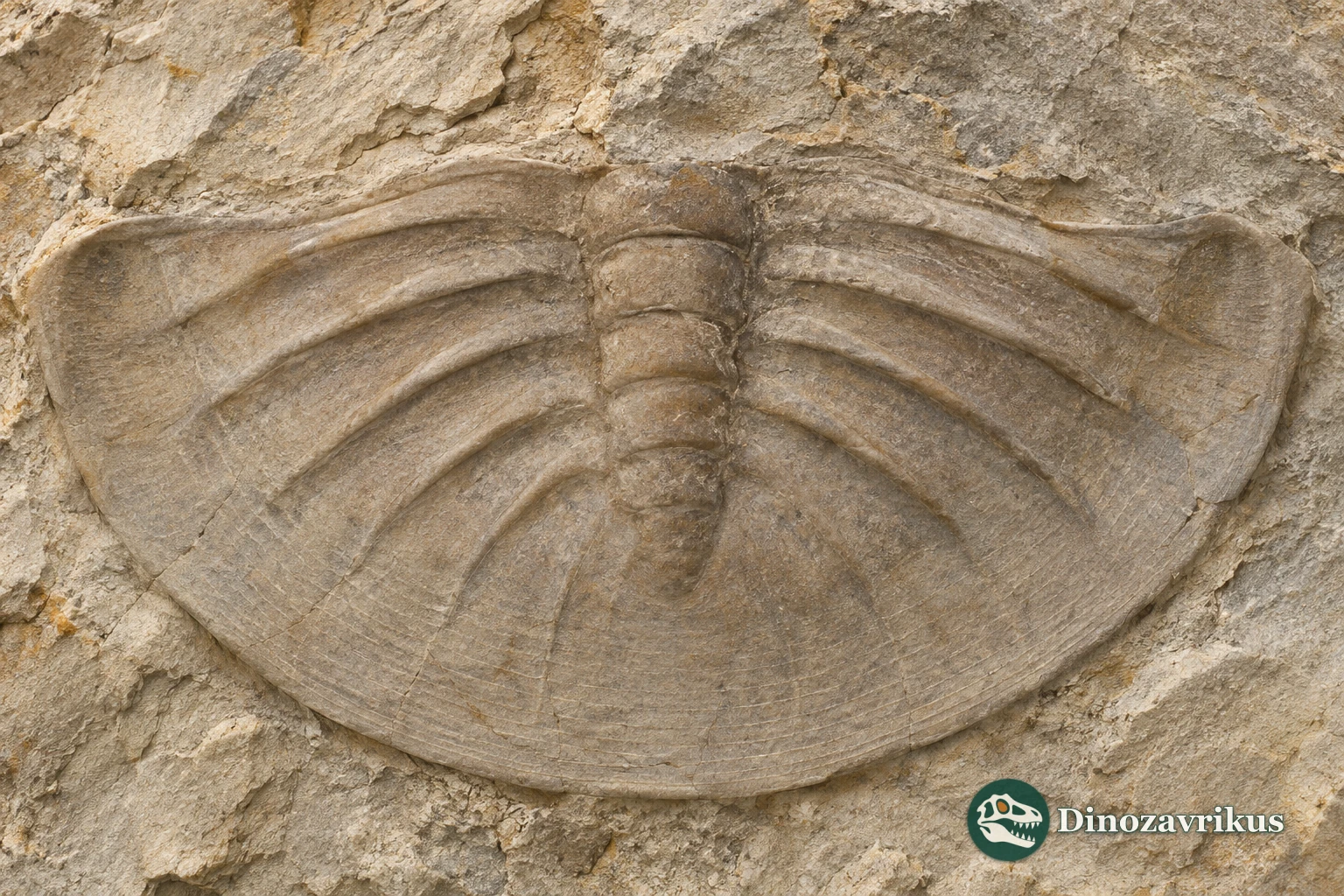
Punka was an Ordovician bathyurid trilobite with a wide tail shield. In several species, grooves between the ribs continue over the border. Their arrangement, together with characters of the head shield, helped distinguish Punka from related forms.
Quick facts
| Group | Trilobita, Bathyuridae |
|---|---|
| Age of the main material | Early Ordovician |
| Genus named | Richard Fortey, 1979 |
| Type species | Punka nitida |
| Localities | Newfoundland, Oklahoma and other Laurentian regions |
| Measured tail shield | Up to 2 cm long in a species from Oklahoma |
What can the fossils tell us?
Fortey separated Punka during a reassessment of broad tail shields. The type species came from a boulder at Lower Head.
Four pairs occur in P. akoura. Some of the furrows in a related species are much shallower.
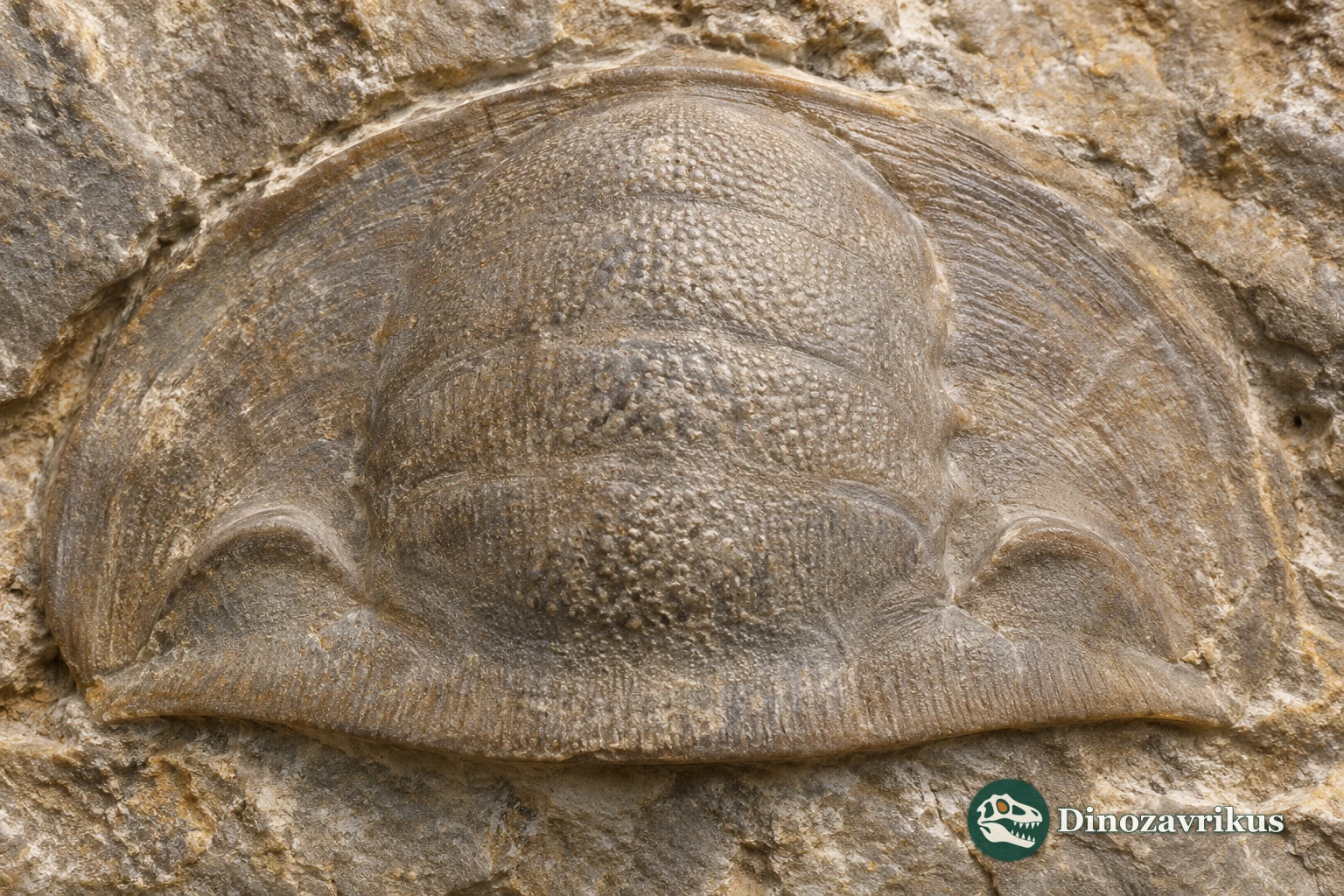
Some heads were assigned to P. akoura by size and occurrence. Their assignment remains less certain than that of the type pygidium.
How Punka was established
Richard Fortey established Punka in 1979. Elkanah Billings had described its type species, P. nitida, as Bathyurellus nitidus from a boulder at Lower Head, Newfoundland. Fortey moved species with wide tail shields and interpleural furrows reaching the border into Punka.
Other bathyurids can share details of the wide tail border or the long anterior border of the head. Classification therefore depends on combinations of features including the eye lobes, glabellar outline and the arrangement of the furrows.
The Oklahoma fossils
James Loch described P. akoura from the Kindblade Formation. Its holotype, UMC 16894, is a tail shield. The largest known pygidia reach 2 cm in length and are about twice as wide. Four pairs of interpleural furrows radiate outward into broad folds near the border.
Loch also described P. verecunda, in which some border furrows are less prominent and the shell is pitted. He matched some isolated head shields with P. akoura on the basis of size, convexity and occurrence. Those associations are less directly demonstrated than they would be in an articulated shell.
The beds that preserved Punka
Punka occurs in several zones of the Kindblade Formation. Some specimens come from beds that also yield Petigurus cullisoni. Associated species help correlate beds between sections. The presence of one genus by itself gives limited age resolution.
The broad pygidium and its furrows can be measured on the fossils. The proportions of the trunk in the reconstruction are approximate, and the material provides little evidence for the appendages or the diet.
Frequently asked questions
Why was Punka established?
Some species previously assigned to Bathyurellus had broad tail shields with interpleural furrows on their borders. Fortey used this combination to separate Punka.
Where was the type species found?
It comes from a boulder at Lower Head, Newfoundland.
What measured 2 cm in the Oklahoma material?
The tail shields of P. akoura reach that length. They are about twice as wide.
Are the furrows alike in all species?
They extend prominently across the border in P. akoura. Some are weaker in another species from the same formation.