

Ramphastosula was a booby from the Pacific coast of Peru. Its fossil skulls from the Pisco Formation preserve a bony bill that is much deeper than the bill of a living booby. The two described species differ in the height and curvature of that bill.
Quick facts
| Type species | Ramphastosula ramirezi |
|---|---|
| Family | Sulidae |
| Age | Late Miocene, Messinian |
| Locality | Sacaco Sur, Pisco Formation, Peru |
| Holotypes | MUSM 264 and MUSM 665 |
| Main evidence | Two skulls with bony bills |
What can the fossils tell us?
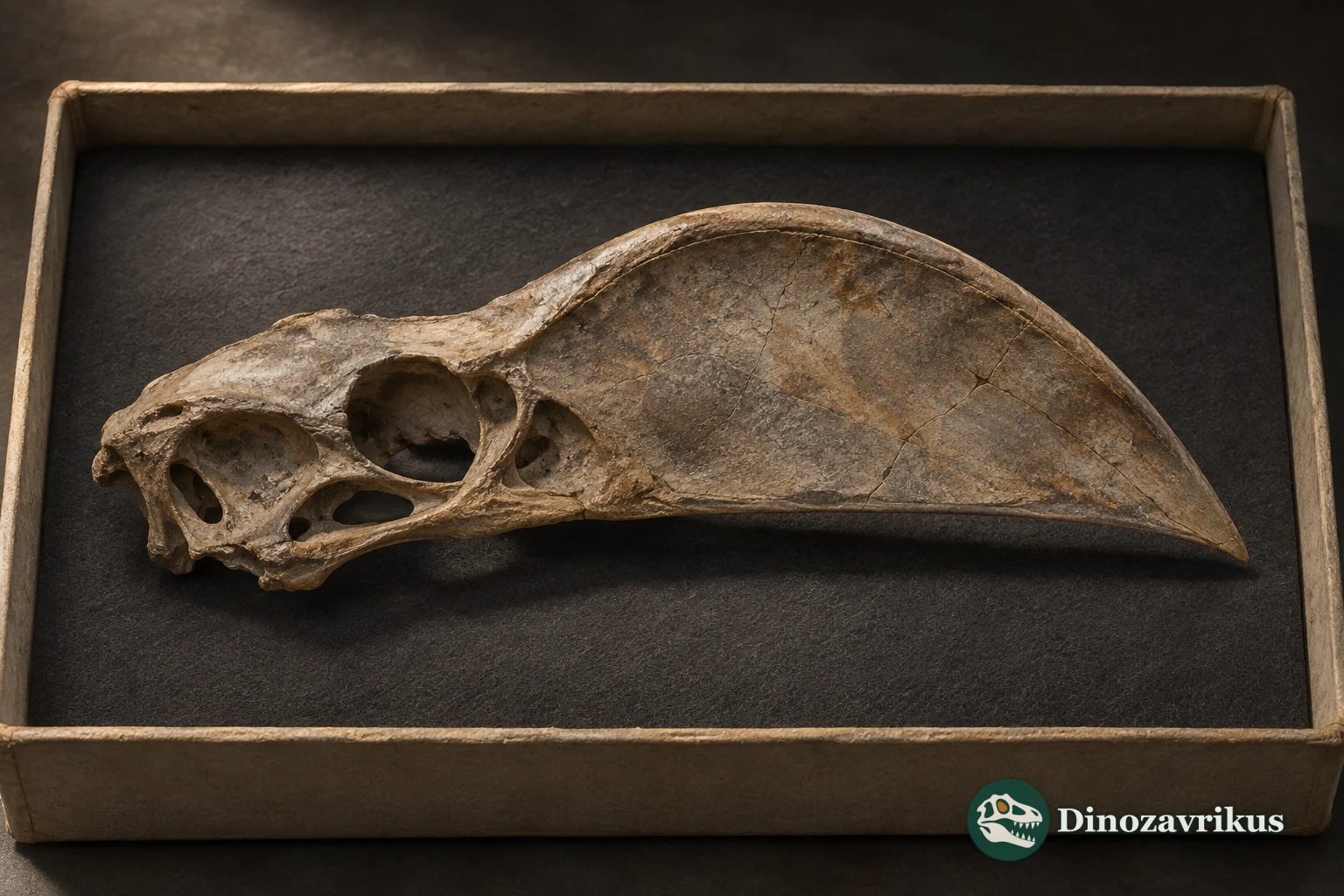
In MUSM 264 the rostrum is deeper at mid-length than at the hinge with the frontal bones. Its upper margin is strongly curved.
In MUSM 665 the rostrum at mid-length is about two-thirds as deep as it is at the hinge.
New dating placed Sacaco Sur at about 6.59–5.93 million years ago. The two skulls came from distinct levels at this locality.
Two skulls from Sacaco Sur
Mario Urbina collected MUSM 264 in 1995. In 2004 he and Marcelo Stucchi named it Ramphastosula ramirezi in honour of Gregorio Ramírez. The skull lacks several pieces of the palate and jaw joint, but preserves the bony rostrum.
The nearly complete MUSM 665 from Poza Negra is the type of Ramphastosula aguirrei. The authors placed its bed about 18 metres below the level that yielded R. ramirezi at Poza Roja. Sacaco Sur was initially considered early Pliocene. Later radiometric work instead placed the locality in the Messinian, near the close of the Miocene.
A deep bill on a seabird
Both species have a laterally compressed rostrum, but the arch is markedly stronger in R. ramirezi. The broad, robust rear of the skull and the structure of the palate support placement in Sulidae. In the eastern Pacific, examples such as Paleosula from California preserve different elements and provide context for the diversity of fossil boobies.
Living boobies have long, relatively narrow bills and many plunge into water from the air. The authors considered whether the deeper bill of Ramphastosula changed the way it caught prey. No stomach contents or direct observations can resolve that question.
Frequently asked questions
Where was Ramphastosula found?
In marine rocks of the Pisco Formation, at two fossil sites in the Sacaco Sur area of southern Peru.
Was it related to toucans?
The name alludes to the resemblance of the bill. Other skull features place the bird in the booby family.
How do the two species differ?
The middle of the bony bill is deeper in the type species. In R. aguirrei the upper margin is more gently curved.
Why do some references call it Pliocene?
That was the original age for Sacaco Sur. Later radiometric dating placed the fossil levels in the late Miocene.