

Regalerpeton was an Early Cretaceous salamander from northern China. Fine impressions behind the skull record external gill filaments. At the same time, the wrists and ankles of the larger individuals had already ossified. Together, these features indicate that some larval anatomy persisted into adulthood.
Quick facts
| Group | Salamanders (Caudata) |
|---|---|
| Age | Early Cretaceous |
| Region | Asia (Weichang County, Hebei, China) |
| Type species | Regalerpeton weichangensis |
| Scientific name | Regalerpeton |
| Diet | Exact prey is unknown |
What can the fossils tell us?
Specimen IVPP V 16776 preserves external gill impressions. Other skeletons document parts of the gill apparatus and the small bones of the limbs.
External gills and larval features of the palate occur in individuals whose hands and feet had ossified. The restudy interpreted this combination as evidence of neoteny.
Two comparative analyses placed Regalerpeton on different branches of the salamander tree. Its relationship to living families depends on the evidence and taxa included.
Three sites in Weichang County
In 2009, Guilin Zhang, Yuan Wang, Marc Jones and Susan Evans described the genus from an incomplete skeleton, IVPP V 14391, collected at Daobaziliang. Yufeng Rong studied eight additional specimens from Xishunjing and Yulinzi in 2018. The original description placed the find in the Huajiying Formation. The restudy records the specimens from the Early Cretaceous Dabeigou Formation.
What the new skeletons clarified
The vomerine teeth form a transverse row across the palate. Displacement in the holotype had made that orientation difficult to interpret. The better specimens also preserve a tail longer than the rest of the body, with around forty vertebrae. The hands had four digits, and the feet had five.
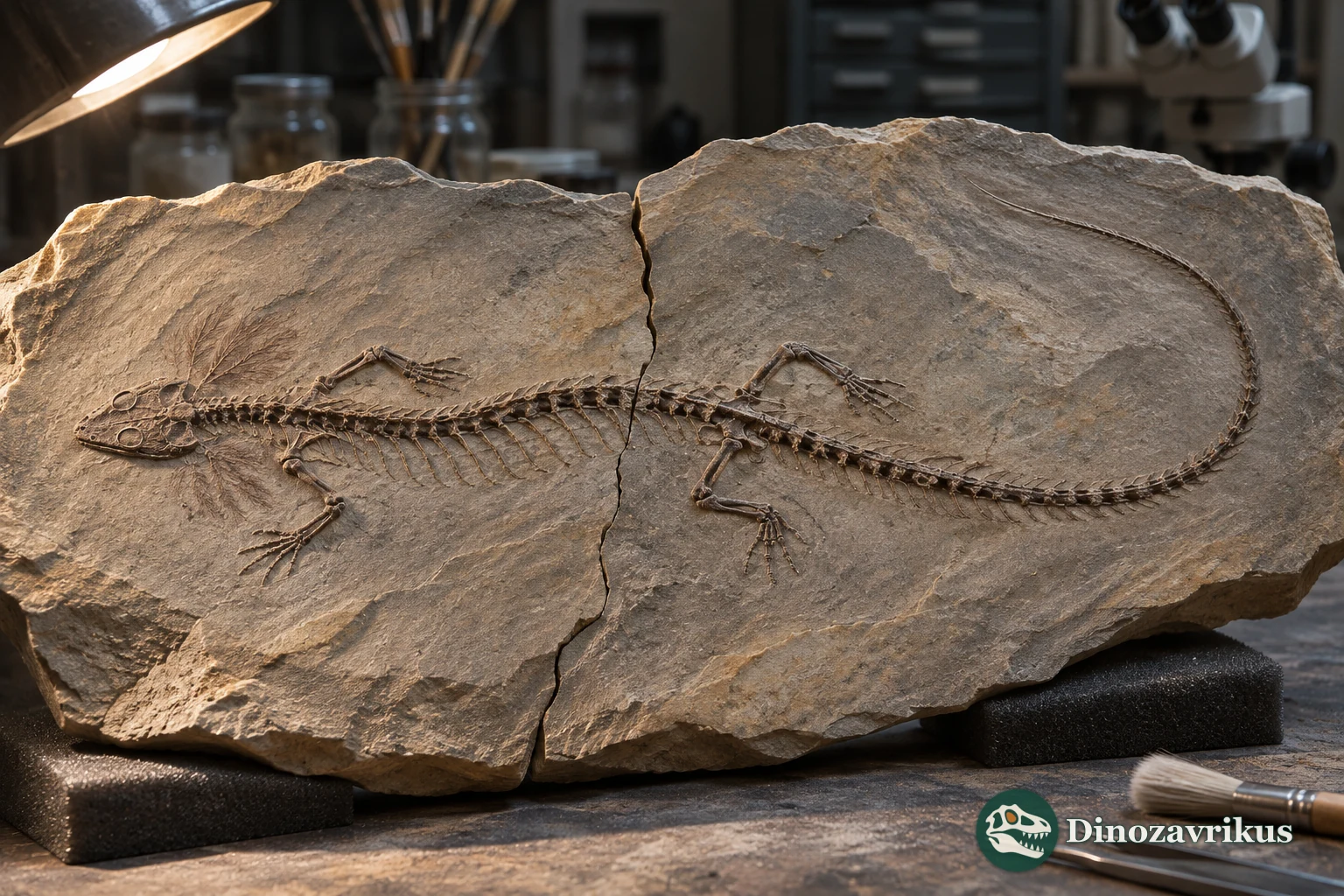
Gill filaments and mature limbs
External gill impressions occur behind the head of IVPP V 16776. Ossified wrist and ankle elements show that limb development had advanced even though the pterygoids and gill apparatus retained larval features. Rong interpreted this as neoteny. In Nuominerpeton, an Early Cretaceous relative, a growth series instead documents remodeling of the palate during metamorphosis.
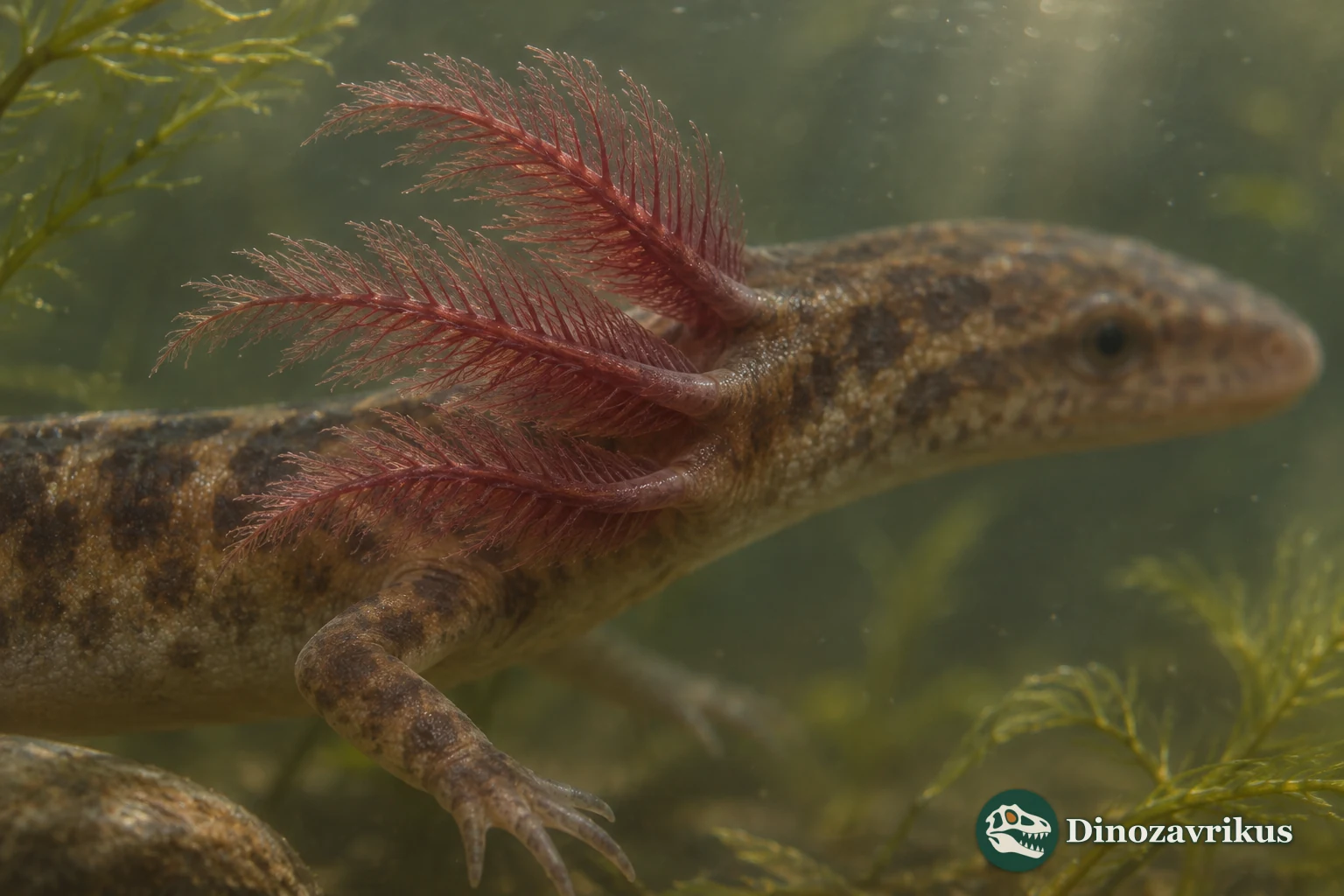
Different placements in the family tree
The 2018 analysis placed Regalerpeton in Salamandroidea with two other fossil genera. A 2021 analysis instead recovered it among stem relatives of living hynobiids. The preserved anatomy constrains the comparisons, while the placement can change with the choice of characters and species examined.
Frequently asked questions
Where was Regalerpeton found?
At three localities in Weichang County, in the north of Hebei Province, China.
How are the external gills known?
One specimen preserves impressions of delicate filaments in three pairs of tufts behind the skull.
Why were some individuals considered adults?
Small bones in the wrists and ankles were ossified, even though the gills and some parts of the palate retained larval features.
How long was the tail?
It exceeded the snout-to-vent length and contained approximately forty vertebrae.