

Rodeosuchus machukiru was an Early Palaeocene dyrosaurid from Bolivia. Two skulls from the Torotoro area show a relatively short snout and an enlarged socket for the third maxillary tooth. Lower jaw fragments from another site may belong to the same species.
Quick facts
| Species | Rodeosuchus machukiru |
|---|---|
| Family | Dyrosauridae |
| Age | Danian, Early Palaeocene |
| Formation | Santa Lucía Formation, Bolivia |
| Holotype | MHNC.13829, partial skull |
| Type locality | Molle Cancha, Torotoro area |
What can the fossils tell us?
Both skulls from Torotoro preserve this socket and a widened snout tip. The sockets record differences in tooth size where the crowns are missing.
Their tooth spacing and jaw proportions are similar. They were tentatively assigned to the same species as skulls from a separate site.
The two skulls gave estimates of about 82 and 154 kg. The values depend on the specimens and the scaling relationship used.
Two sites and a name from a river
Stéphane Jouve and colleagues published the original description online in 2020. They named the genus for the Rodeo River near the type locality. The holotype and a second skull, MHNC.14067, come from Molle Cancha at Torotoro and are held by the Alcide d’Orbigny Natural History Museum in Cochabamba.
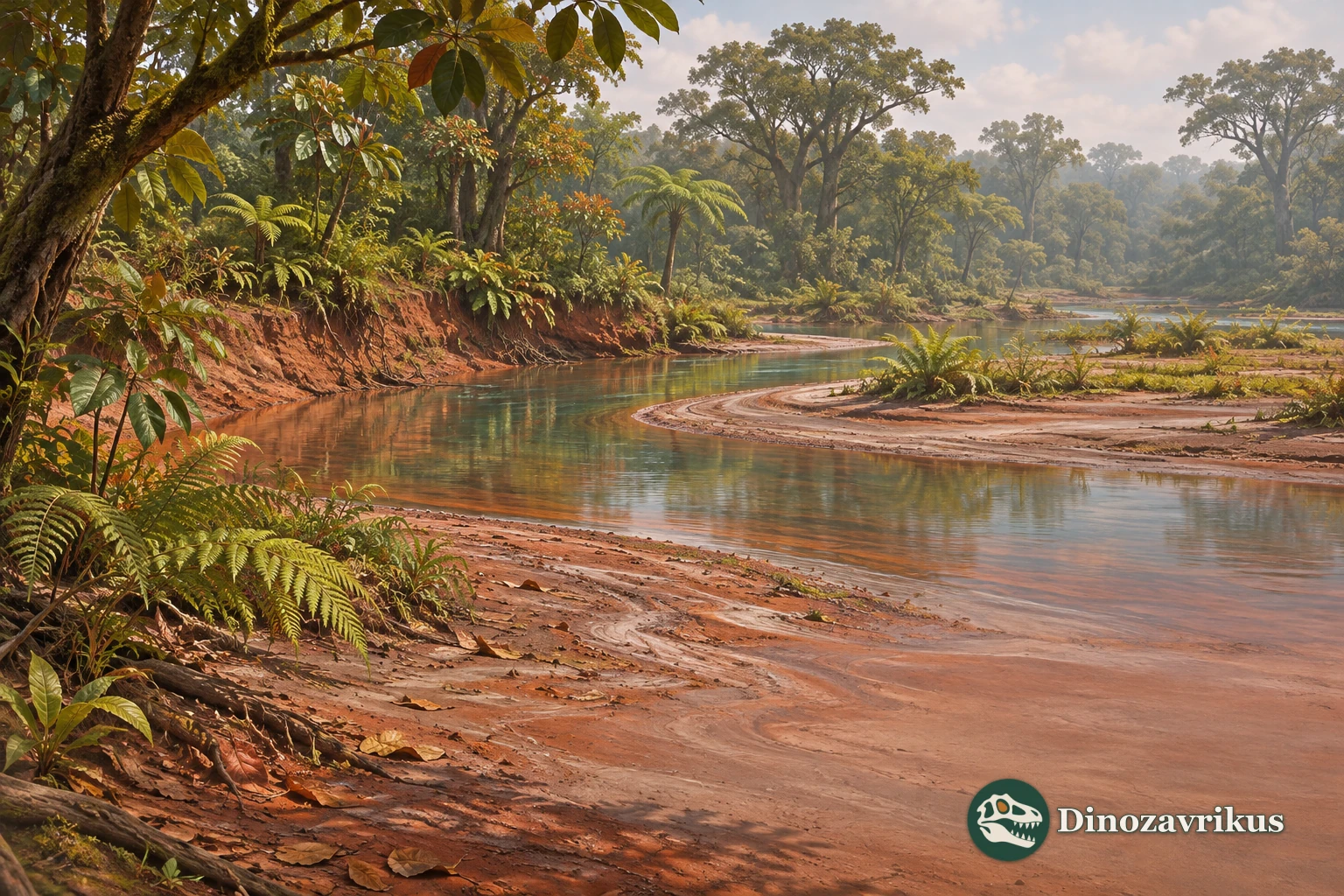
The lower jaw fragments come from red sandstones of the Santa Lucía Formation at Tiupampa. The Danian beds were deposited after the Cretaceous–Palaeogene boundary. Dolichochampsa from Bolivia illustrates another lineage that developed an elongated snout, the gavialoids. Rodeosuchus belongs to the dyrosaurid family.
The proportions of the snout
The bones in front of the eyes account for about 59% of the dorsal length of the type skull and an estimated 62% in the second skull. This is relatively short for a dyrosaurid. The premaxillae flare outward at the front. The third maxillary socket is conspicuously larger than its neighbours, and the sockets sit close together.
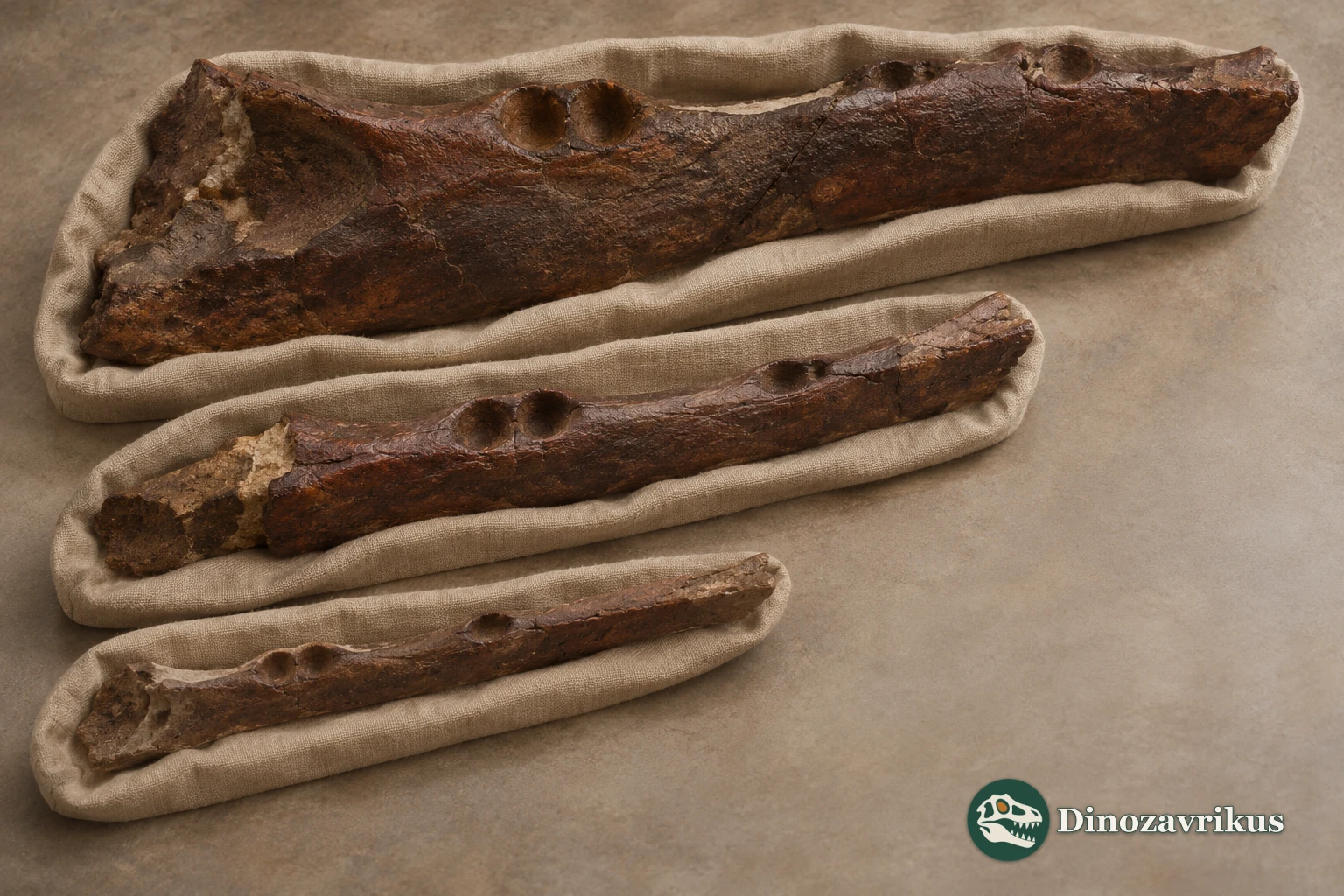
The Tiupampa lower jaw MHNC.6070 preserves the front through the fourteenth socket. MHNC.8126 has the section from the third to the thirteenth. Their close-packed sockets resemble the arrangement in the Torotoro material. The different parts represented at the two sites make the assignment provisional.
Mass estimates and possible bite marks
A 2026 study used dorsal skull lengths of about 40 and 48 cm to estimate masses of about 82 and 154 kg for the Torotoro individuals. Estimates based on distances between tooth sockets in the Tiupampa jaws gave other values. The spread reflects different individuals and the uncertainty of working from incomplete material.
Some freshwater turtle shells from Tiupampa carry damage consistent with bites from local crocodyliforms. Rodeosuchus was among the animals considered capable of making some of these marks. More than one animal can make similar traces.
Frequently asked questions
What is the animal named after?
The Rodeo River near the type locality in Bolivia.
Why is the snout described as short?
It makes up roughly three fifths of the skull length, a smaller proportion than in many other dyrosaurids.
Which specimen defines the species?
The partial skull MHNC.13829 from Molle Cancha near Torotoro.
Did Rodeosuchus eat turtles?
It is a possible maker of some bite marks on turtle shells. The traces cannot assign the bites to a particular genus.