

Romainvillia was a small late Eocene relative of ducks. Its wing and shoulder bones broadly resemble those of living waterfowl, while the humerus retains some more ancient features. Material from France supplies most of the anatomy, and a shoulder bone from Kazakhstan documents a separate species far to the east.
Quick facts
| Type species | Romainvillia stehlini |
|---|---|
| Group | Anseriformes, stem relative of Anatidae |
| Age | Late Eocene |
| Localities | France and eastern Kazakhstan |
| Lectotype | NMB P.G.38.a, left coracoid |
| Size of the type species | Comparable to a small teal |
What can the fossils tell us?
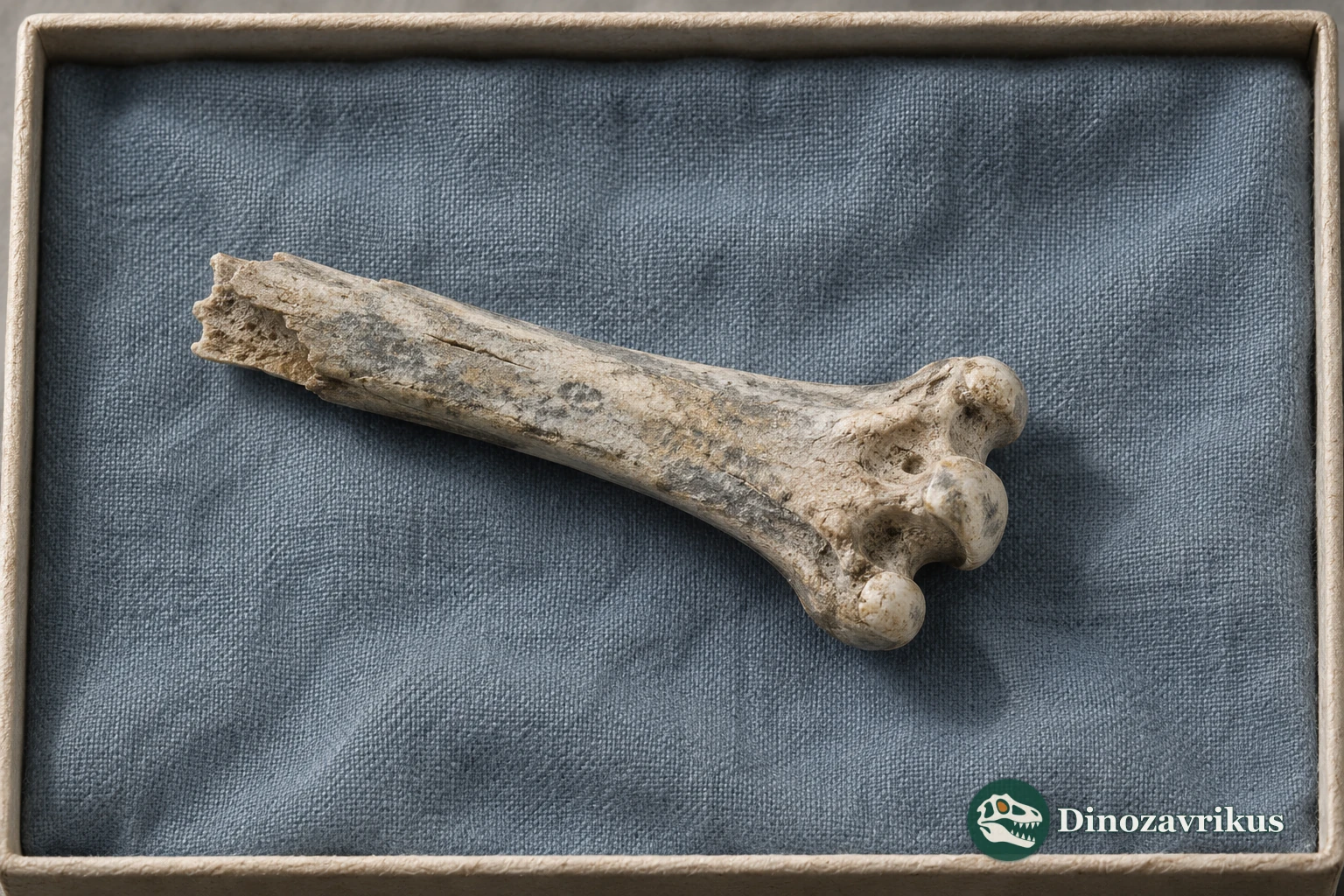
The Natural History Museum of Basel holds the coracoid from Romainville. Other specimens include a furcula, portions of the humerus, parts of the hand and a right tarsometatarsus.
The dorsal tubercle is small and the notch near the head is broad. Living anatids differ in the corresponding anatomy.
The Kazakh species, named on a coracoid, closely resembles the French species in that bone. Its hindlimb bones have not been securely identified.
The bones from Romainville
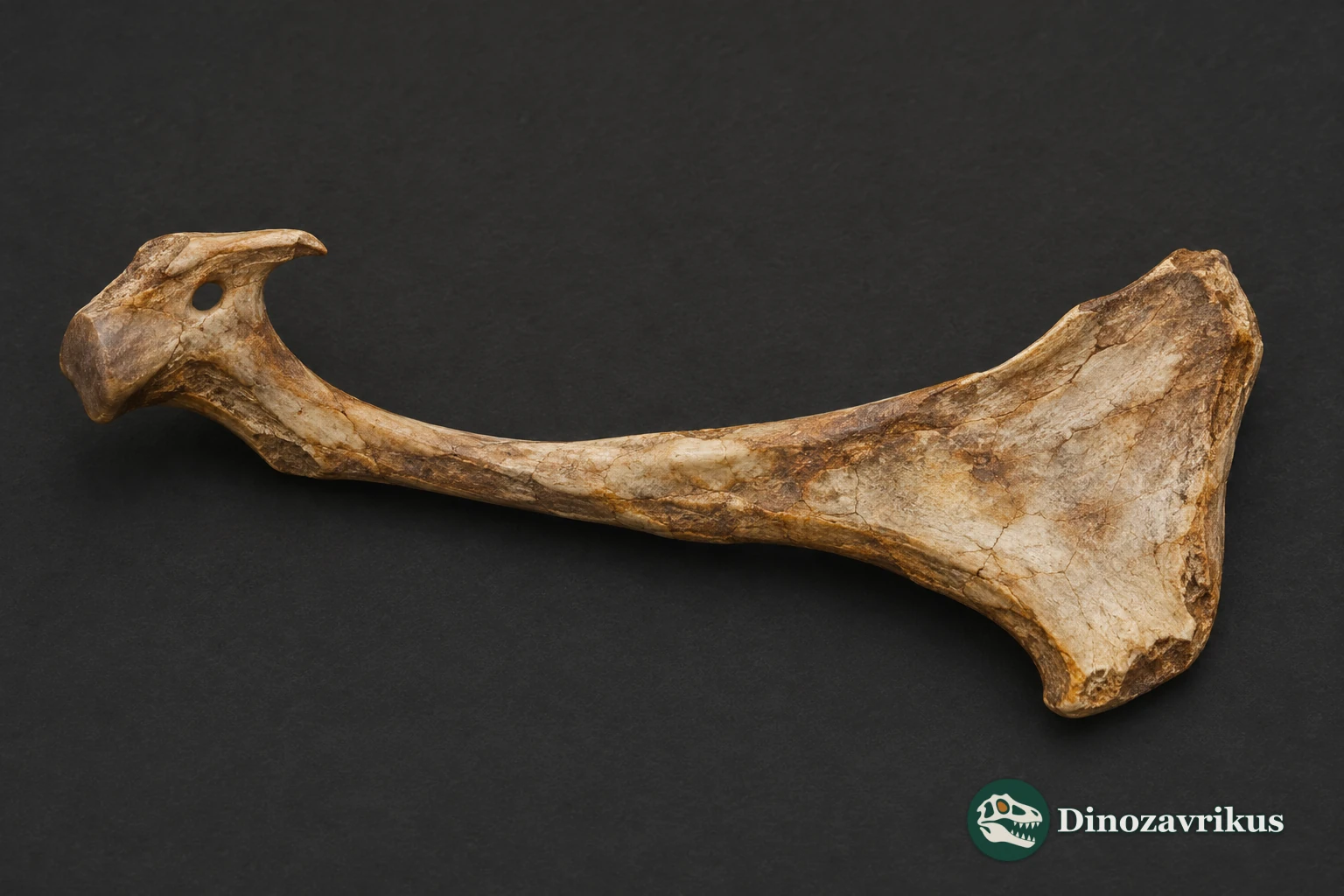
Lebedinsky described Romainvillia stehlini in 1927 from Romainville near Paris. The shoulder girdle element NMB P.G.38.a was later made the lectotype. In life the coracoid braced the shoulder against the breastbone. It is also one of the few parts available for comparison with early waterfowl such as Paracygnopterus.
The bones put the bird near the size of a small living teal. The partial right tarsometatarsus preserves the joints for the toes, while the area guiding the toe-flexor tendons remains too incompletely known for detailed comparison.
An eastern species and a place on the duck family tree
Nikita Zelenkov described Romainvillia kazakhstanensis in 2018 from the late Eocene Kusto beds of eastern Kazakhstan. Its coracoid resembles that of Romainvillia stehlini at the shoulder end. This establishes the presence of the genus in Asia, but the two fossil occurrences do not establish a migration route.
Gerald Mayr’s analysis placed Romainvillia next to the lineage of living ducks, geese and swans, outside their crown group. The French bones allow hypotheses about its relationships to be tested in detail. The bill remains unknown, leaving the precise feeding method unresolved.
Frequently asked questions
Where was the type species found?
At Romainville, near Paris. The specimens are held in Basel.
How large was Romainvillia?
The bones of the French species suggest an animal the size of a small teal.
Which bone identifies the species from Kazakhstan?
A coracoid preserving the part that braced the shoulder joint.
Was it a modern duck?
Mayr’s analysis places it on an extinct branch just outside the group that contains living anatids.