

Rottophis was a snake from late Oligocene deposits at Rott near Bonn. Articulated skeletons show how the vertebrae change from the middle of the body to the end of the tail. Different parts of the spine resemble those of different living groups, leaving the family uncertain.
Quick facts
| Group | Snakes (Serpentes), Alethinophidia |
|---|---|
| Age | Late Oligocene, Chattian |
| Region | Europe, Germany, Rott near Bonn |
| Type species | Rottophis atavus |
| Scientific name | Rottophis |
| Diet | No direct evidence |
What can the fossils tell us?
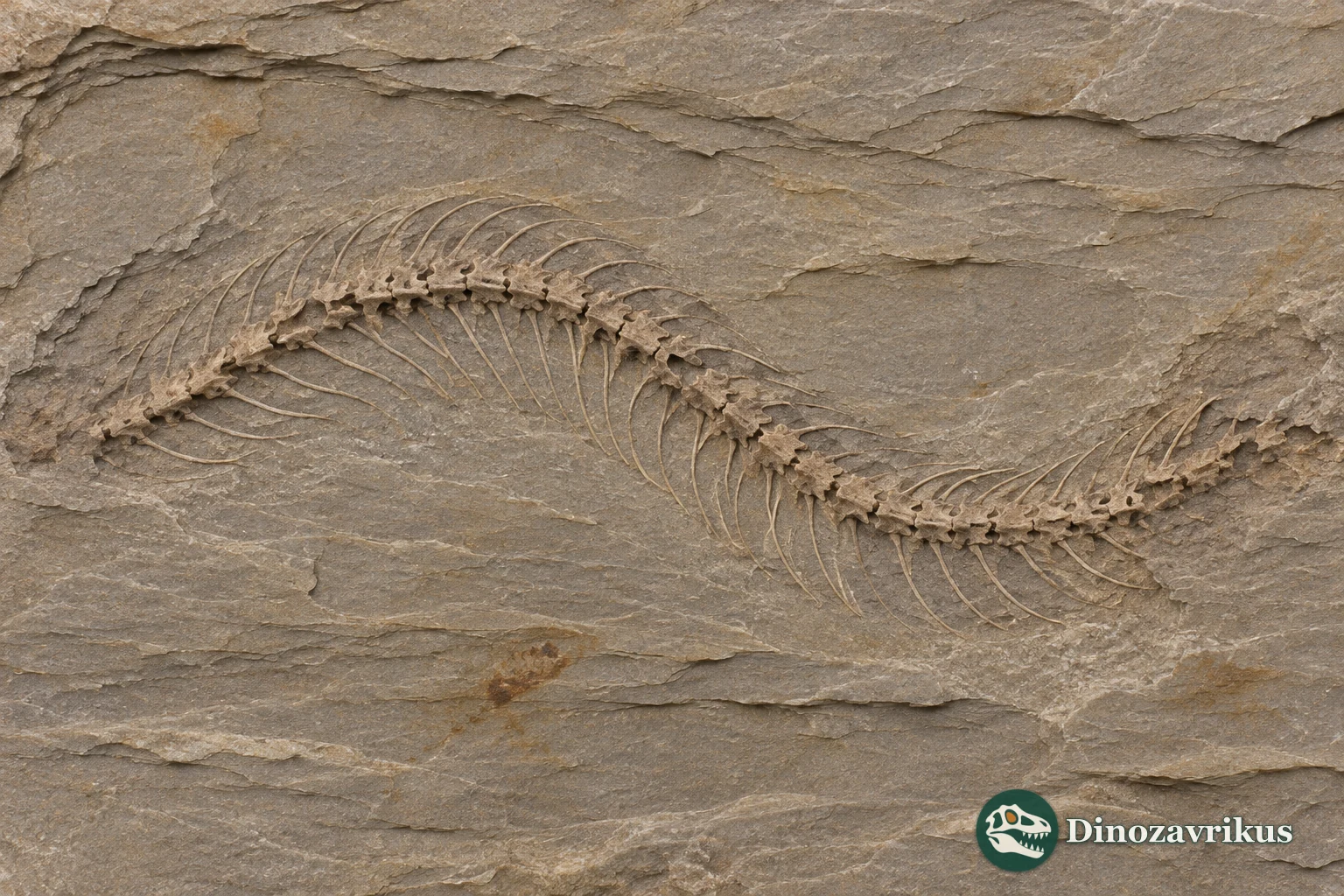
A partial skeleton from lake beds provided the basis for the name. Other specimens from the same deposit preserve vertebrae in their original sequence.
Some vertebrae at the start of the last third of the tail carry a keel underneath. Paired downward processes appear farther back.
The trunk and tail resemble those of different living snakes. A recent review placed Rottophis in Alethinophidia and left its family unresolved.
From the first description to a genus of its own
Hermann von Meyer named the species Tropidonotus atavus in 1855 from a partial skeleton at Rott. Zbigniew Szyndlar and Wolfgang Böhme redescribed the material in 1996 and established the genus Rottophis. At least four additional skeletons are known from Rott. One of them, BIOB-PAL-Ro 4024, has been figured in a study of the deposit.
Trunk and tail tell different parts of the story
The mid-trunk vertebrae are comparatively elongate. Their proportions resemble those of ungaliophiine dwarf boas. Near the start of the final third of the tail, some vertebrae bear a keel that can be grooved underneath. Paired projections replace the keel farther back. The sequence differs from the known pattern in living tropidophiids.
Why the family is unresolved
Researchers have compared Rottophis with boas and tropidophiids. A similar problem arises in the identification of Falseryx, another European fossil snake whose tail bones have been studied in detail. A review in 2022 concluded that Rottophis was an alethinophidian, while the mixture of vertebral characters left its narrower relationships uncertain.
The lake at Rott
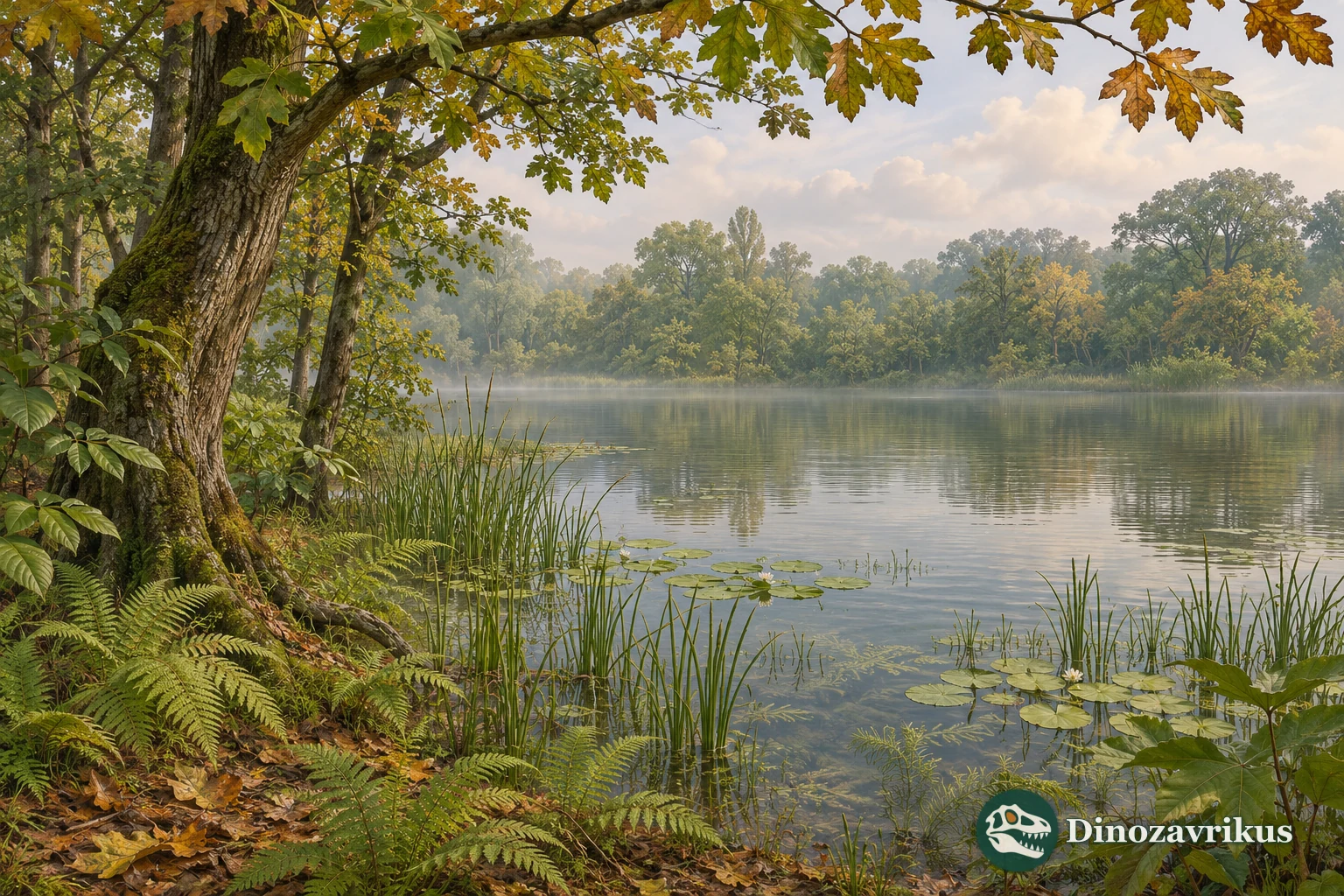
The Rott sediments accumulated in a shallow freshwater lake. The deposits also preserve fish, turtles and aquatic plants. Fossil leaves and seeds indicate woodland around the lake in a warm, humid climate. The place where the skeletons were buried reveals that setting, while the amount of time the snake spent in water remains unknown.
Frequently asked questions
What was the original species name?
Tropidonotus atavus. The species was transferred to its own genus, Rottophis, in 1996.
Where do the best-confirmed fossils come from?
The lake beds at Rott near Bonn, Germany. The type and several other skeletons came from the same locality.
What is unusual about the tail vertebrae?
A keel appears beneath some vertebrae near the start of the final third of the tail. Paired processes occur farther back.
Can Rottophis be assigned to a living family?
Its wider placement is in Alethinophidia. The available characters leave the family unresolved.