

Saratogia was a Late Cambrian trilobite. The type species from New York State bears a long spine that projects backwards from the middle of the head. Similar shields from Utah preserve a small bump in that position, which complicates identification at species level.
Quick facts
| Group | Idahoiid trilobites |
|---|---|
| Age | Late Cambrian, Furongian |
| Genus established by | Charles Doolittle Walcott, 1916 |
| Type species | Saratogia calcifera |
| Type beds | Hoyt Limestone, New York |
| Other records | St. Charles Formation in Utah and Idaho |
What can the fossils tell us?
Walcott documented the form of the head. The incomplete trunk does not preserve the full row of segments.
A cranidium preserves where the spine attached. The fragment on its own cannot reveal its function.
The central head shield resembles Saratogia fria. The differences in the occipital region and the condition of the material leave the species uncertain.
The species from the Hoyt quarry
Walcott described the species as Conocephalites calciferous in 1879. After assigning it to other genera, he made it the type species of Saratogia in 1916. One of the fossil localities is the sandy Hoyt Limestone west of Saratoga Springs. A later revision selected a lectotype from the original series. Another specimen in that series is held as a paralectotype by the Smithsonian Institution.
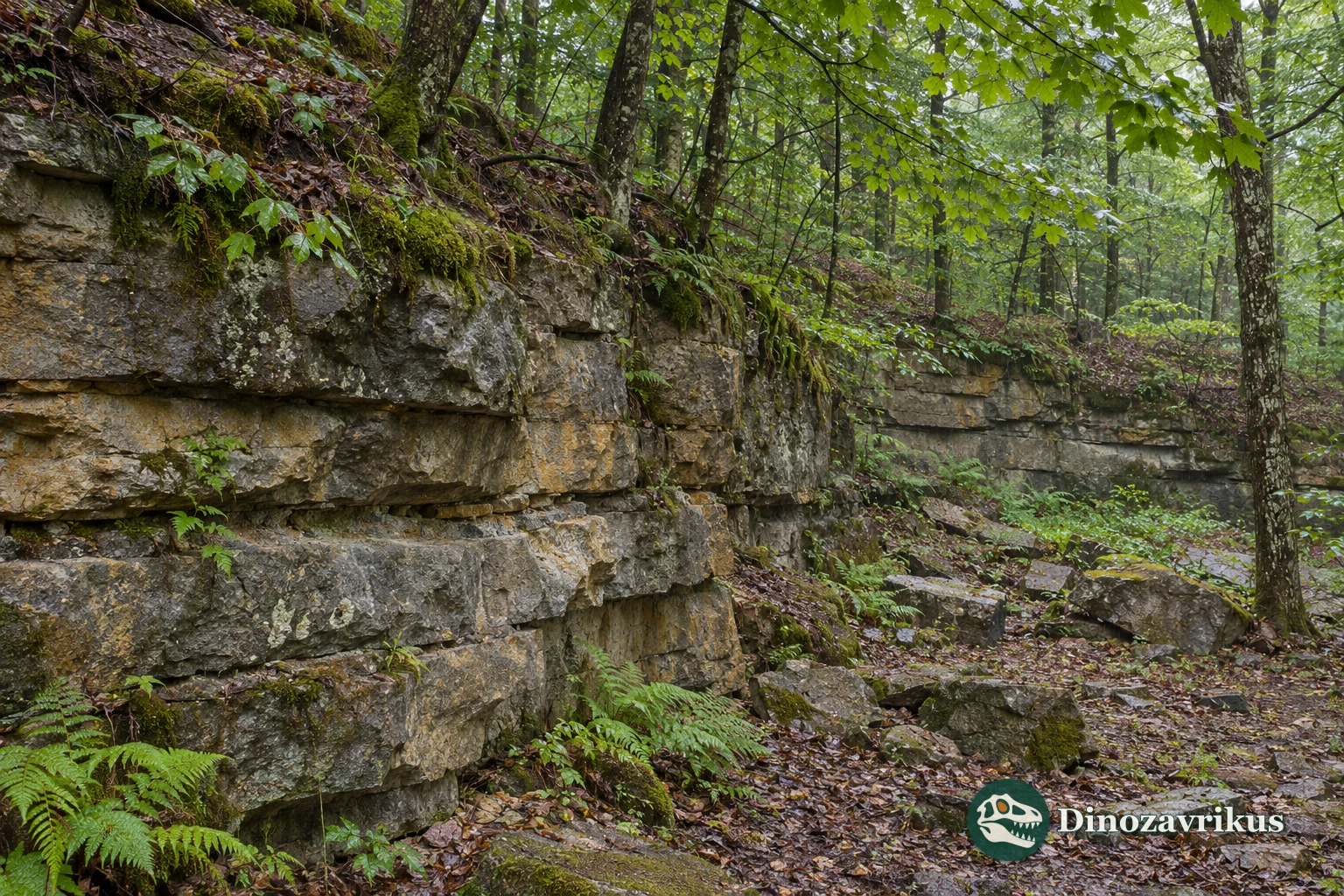
Where the spine attaches
In Saratogia calcifera there is one long median spine at the rear edge of the central head shield. Walcott noted narrow fixed cheeks, large eyes and a surface covered by small, low granules. He also assigned small tail shields found in association with the head shields to the species. With the trunk represented by pieces of segments, he used the proportions of the head material to estimate the length of the complete shell.
Why the Utah shields have a provisional identification
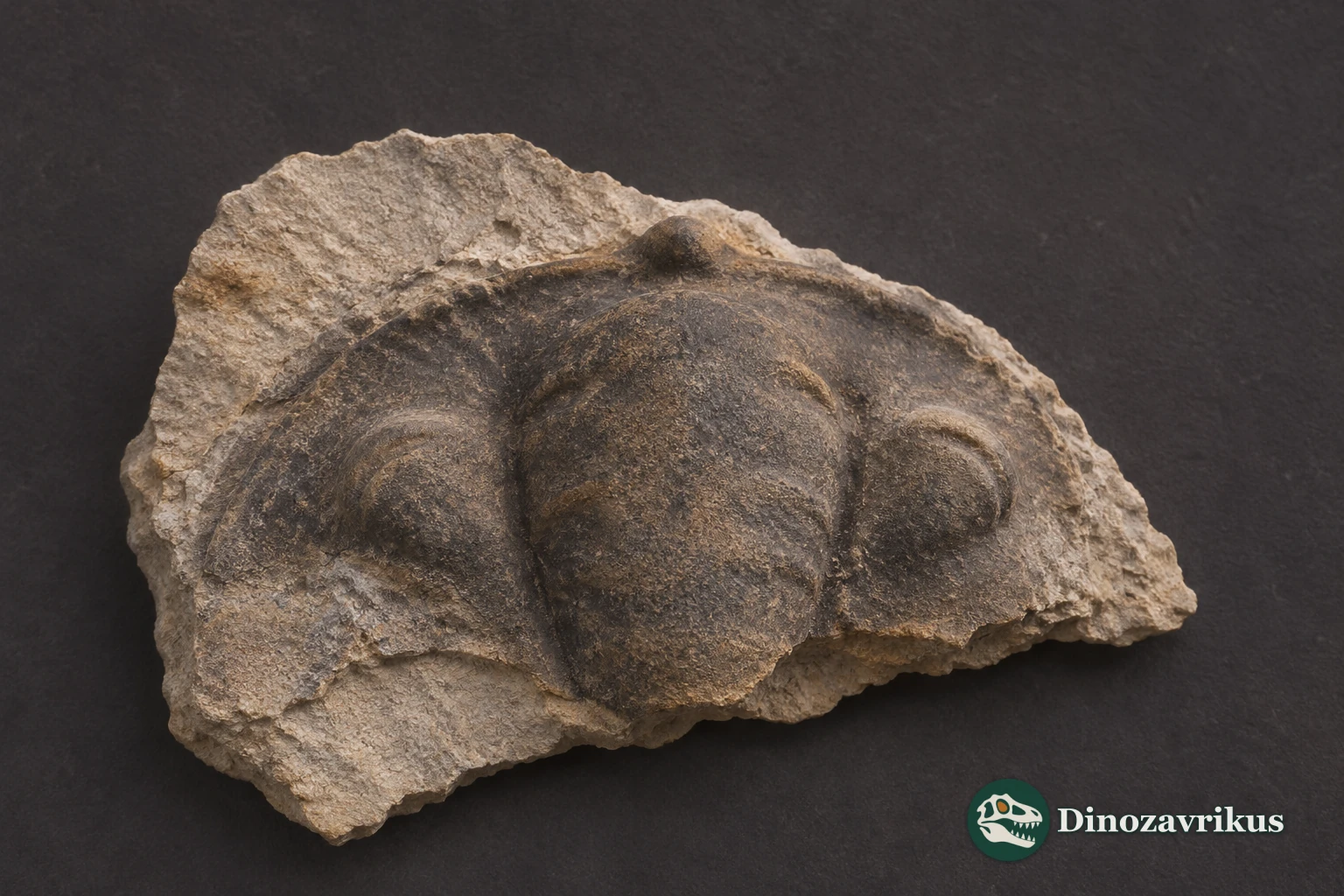
Cranidia from the St. Charles Formation at Smithfield Canyon resemble Saratogia (Idahoia) fria from Idaho. The raised central area of the head, the glabella, is similar in outline and the eye lobes occupy comparable positions. The Idaho type material has a long occipital spine. A small node is visible in the same position on the Utah fossils, which were assigned to a closely comparable form without a firm species identification.
Shield surfaces can help resolve such comparisons. Fine granules help distinguish another Furongian trilobite, Dellea, from similar forms with pitted shields. In the Saratogia material, surface details were compared alongside the head outline and the structure of its rear edge.
Frequently asked questions
What was the original name of the type species?
Walcott named it Conocephalites calciferous in 1879. It subsequently became Saratogia calcifera.
Where is the spine on Saratogia?
It projects backwards from the middle of the occipital ring at the rear edge of the head shield.
Can Walcott's material show the complete number of trunk segments?
The preserved portions included separate pieces of segments, which do not show a complete articulated series.
How do the Utah shields differ from the type of Saratogia fria?
The Utah shields have a small node where the Idaho type material carries a long spine. The Utah specimens were left with a provisional identification.