

Saurillus was a squamate from Early Cretaceous deposits in southern England. The type species is known chiefly from descriptions and drawings of a dentary found in the Purbeck beds of Dorset. The teeth were conical with relatively blunt tips. The original specimen is now considered lost.
Quick facts
| Group | Squamates (Squamata) |
|---|---|
| Age | Early Cretaceous, Berriasian |
| Region | Europe, United Kingdom, Dorset |
| Type species | Saurillus obtusus |
| Scientific name | Saurillus |
| Diet | No direct evidence |
What can the fossils tell us?
The historical description records thirteen preserved teeth and a row of small openings on the outside of the bone.
Comparisons of tooth tips and grooves led researchers to move some of the Purbeck material once called Saurillus to a different genus.
The original jaw is lost. Isolated finds from elsewhere can be referred only where their features can be compared in enough detail.
The jaw Owen described
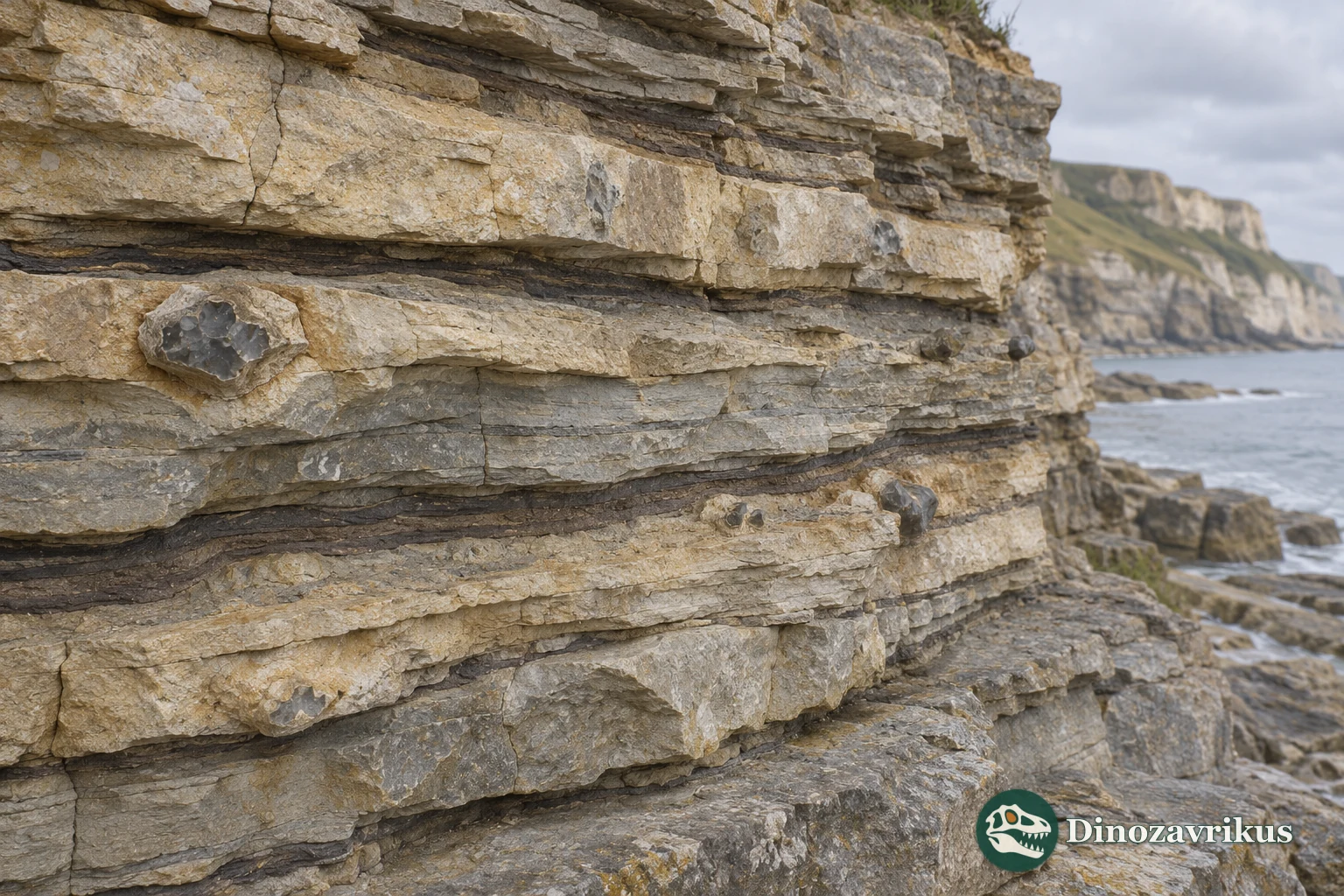
Richard Owen named Saurillus obtusus in 1854 from material sent by William Brodie of Swanage. In his detailed account, Owen described a right dentary with thirteen teeth. The teeth were conical and moderately tall. He counted six openings in a row on the outside of the bone. A modern review places the find in the Feather Bed in the Early Cretaceous part of the Purbeck sequence.
What changed when the jaws were reexamined
Other lower jaw fragments from the Beckles Collection were initially referred to Saurillus. A closer look at the tooth tips showed that many differed from the material they had been compared with. The genus Parasaurillus was erected for that subset of fossils. A different Jurassic lizard, Saurillodon, also has a historical link to the name. Its type species was originally described in Saurillus before it was moved to its own genus.
What remains uncertain
The original dentary of the type species is unavailable for reexamination. Drawings and descriptions show what Owen observed, but comparisons of fine crown surfaces must use other specimens. Some Late Jurassic fossils from Portugal have been compared with the genus provisionally. Those referrals do not determine the age of the British type material.
Frequently asked questions
How many teeth were on the original fragment?
Owen counted thirteen teeth preserved on a right dentary. The number refers to the fossil itself.
Where was the type material found?
It came from the Purbeck deposits near Swanage in Dorset, England.
Is the type jaw available to examine?
Researchers have been unable to locate the specimen. The historical description and drawings remain available.
Why do Saurillus and Saurillodon have similar names?
The type species of Saurillodon was first described in Saurillus. It was later moved to a separate genus.