

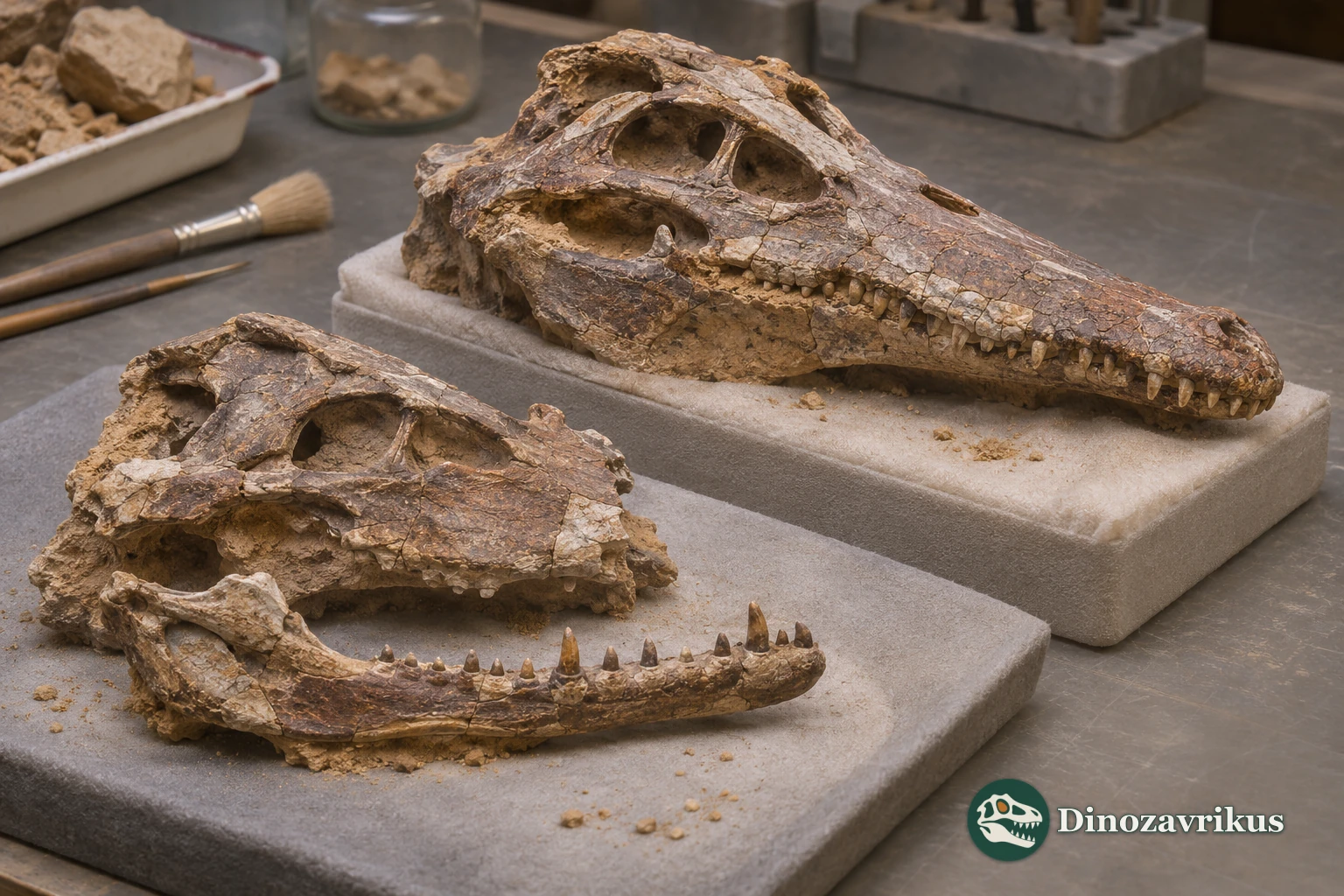
Shantungosuchus was a small early-branching crocodyliform from China. The type species is known from an articulated impression from Shandong. Other specimens preserve a groove on the palate and fine differences in the shape of the bones around it.
Quick facts
| Type species | Shantungosuchus chuhsienensis |
|---|---|
| Group | Shartegosuchoidea |
| Age | Early Cretaceous in recent studies |
| Type material | Articulated ventral impression |
| Formation | Mengyin Formation, Shandong |
| Other material | Shandong and Inner Mongolian finds |
What can the fossils tell us?
The arrangement of the bones is visible, while some skull details are better preserved in other species.
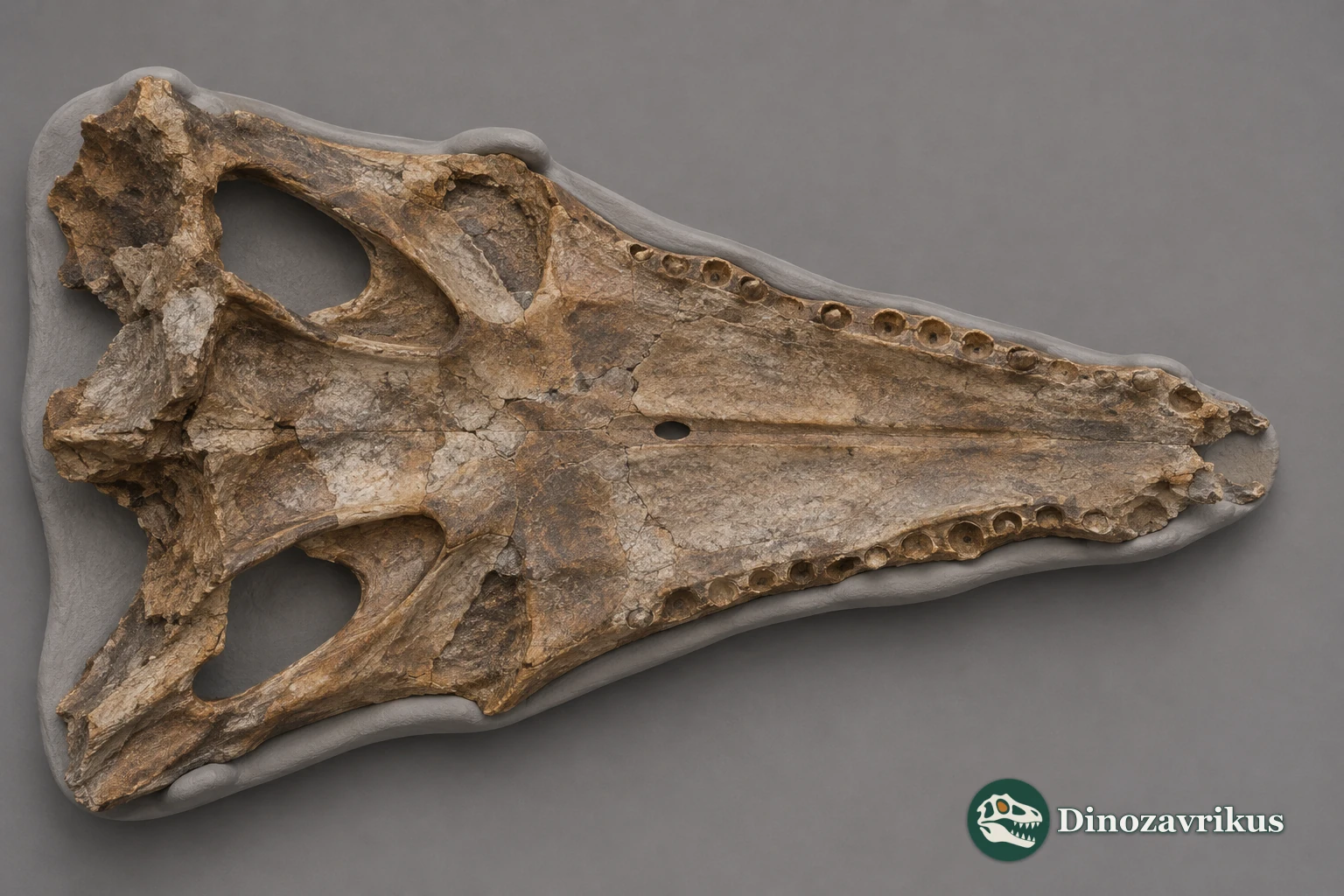
The bony floor shows a connection between the choana and an opening farther forward. The surrounding soft tissues are unknown.
A recent study used an interval of about 145–136 million years for the formation. That estimate dates the rock sequence, rather than the fossil itself.
Three named species from China
C. C. Young described the type species, Shantungosuchus chuhsienensis, in 1961 from a Shandong skeleton impressed into the rock from below. He considered it an atoposaurid. Xiao-Chun Wu, Donald Brinkman and Junchang Lü re-examined it in 1994 and found closer similarities to the early crocodyliforms then called protosuchians.
The same study named S. hangjinensis from the Luohandong Formation of Inner Mongolia. It preserves a partial skull, lower jaw and bones from the rest of the skeleton. Further preparation of IVPP V4020, the specimen of S. brachycephalus, revealed four cervical vertebrae where the original description had identified armour plates.
The groove on the palate
The choana, or internal nostril, sits on the midline of the palate. A nasopharyngeal groove open on the underside connects it to an opening farther forward. Nominosuchus shows a similar connection, with the openings set at different levels relative to neighbouring bones.
A longitudinal ridge runs along the groove in S. brachycephalus. S. hangjinensis has large round pits on the palatal surface of the maxilla, while those pits are absent from S. brachycephalus. These features help track changes in the airway among early crocodyliforms. They leave the animal’s diet uncertain.
Dating the rock sequences
The Mengyin Formation was once considered Late Jurassic and was later assigned to a younger part of the Early Cretaceous. Zircon dates discussed in a 2019 study support an Early Cretaceous interval of about 145–136 million years. The Luohandong age has been inferred from fossils and correlations, with several different Early Cretaceous stages proposed.
Frequently asked questions
How is the type skeleton preserved?
As an articulated impression seen from below, including parts of the skull and body.
Which formation yielded the Inner Mongolian species?
The Early Cretaceous Luohandong Formation.
What is a choana?
It is an internal nostril in the palate. In Shantungosuchus a groove on the underside leads into it.
Why were four vertebrae originally called scutes?
The specimen of S. brachycephalus was incompletely prepared. Further preparation exposed the cervical vertebrae.