

Shartegosuchus asperopalatum was a small crocodyliform from Late Jurassic Mongolia. CT scans of a partial skull showed that the nasal passage opened far back in the bony palate, with a separate opening farther forward. A rearward internal nostril also evolved in the lineage that includes living crocodilians.
Quick facts
| Group | Crocodyliformes, Shartegosuchidae |
|---|---|
| Age | Late Jurassic, probably early Oxfordian |
| Locality | Shar Teg, Gobi Altai, Mongolia |
| Rock unit | Ulan Malgait Formation |
| Holotype | PIN 4174/2, juvenile skull and mandible |
| CT-scanned specimen | IGM 200/50, front of skull |
What can the fossils tell us?
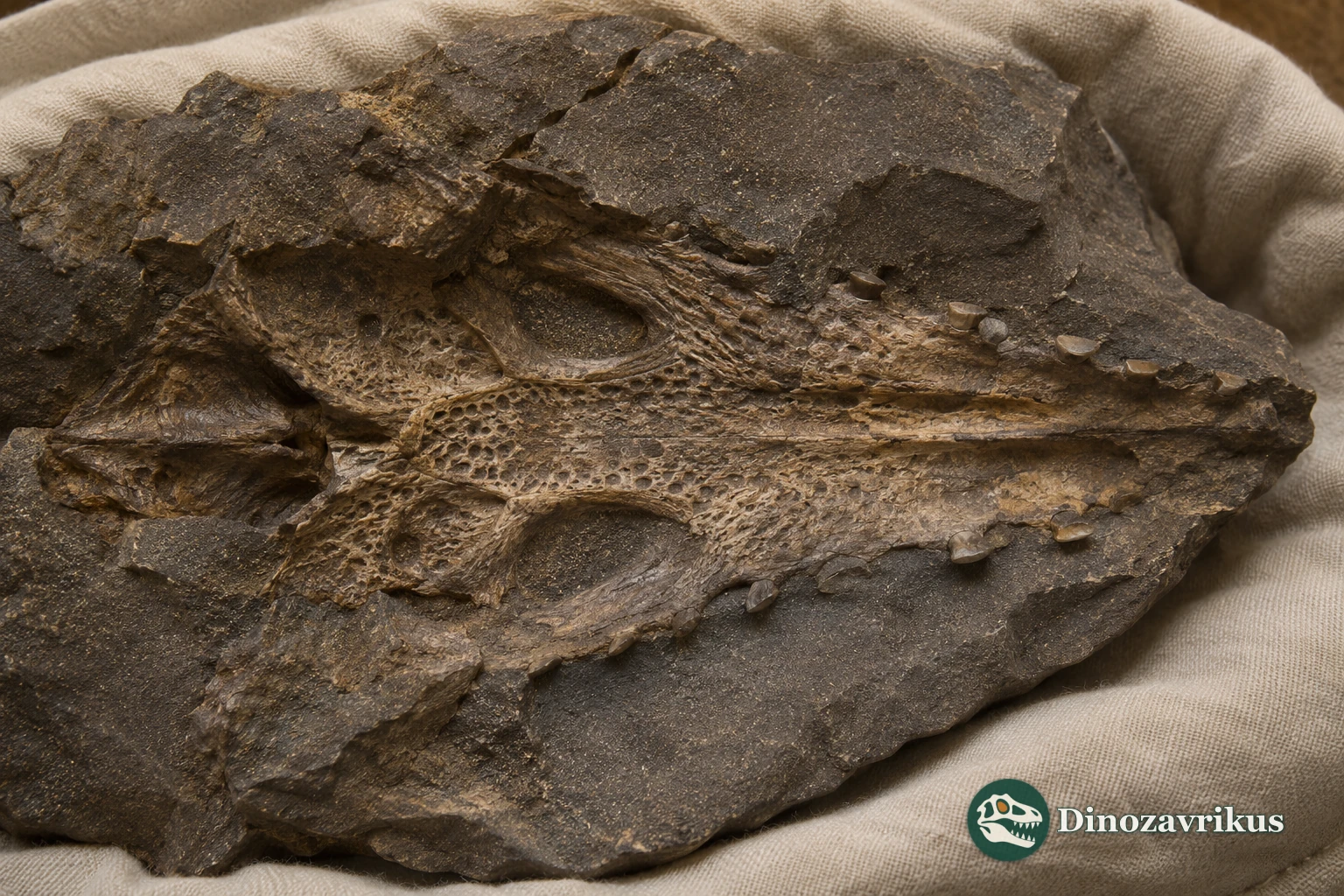
The scans show pterygoid bones surrounding this opening. A bony bridge divides it from a separate opening farther forward.
The crowns behind the front teeth have vertical folds. Deep, irregular pits texture the surfaces of the palate bones. These features help identify shartegosuchids.
Both units have yielded material identified as Nominosuchus. Dates from Chinese volcanic ash support an early Oxfordian age for the Mongolian specimen.
Two skull specimens from Shar Teg
Mikhail Efimov named Shartegosuchus in 1988. The holotype, PIN 4174/2, is a juvenile skull and mandible crushed from above. In 2010, a Mongolian–American expedition recovered IGM 200/50 at Bor Ukhaa. It consists of the front of a skull with parts of the palate and lower jaw.
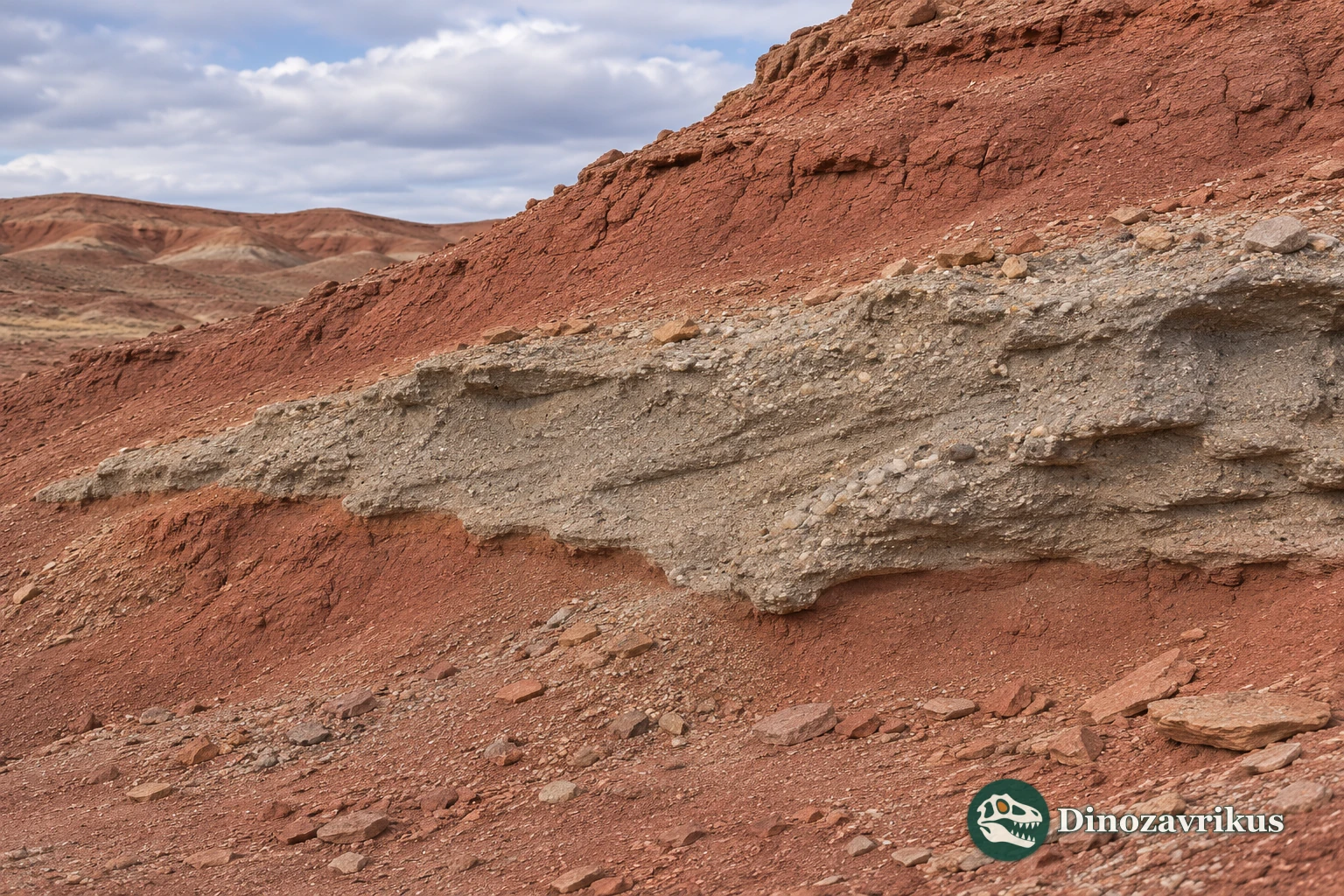
The specimen came from a grey sandstone layer amid red mudrocks in the lower Ulan Malgait Formation. Kathleen Dollman and colleagues used CT scans to reconstruct the preserved palate in three dimensions and published the results in 2018.
Two openings in the bony palate
The choana is the internal opening of the nasal passage. In Shartegosuchus it sits far back on the palate, surrounded by the pterygoids. A separate, elongated opening lies in front of it, with a bridge of bone between the two. The palatine bones are comparatively small.
Fruitachampsa also has an isolated anterior opening, but different bones contribute to the bridge. The two fossils help trace changes in the palate and the position of the choana among early crocodyliforms. A rearward choana evolved independently in Shartegosuchus and in the lineage that includes living crocodilians.
How the fossil was dated
Material identified as Nominosuchus occurs in the Ulan Malgait Formation and the upper Shishugou Formation in China. That shared fossil helped correlate the rock units. Radiometric dates from Chinese tuffs put the comparison horizons at roughly 160–162 million years old, suggesting an early Oxfordian age for IGM 200/50.
The skulls preserve considerable detail about the palate. They leave the length of the trunk and tail uncertain. The position of the choana alone cannot establish how much time the animal spent in water.
Frequently asked questions
What was unusual about the palate of Shartegosuchus?
The nasal passage opened at the rear and a separate opening remained farther forward, across a bony bridge.
What did CT scans show?
They revealed boundaries between palate bones and confirmed that the pterygoids completely surround the rear opening.
How was the Mongolian specimen dated?
Researchers compared its fossil assemblage with dated rocks in China that also yielded material identified as Nominosuchus. The estimated age is early Oxfordian.
Is there a complete skeleton?
The studied specimens are parts of skulls and lower jaws. They provide no reliable measurement of total body length.