

Shelania was an early Eocene pipid frog from Patagonia. Rodolfo Casamiquela named the type species from an incomplete young individual. Larger specimens from the same lake deposits later revealed the form of the skull, pelvis and limbs in much greater detail.
Quick facts
| Group | Frogs, pipids (Pipidae) |
|---|---|
| Age | Early Eocene, Ypresian |
| Region | South America (Chubut Province, Argentina) |
| Type species | Shelania pascuali |
| Scientific name | Shelania |
| Diet | Exact prey is unknown |
What can the fossils tell us?
The holotype, PVL 2186, is a young individual. The larger specimen PVL 3991 preserves a more complete skull and skeleton.
The redescription estimates a snout-to-vent length of about 30 mm for the type and about 90 mm for PVL 3991. Larger skull and pelvic elements suggest lengths of around 100 mm.
The upper jaw bone lacks teeth. That feature helps identify Shelania, while its exact diet remains unknown.
An early Eocene lake in Chubut
Casamiquela named Shelania pascuali in 1960. The type specimen, PVL 2186, comes from the Laguna del Hunco area in the Chubut River valley. Ana María Báez and Linda Trueb redescribed the genus in 1997 using many more specimens. Radiometric dates from volcanic layers put the Laguna del Hunco lake deposits in the early Eocene, around 52 million years ago.
Why published sizes differ
The small holotype was estimated at about three centimetres from snout to vent. The more complete PVL 3991 was about nine centimetres long by the same measure. Several specimens preserve larger braincases and pelvic elements, suggesting lengths around ten centimetres. These figures describe the material studied and cannot establish the species’ maximum size.
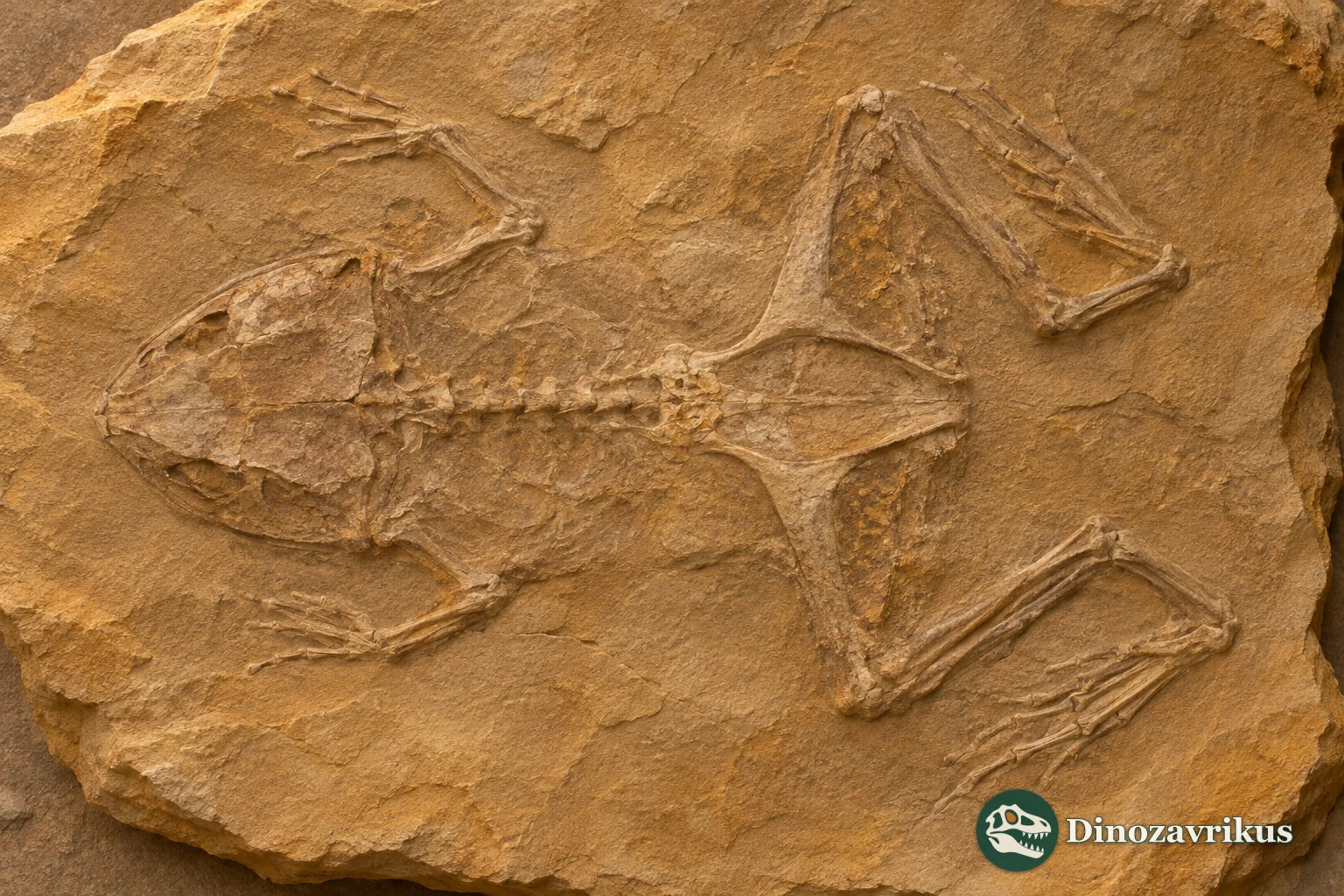
Features of the skull and pelvis
The braincase is relatively long and narrow, while the outer bones of the head extend to the sides. The frontoparietal region narrows at midlength. The toothless maxilla has a long process extending inward in front of the eye. The long, straight hip bones also distinguish Shelania from some fossil relatives.
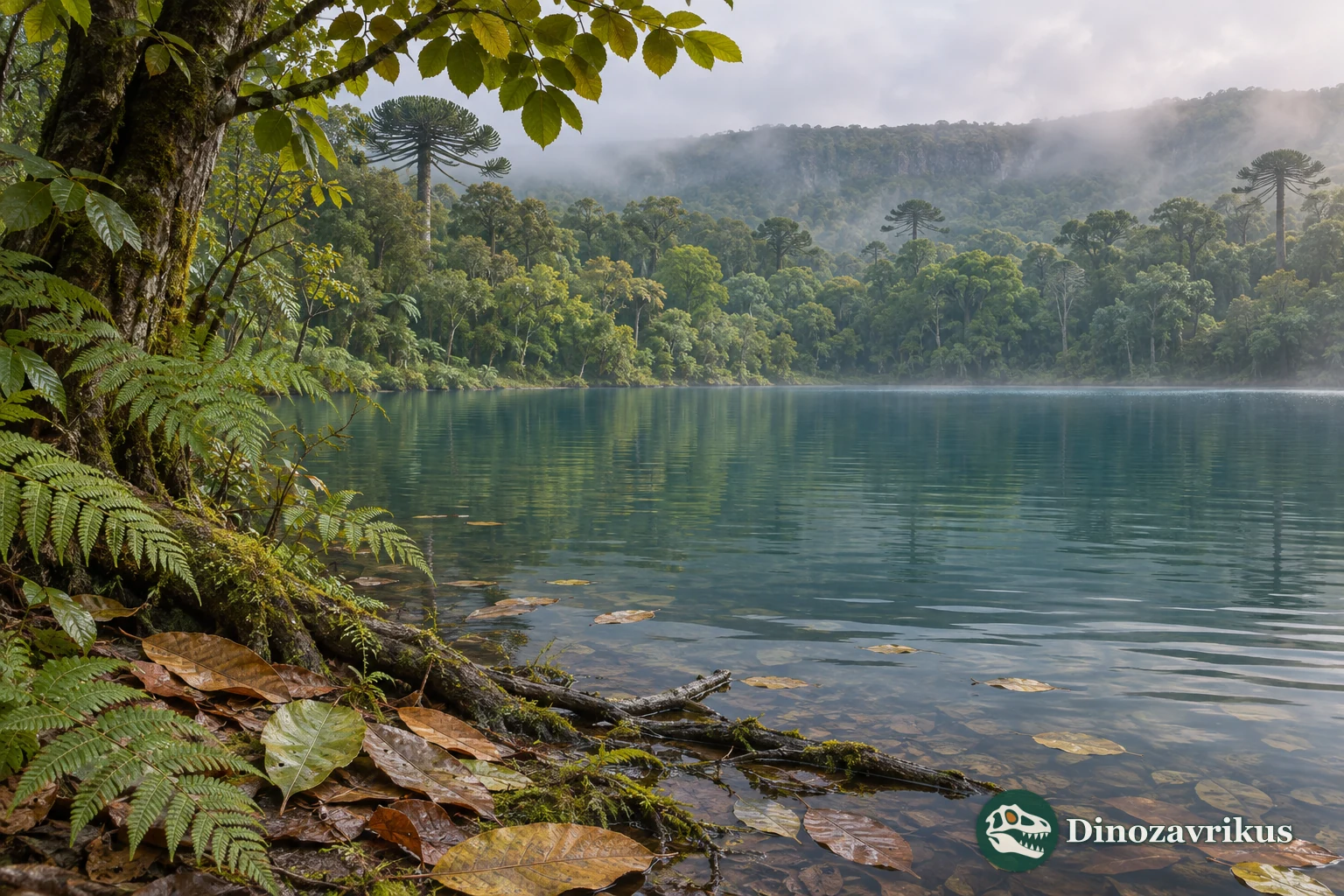
A forest around the lake
The frogs were buried in lake sediment. Fossil leaves and other plant remains show that a diverse forest grew around the early Eocene lake. Much younger Patagonian deposits preserve another frog lineage, represented by the Miocene Calyptocephalella parodii.
Frequently asked questions
Where was Shelania found?
The type material comes from near Laguna del Hunco in Chubut Province, Argentine Patagonia.
When did Shelania live?
In the early Eocene. The Laguna del Hunco lake deposits date to around 52 million years ago.
How large was Shelania?
The young holotype was about three centimetres long. Larger specimens have estimated snout-to-vent lengths of around nine to ten centimetres.
Did Shelania have teeth in its upper jaw?
The redescription records no teeth on the maxilla. This feature does not establish what the frog ate.