

Shiriyanetta was a large sea duck from Pleistocene Japan. Its bones were found in sediment-filled fissures in northern Honshu. Material from the wing and leg allowed palaeontologists to compare its proportions with those of living ducks and test whether it could fly.
Quick facts
| Group | Anatidae, sea ducks |
|---|---|
| Age | Middle to Late Pleistocene |
| Site | Shiriya, northern Honshu |
| Material | Isolated cranial and postcranial bones |
| Locomotion | Diving and loss of flight |
What can the fossils tell us?
The sediment preserved isolated parts of skeletons, including wing and leg bones.
A comparison of skeletal measurements in living and fossil waterfowl strongly supported the loss of flight.
The curved shaft and the shape of the lower end resemble structures seen in several regularly diving duck lineages.
The Shiriya material
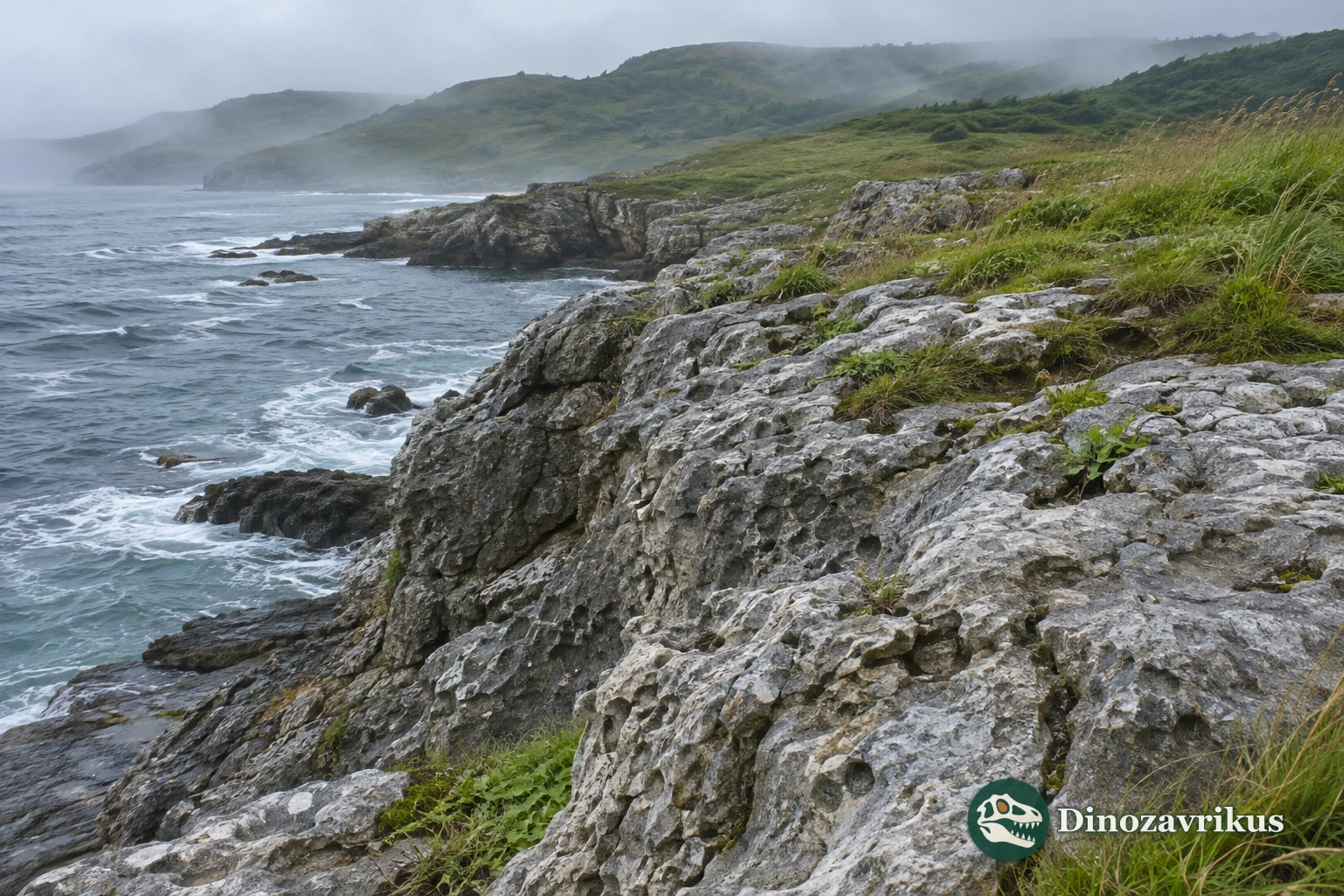
Junya Watanabe and Hiroshige Matsuoka described Shiriyanetta hasegawai in 2015 from bones in the Shiriya area on the Shimokita Peninsula. The material includes parts of the skull, vertebrae, shoulder and pelvic girdles, and the major limb bones. The remains are isolated, so comparative measurements were used to examine the bird’s proportions.
The fissure fills contain marine and terrestrial animals. The studied Shiriya deposits are associated with warm stages about 320,000 and 120,000 years ago. Those ages refer to the fossil assemblages and leave the exact times of arrival and extinction of the duck unknown.
Testing the loss of flight
Watanabe built a model from measurements of living volant and flightless waterfowl. It considered wing and leg dimensions and the height of the breastbone keel where the material was available. Ratios of measurements help distinguish a bird with short wings from one that simply has large leg bones.
The analysis strongly supported flightlessness for Shiriyanetta. Its femur has a curved shaft and a widened lower end. In combination with other details, these features resemble those of ducks that regularly forage underwater. The bones give no direct estimate of diving depth or precise prey.
Similar birds on the opposite side of the Pacific
The original study compared Shiriyanetta with living eiders and the extinct North American sea ducks of the genus Chendytes. Many corresponding bones are diagnostically different. The authors raised the possibility that flight was lost independently on the two sides of the Pacific.
Wing anatomy also matters in the much older Australian duck Pinpanetta. In that case, humeri helped distinguish closely related species. In Shiriyanetta, the balance of wing and leg proportions addresses a different question, whether the animal could still fly.
Frequently asked questions
Where was Shiriyanetta found?
In the Shiriya area on the northern end of Honshu, Japan.
Could it fly?
A quantitative comparison of skeletal proportions strongly supported flightlessness.
How can a fossil show that it dived?
Several features of the femur match those found in living ducks that regularly dive for food.
Did it belong to the same genus as the extinct North American sea ducks?
It was described as a separate genus. The authors suggested that the birds might have lost flight independently.