

Spathorhynchus was an Eocene worm lizard from Wyoming. It had a short, broad snout with a flattened tip. Its skull combines features consistent with digging and a feature now lost in living worm lizards, a complete bony rim around the eye socket.
Quick facts
| Group | Worm lizards (Amphisbaenia), rhineurids (Rhineuridae) |
|---|---|
| Age | Middle and late Eocene |
| Region | North America, United States, Wyoming |
| Type species | Spathorhynchus fossorium |
| Scientific name | Spathorhynchus |
| Diet | No direct evidence |
What can the fossils tell us?
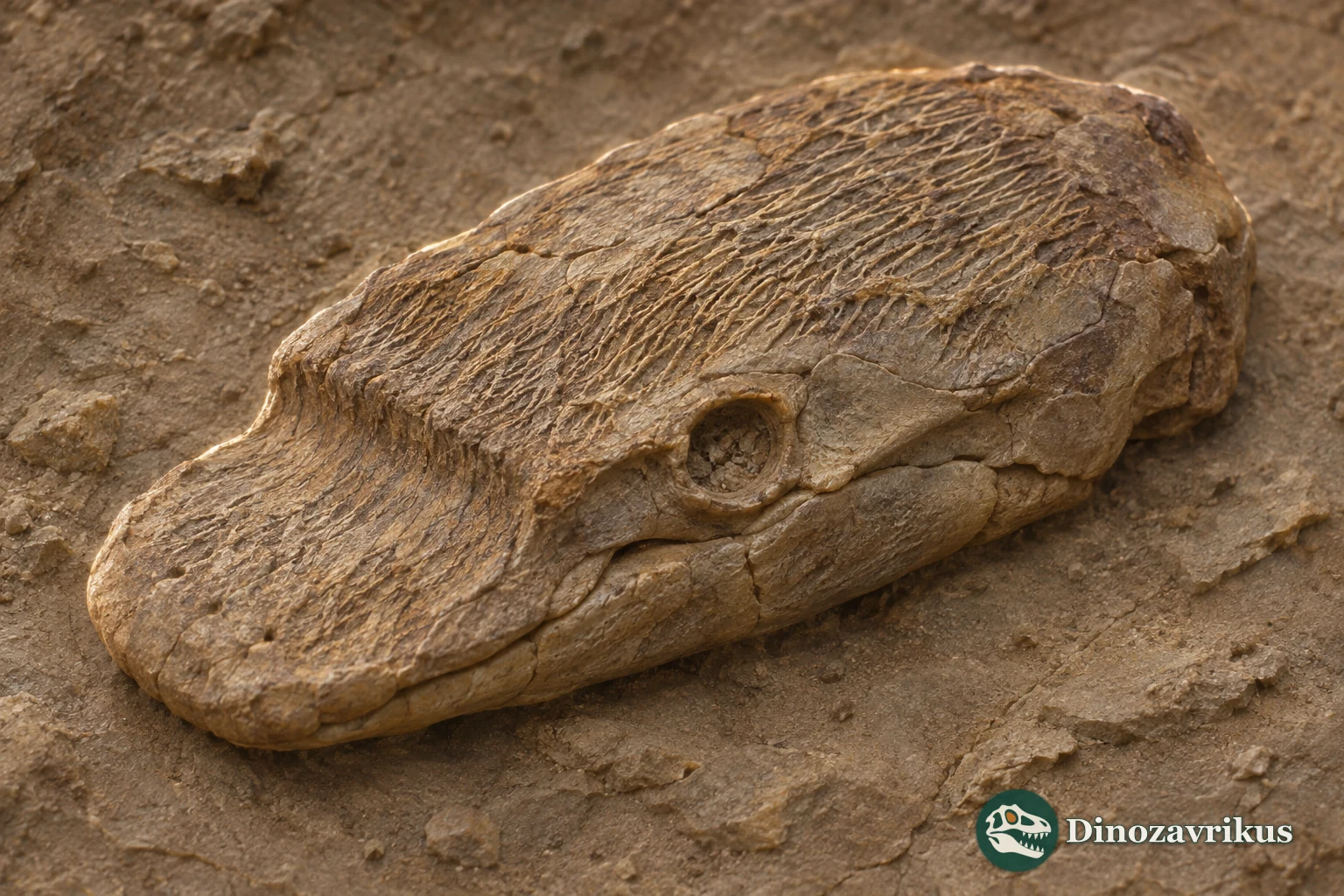
USNM V26317 comes from Wyoming and is housed at the Smithsonian. The skull is 35.4 mm long from the snout tip to the occipital condyle.
The premaxilla and nasals form a wide edge overhanging the lower jaw. CT slices show how the skull bones fit together.
Bone surrounds the orbit. This prompted a hypothesis about the importance of vision, but the skull cannot establish visual acuity or activity patterns.
Two species from Wyoming
Frank Pearce collected the type skull, USNM V26317, in Sweetwater County in July 1967. David Berman named Spathorhynchus fossorium in 1973 from middle Eocene material. He described a second species, Spathorhynchus natronicus, in 1977 from the White River Formation. Its age was originally reported as early Oligocene. Studies that date the local Chadronian fauna to the late Eocene treat this occurrence as late Eocene.
The shape of the skull
The type skull is 35.4 mm long and reaches a maximum width of 19.3 mm. The flattened front of the snout overhangs the lower jaw, and its surface is marked by small pits and grooves. That shape is consistent with digging head first. It does not establish the amount of time spent underground.
What CT revealed
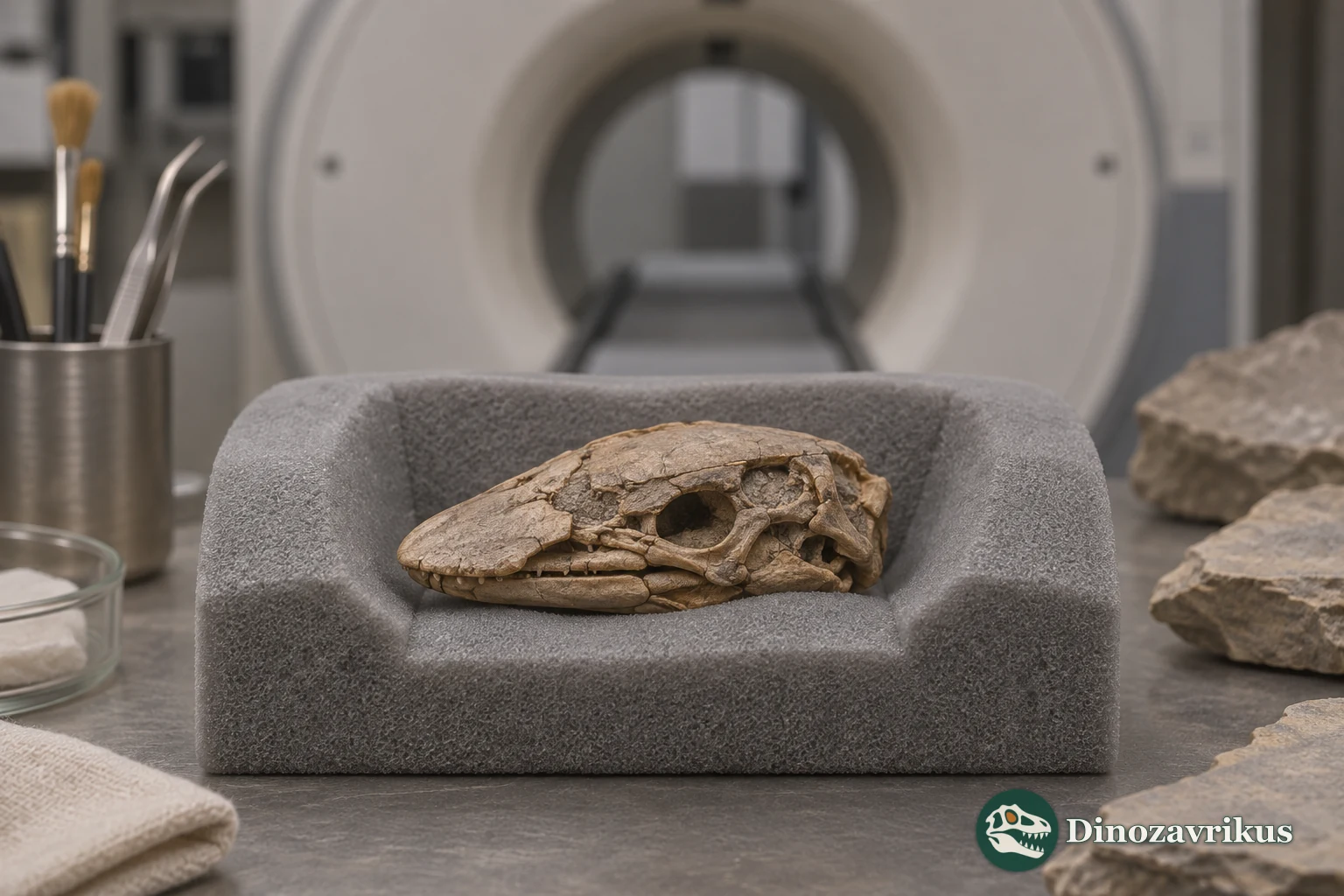
Johannes Müller, Christy Hipsley and Jessica Maisano examined the fossil with high-resolution X-ray CT in 2016. The slices show where the frontal and jugal meet below the orbit. They found a similar contact in Dyticonastis. Both genera also preserve unusual paired canals in the floor of the braincase. The function of these passages is unresolved.
Eyes and life underground
Spathorhynchus has a complete bony orbital rim. Living worm lizards lack a full rim and generally have reduced eyes. The researchers suggested that the eyes may have been more important to Spathorhynchus. Its eye socket alone cannot establish how well it saw or how often it came to the surface.
Frequently asked questions
Which group includes Spathorhynchus?
It belongs to Rhineuridae, a family of worm lizards. Its skull and jaw anatomy distinguish it from snakes.
Does 35.4 mm refer to its total length?
It is the distance from the tip of the snout to the occipital condyle in the type skull. The full body length is unknown.
What did the CT scans add?
They revealed internal passages and contacts between bones that are difficult to see on the outside of the fossil.
Could it dig with its head?
The broad flattened snout is consistent with head-first digging. The skull does not record how much time the animal spent underground.