

Sphaerophthalmus was a small late Cambrian trilobite in the family Olenidae. One articulated Swedish shell measures 6.7 mm. A separate tail shield is just 0.6 mm long without its spine. Fossils from the Danish island of Bornholm preserve even smaller details, including individual lenses of its compound eyes.
Quick facts
| Group | Olenid trilobites |
|---|---|
| Age | Late Cambrian |
| Genus named | Nils Peter Angelin, 1854 |
| Type species | Sphaerophthalmus alatus |
| Lectotype locality | Gamlebyen, Oslo |
| Measured shell | 6.7 mm, Swedish specimen |
What can the fossils tell us?
The long spine on the tenth segment is distinct from the spine on the tail shield.
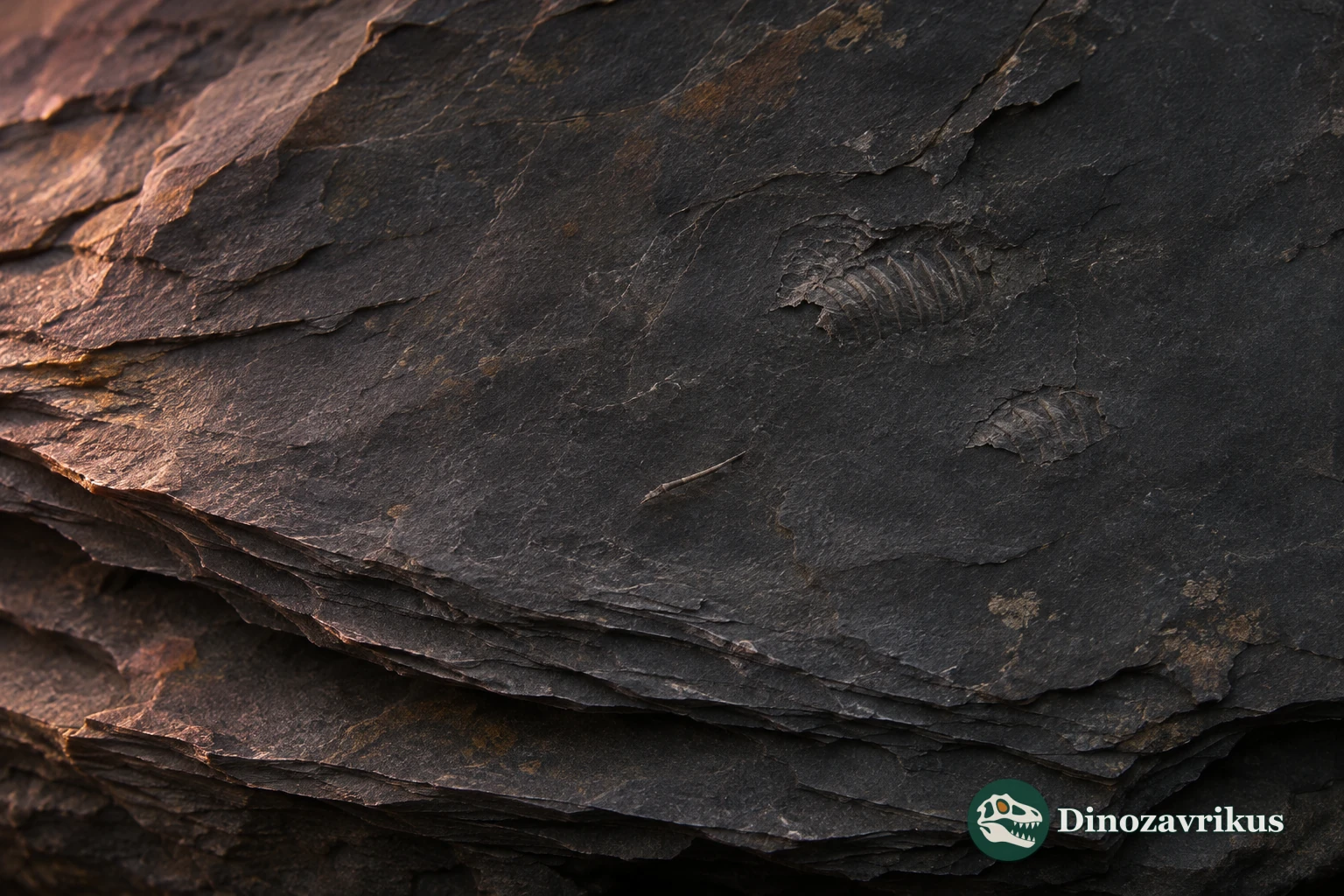
The slender caudal spine can break away as the shale is split, leaving a small triangular shield.
Measurements from Bornholm allow a comparison of vision in two trilobites found in the same beds.
Fossils in Scandinavian Alum Shale
Christian Boeck described the type species as Trilobites alatus in 1838. Nils Peter Angelin named Sphaerophthalmus in 1854. A cranidium from an old quarry in Gamlebyen, Oslo, was selected as the lectotype in 1940. It is preserved as PMO 56371 and was photographed again in a revision of the Scandinavian Alum Shale material.
An articulated shell from Backeborg, Sweden, preserves both the long axial spine of the tenth thoracic segment and a separate spine attached to the tiny tail shield. Detached fragments lack that positional evidence and are harder to identify.
How the shell changed during growth
The adult pygidium is triangular, with one or two axial rings. Some juvenile tail shields have up to six rings and lack the elongate caudal spine. As these trilobites grew, segments were released from the temporary tail shield into the thorax. A different fossil series records changes to the head shield during growth in Oryctocephalites.
Ten eyes from Bornholm
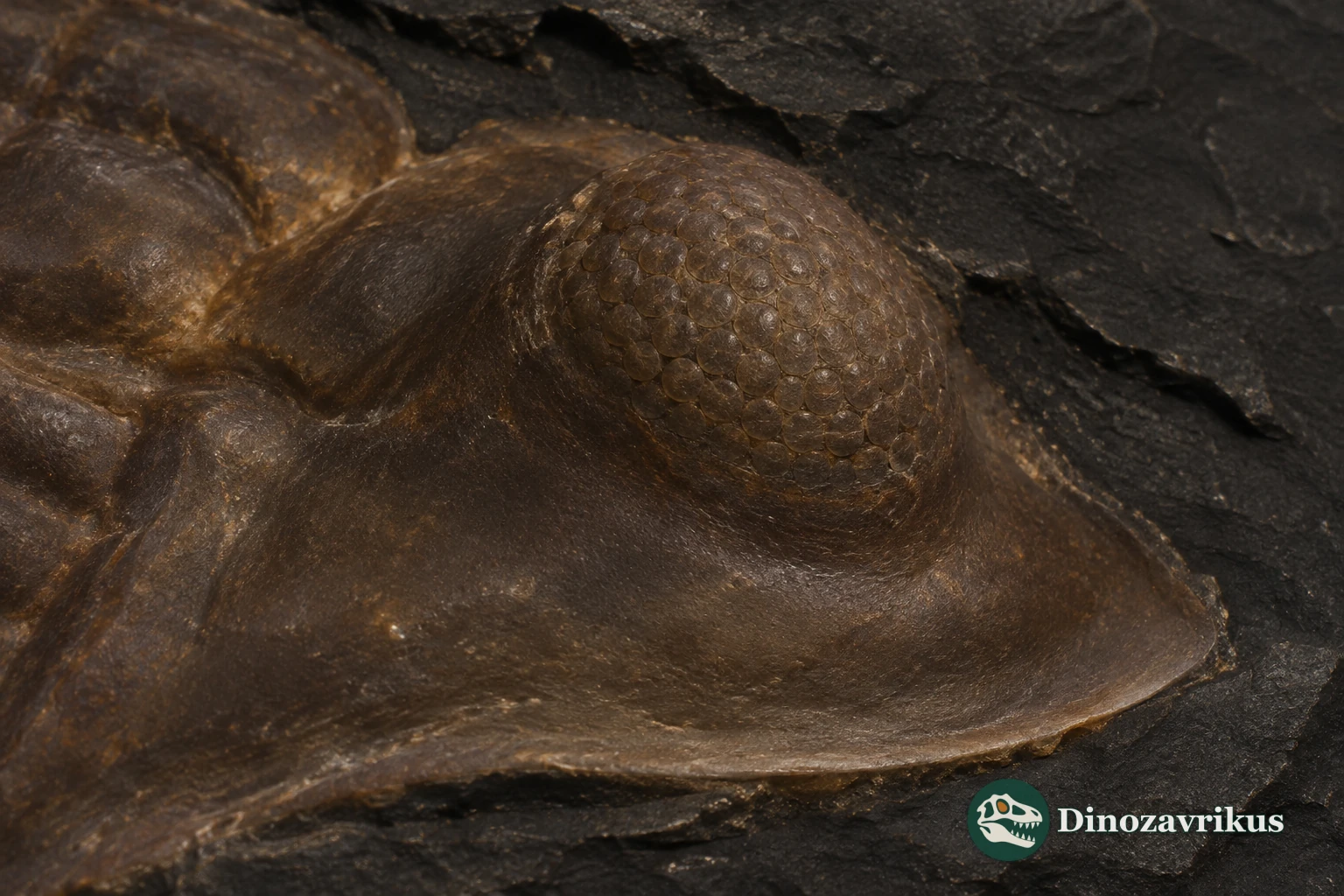
Researchers compared ten Sphaerophthalmus alatus eyes with eyes of Ctenopyge tumida from the same beds. The Sphaerophthalmus eyes in their sample measured 265 to 500 micrometres in length. The average diameter of an individual lens was about 35 micrometres. The team combined lens sizes with the angles between neighbouring lenses to estimate the light conditions each eye could work in.
The calculations indicate that S. alatus was adapted to dimmer light than C. tumida. The eye study suggested that it might have lived nearer the seafloor. An earlier study of shell and spine shape also considered a more open-water habit possible. The fossils provide indirect evidence for both interpretations.
Frequently asked questions
How long was Sphaerophthalmus?
One articulated shell from Kinnekulle, Sweden, measures 6.7 mm. That is the length of an individual specimen.
How many thoracic segments did the adult have?
Ten. A long axial spine extends from the tenth segment, and a separate spine projects from the tail shield.
Where was the lectotype found?
At an old Alum Shale quarry in Gamlebyen, Oslo. The specimen is catalogued as PMO 56371.
What did the eye comparison with Ctenopyge show?
The lens geometry suggests adaptation to dimmer light in Sphaerophthalmus, consistent with a possible life near the seafloor.