

Stenotosaurus was a capitosauroid temnospondyl amphibian. The German type species is known from a palate and the impression of a skull roof from Middle Triassic rocks. A second species, described from Algeria in 2026, preserves details of the cheek and the rear of the skull that are difficult to study in the European material.
Quick facts
| Group | Temnospondyls, capitosauroids |
|---|---|
| Age | Middle Triassic |
| Region | Europe and Africa (Germany and Algeria) |
| Type species | Stenotosaurus semiclausus |
| Scientific name | Stenotosaurus |
| Diet | Exact prey is unknown |
What can the fossils tell us?
The German material preserves a palate and the impression of the skull roof. The Algerian skull shows contacts between bones at the rear of the head.
The Algerian skull has a steeply inclined cheek and direct contact between the exoccipital and the pterygoid. These and other details support naming a separate species.
The incomplete impression from Kronach has been assigned to the type species in a revision. It is still discussed under its own name in some comparisons.
The Black Forest material
William Swinton described the type species in 1927 as Capitosaurus semiclausus. Alfred Romer later proposed placing it in Stenotosaurus. The type material, the palate NHMUK R.5276 and external mould of the skull roof NHMUK R.5277, is held at the Natural History Museum in London. It comes from the Upper Röt clays of the Black Forest, dated to the early Anisian of the Middle Triassic.
Reading the bones around the eye socket
In the type species, a narrow contact between the prefrontal and the postorbital keeps the jugal from reaching the edge of the eye socket. The surface of the skull bears widely spaced ridges. The broad, oval nostril is roughly half as long as the eye socket. These features help identify specimens when the skull margins or palate are damaged.
The impression from Kronach
Another German specimen comes from Kronach, Bavaria. It was named Stenotosaurus gracilis. A revision of German temnospondyls assigned it to the type species, and a later synthesis treated the separate name as a probable synonym. The specimen preserves only part of the skull. It offers limited evidence for assessing whether differences between the two specimens were consistent in life.
What the Algerian skull adds
The Reculée section yielded Stenotosaurus aitoualii, described in 2026. In its skull, the exoccipital touches the pterygoid and the cheek is steeply inclined. The fossil comes from a level above remains of Stanocephalosaurus, another amphibian found in the same section. The order of the beds establishes which finds are younger and gives the anatomical comparison a geological context.
What the skull says about its habits
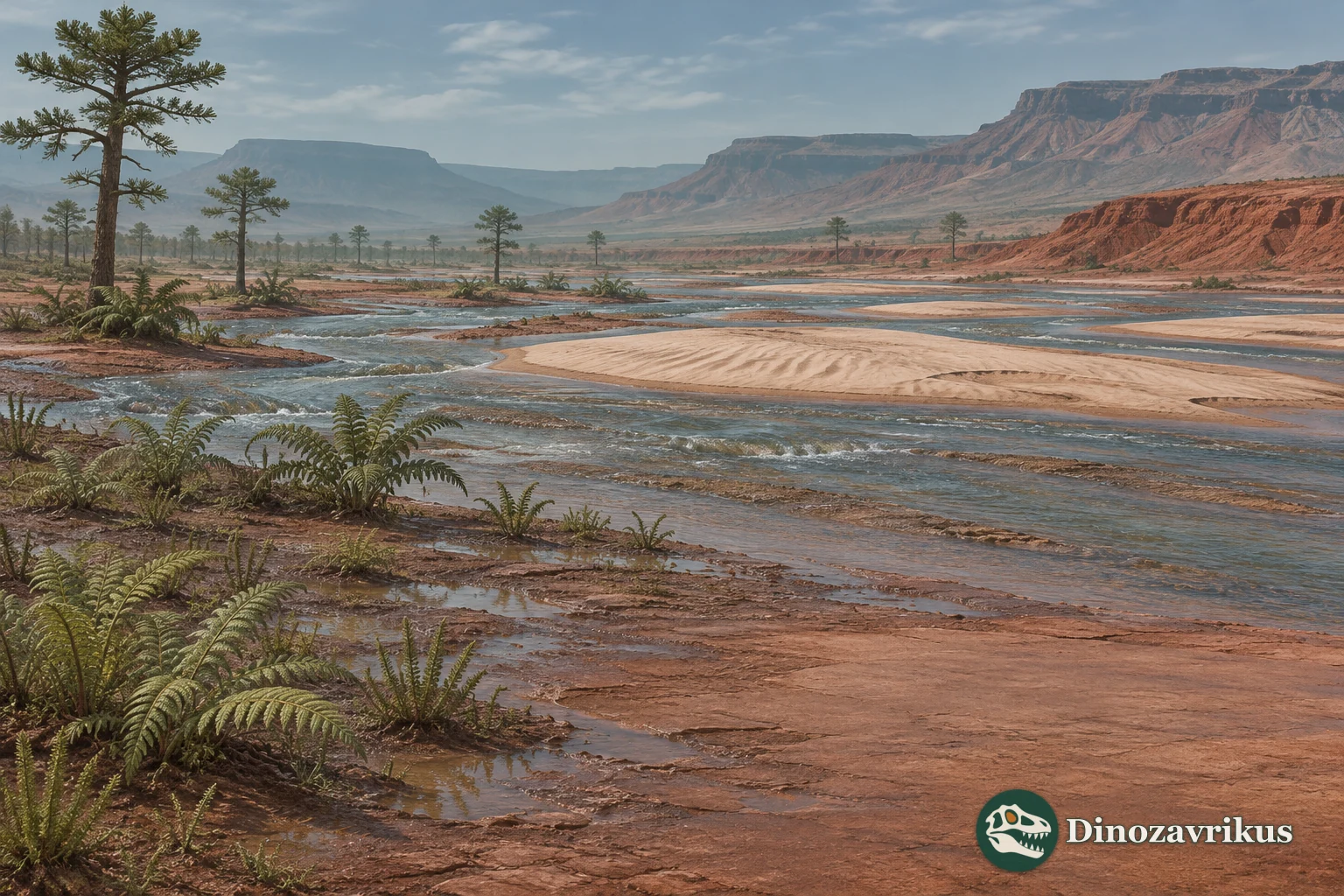
The long, low head is consistent with an aquatic capitosauroid. The sediments at the localities also point to channels and bodies of water in Triassic basins. The skulls show details of the palate and the position of the eyes, but neither an exact total body length nor direct evidence of particular prey is available.
Frequently asked questions
Where was Stenotosaurus found?
The type species comes from the Black Forest of Germany. *S. aitoualii* was found in the Reculée section in southeastern Algeria.
When did the type species live?
Its type material comes from the early Anisian stage of the Middle Triassic.
What is distinctive about the German skull?
A narrow contact between the prefrontal and postorbital bones keeps the jugal from reaching the edge of the eye socket.
What did the Algerian find show?
It extended the documented range of the genus to North Africa and preserved details of the cheek and back of the skull that distinguish the species.